
Adventures in the Land of Elderberry
September 20, 2009 by The swedish meatball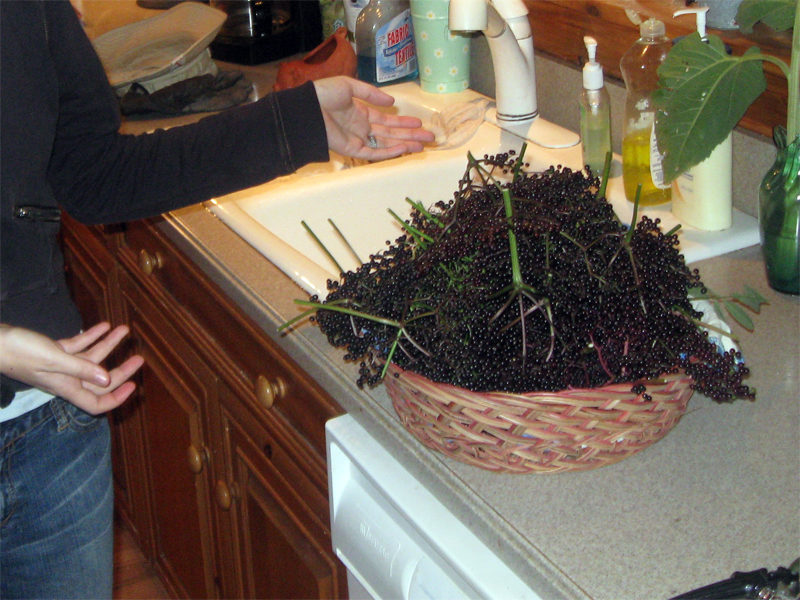
I left for Pennsylvania with the notion of having a kitchen-free “vacation.” But when I arrived at the McHenry residence, I could hardly help myself; bordering the back of the house was a patch of elderberry bushes loaded with ripe fruitand it was all going to rot if I didn’t do something! Sacrilege! I’d never cooked with or tasted elderberries, so preparing this fresh hand-picked fruit was also a rare opportunity and adventure.
Harvesting the berries was simple enough with a little maneuvering and the right equipment. I wore long jeans, my trusty ol’ jogging shoes, a hat, and a fitted long-sleeve jacket to protect me from the surrounding brush and its creepy-crawly inhabitants. Sharp clippers did the snipping, and a rake brought the taller bunches down to eye-level. No comments from the peanut gallery about short Asian people, please.
The most tedious prep work was separating the elderberries from the stems. The internets are home to the myth that de-stemming elderberries is as simple as heating water. Lies! Lies, I say! I wish it were not so, but Mr. McHenry and I ended up de-stemming the elderberries by hand, with no miracle tricks to aid our scheme. Next time, when I am more willing to give internet testimony the benefit of a doubt, I may try the freezing method.
And now let me say a few words about a sensitive topic: some of you may be squeamish about the presence of certain organisms in your garden. You will find and kill most of the bugs in your elderberries during the de-stemming process. If the idea of encountering live arachnids or wriggly caterpillars is unappealing to you, you may want to submerge the elderberries (prior to de-stemming) in very hot water from your sink for 10 minutes. This will render most bugs dead. However, you will still need to fish the bodies out of your berries. I recommend at least three cold water baths after de-stemming to eliminate the (undesirable) protein. Try to comb through the berries while they are submerged; I spotted spiders, beetles, and worms this way and easily disposed of them with a spoon. Don’t be squeamish. Just remember, even the FDA recognizes the presence of “natural contaminants” in products you buy from sanitized grocery megamarts.
When the berries are de-stemmed and thoroughly cleaned, place them in a stockpot and add enough water to cover the berries with ¼ inch of liquid. Then, with the top on, boil the contents for a solid 30 minutes. Most pathogens will be dead once the temperatures reach boiling, but raw elderberries contain hydrocyanic acid and sambucine alkaloids, which are known to induce nausea. Cooking the elderberries supposedly breaks down these chemicals. Why is 30 minutes the magic number? Well elderberries might be safe to eat after five minutes of boiling, but at 30 minutes I’m absolutely sure it’s safe.
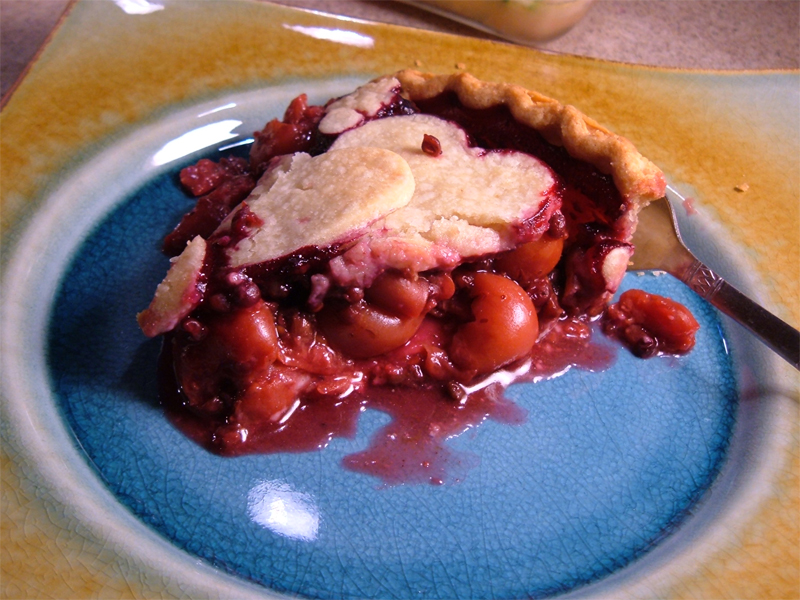
After 30 minutes, I separated the elderberries into two batches: one for preserves and the other for pie. For the preserves, I left the top off the pot, boiled off most of the liquid, and added sugar, lemon juice, and pectin. For the pie, I mixed in honey (complemented the elderberry flavor very well), sugar, cornstarch (made into a slurry first then stirred in), cinnamon, vanilla extract, and (because Mrs. McHenry prefers cherries) two cans, drained, tart pitted cherries. In the future, I may try an apple-elderberry pie with an oat brown-sugar crumble topping; the tannins native to the natural elderberry fruit reminded me of strongly of raisins.