
Chicken Marsala served with Penne Puttanesca
September 22, 2009 by The swedish meatball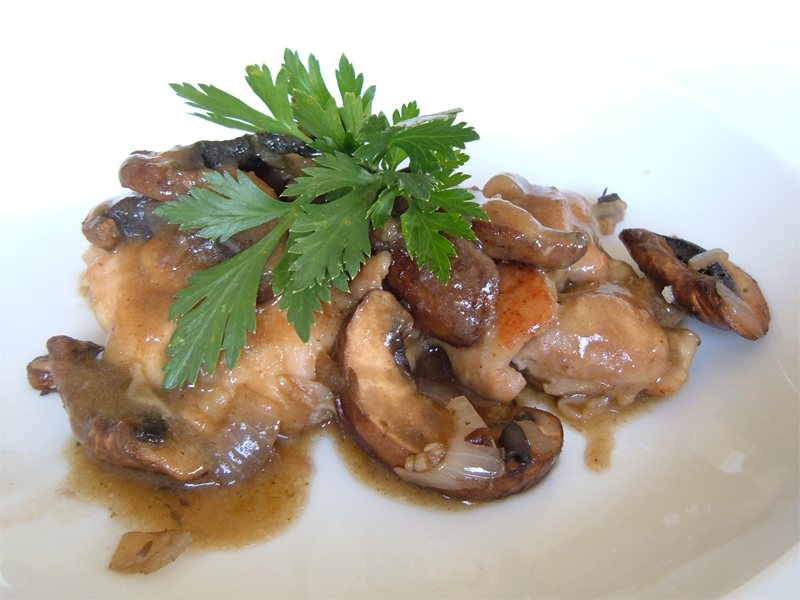
Chicken Marsala
Modern chicken marsala is usually prepared using chicken breast, which is then butterflied or pounded with a mallet. However, I find the richness and sweetness of the marsala wine perfectly complement the depth of flavor in dark meat; chicken thighs are also conveniently the right thickness for this dish.
4.64 lbs chicken thigh
1 lb 9.8 oz mushrooms, sliced
1 shallot, minced
1 clove garlic, minced
homemade chicken stock
Florio sweet marsala wine
Ruffino Orvieto Classico 2008
all purpose flour
kosher salt
black peppercorns, ground
fresh oregano, chopped
fresh thyme, chopped
fresh sage, chopped
butter
olive oil
- Prepare a mixture of flour, salt, and pepper and spread out over a baking sheet. Then, with the burner on high, heat a mixture of olive oil and butter until the fat shimmers.
- Quickly toss the first batch of thighs in the flour and shake off any excess. Transfer to the pan and sear both sides until golden brown. Remove from the pan, add additional oil or butter if necessary, and repeat until all the chicken is seared.
- In the same pan, saute the mushrooms and the shallot with salt and pepper. Add the garlic in the last minute of sauteing.
- Add marsala and white wine in a ratio of 2:1 until the bottom of the pan is covered with a half inch of liquid. Stir with a slotted spoon, being sure to scrape the tasty bits off the bottom of the pan. Remove the mushrooms from the pan and reserve. Then return the chicken to the pan and add stock until most of the chicken is covered by liquid.
- Bring the contents to a boil, then simmer for 20 to 25 minutes.
- Remove the chicken from the pan and reserve. Continue to boil until the sauce has reduced and thickened.
- Add the fresh herbs, which should consist of oregano, a little thyme, and very little sage. Stir in and reserve the sauce.
- Top the chicken thighs with the reserved mushrooms, and spoon on the reserved sauce as desired. Serve.
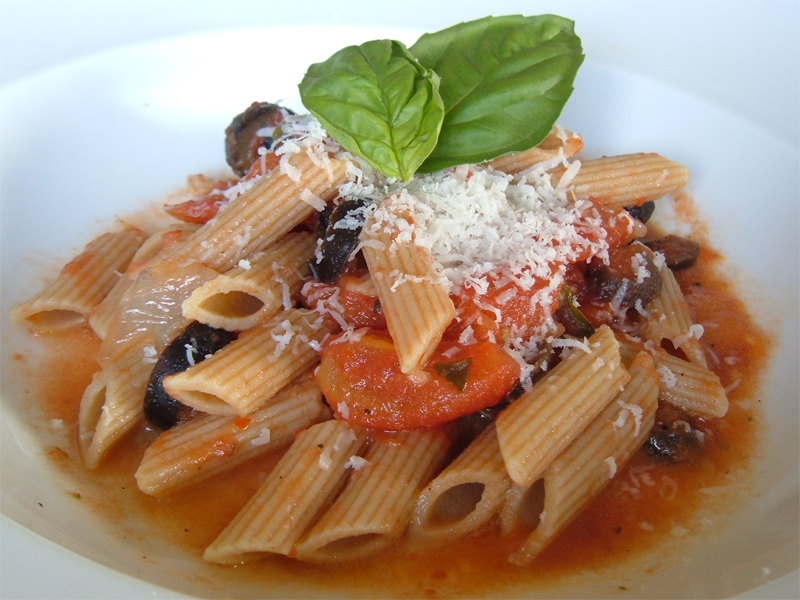
Penne Puttanesca
I’m no expert on world cuisine, but five years of news articles, dining out, and word-of-mouth suggests to me a different picture of traditional Italian food than most Americans perceive. For instance, take the ubiquitous “pasta sauce.” In common speech, most of us immediately picture pasta sauce as tomatoes, garlic, a few herbs, and maybe (if you get that far) some vegetables. But Italian pasta dishes are diverse and include everything from a simple bowl of linguine tossed with olive oil, herbs, and cheese to a hearty bolognese sauce over spaghetti. So why do we refer to only one generic “pasta sauce”?
You might argue tomatoes are the common, central ingredient in any true pasta sauce. In that case, I suggest you backtrack and read over the last paragraph. Even bolognese sauce, though inclusive of the tomato, is dominated first and foremost by the meat, not the fruit. Furthermore, a stodgy historian might remind us that the Spaniards introduced the Italians to tomatoes; prior to that, Italian cuisine was surprisingly bereft of tomatoes. Marinara sauce, the closest approximation of our modern reference to “pasta sauce,” was first eaten by 16th century sailors from Naples and was probably a very humble dish of tomatoes, oil, dried herbs, and maybe garlic or onions. In no way does marinara sauce describe the vast array of sauces available to be served with pasta today.
When I think of my ideal pasta sauce of choice, however, I always remember Penne Puttanesca. Why? Because I absolutely adore the strong flavors which are the trademark of this dish: anchovies, onion, garlic, olives, capers, red pepper flakes… The ingredients don’t get much stronger than that. (Well, okay, maybe they do, but I’m not counting bagoong or kimchi.) Anyway, every last one of these items is a food I love, and I love eating them together. You can substitute in whatever kind of olive you prefer. Personally, I think the black olives work great, but heyfeel free to experiment. Just don’t leave out the anchovies! You can reduce the amount if you prefer a less prominent contribution, but don’t eliminate them entirely.
This dish is so simple and easy, and the name is fun too: “whore’s pasta.” Try not to let your delicate sensibilities keep you away from enjoying this delicious meal.
½ white onion, chopped
2 oz flat fillets of anchovies in pure olive oil
5 cloves garlic, minced
3.88 lbs tomatoes, roma or another plum variety
8 oz black olives, sliced
small capers
whole wheat penne pasta, prepared al dente
parmigiano reggiano
fresh basil, cut chiffonade style
kosher salt
red pepper flakes
black peppercorns, ground
olive oil
- Remove the stem pit and the stem from all of the tomatoes by cutting a conical section from the top. Then, just piercing the skin, slice an 'X' on the bottoms of the tomatoes. Prepare a pot of boiling water at least five inches deep, and a pot of ice water also five inches deep. In batches of three, cook the tomatoes in the boiling water for one minute or until the skin breaks open. Immediately remove the tomatoes to the ice water bath to stop the tomatoes from cooking any further. Wait 20 minutes, then peel the skins off, halve the tomatoes, and remove the seeds. Chop the tomato halves into four pieces. NB: You can substitute an equal amount of canned diced tomatoes if you prefer to shorten the prep time.
- Saute the anchovies and onion with salt and pepper until the onion is tender, stirring frequently. Add the garlic and continue cooking until the garlic becomes aromatic (usually one minute).
- Add the tomatoes, red pepper flakes to taste, more salt, and more pepper. Simmer the contents of the pan for 20 minutes.
- Stir in the black olives, capers, and basil. Cook until all the ingredients are warmed through.
- Toss the sauce with the penne and serve topped with freshly grated parmigiano reggiano.