Beef Sukiyaki
October 4, 2009 by The swedish meatball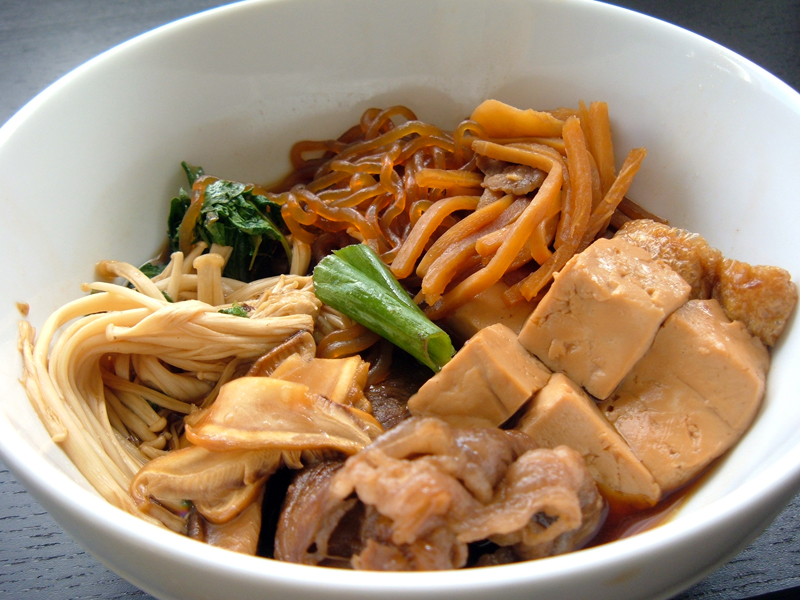
As a child I ate from a variety of cuisines which reflected the life and travel of my mother and her mother. My grandmother was a typical White Anglo Saxon Protestant (WASP), famous in the family for her apple pies, her delicious meat-and-potatoes Midwest cuisine, and her generous, welcoming table. She married a missionary of the church and traveled overseas with him to Hokkaidō. There she raised my mother with the help of a Japanese nanny, whom Mom fondly remembers as oba-san. Between my grandmother sharing her apple pies with the locals and, in turn, "oba-san" preparing traditional country-style Japanese meals for the family, my mother grew up in the epicenter of a small cultural exchange. She took this experience with her and traveled to the U.S., France, Spain, Mexico, and other countries, studying language, literature, and, occasionally, new cooking techniques and recipes. Later, she married a third generation Japanese son of Hawaii and adapted some of the recipes for him. I had the pleasure of enjoying the accumulated results descended through the line of women in my family.
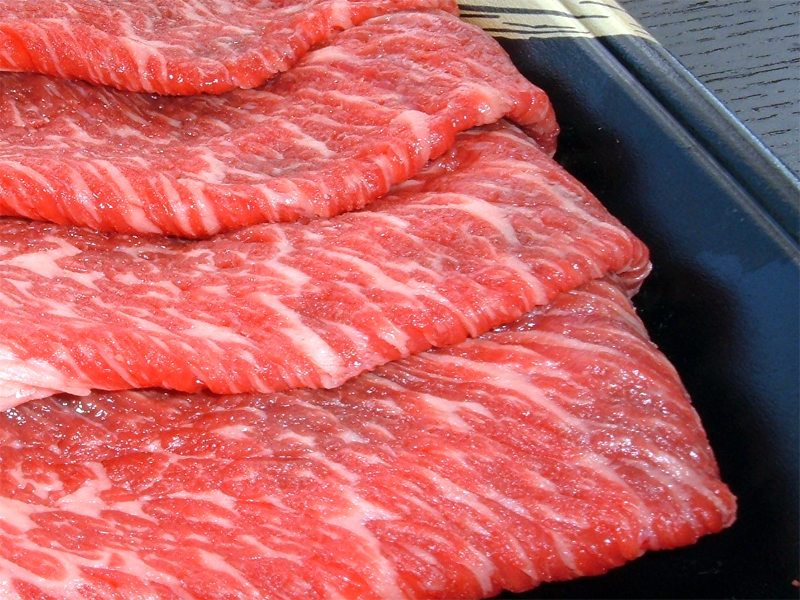
This Sukiyaki recipe has roots in the Sukiyaki of my mother’s table, but also continues the tradition of reinterpreting recipes with new input and adapting recipes to the availability of ingredients. Arguably the most important change to my mother’s recipe is the use of beef over chicken. Beef was more expensive and less frequently seen in the countryside of Japan, which explains why my mother was exposed to the poultry version of sukiyaki. However, beef is widely available today and the Asian markets in the neighborhood sell it pre-sliced for sukiyaki. The beef should be well-marbled, with variations in color similar to wood grain; the more subtle the variations, the better the cut. Avoid beef with clumpings of white fat and red meat.
The soup base is the next major point of departure. Both recipes include water, shoyu (soy sauce), sugar, and mirin. However, in terms of volume, the ratio of ingredients (listed previously) in my mother’s recipe is:
1.5 : 1.0 : 1.0 : ⅜
while mine is:
1.0 : 1.0 : 0.5 : ⅙
My soup base is noticeably less sweet, with half as much Splenda and less mirin. However, my soup base also contains dashi, a tip which I picked up from seasoned chefs like Masaharu Morimoto. Morimoto himself recommends a sweeter base (1.0 : 1.0 : 0.75 : 1.5), but he also uses sake—the alcohol content of which (I suspect) balances and smooths out the sugary-sweetness of the mirin and sugar. Sadly, I had no sake so I opted to sweeten the dish to taste. Even so, Tyler still thought the soup base seemed too sweet… But then again, if he had his away, everything would be sour or spicy.
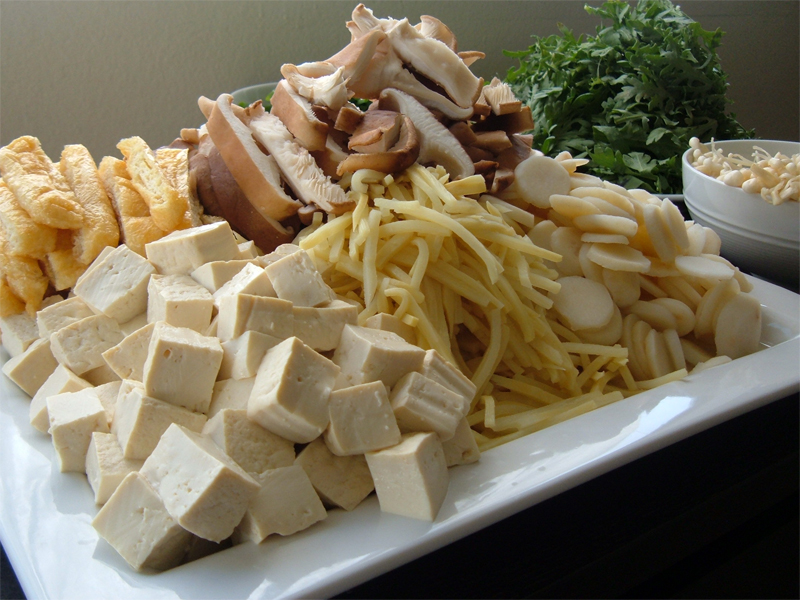
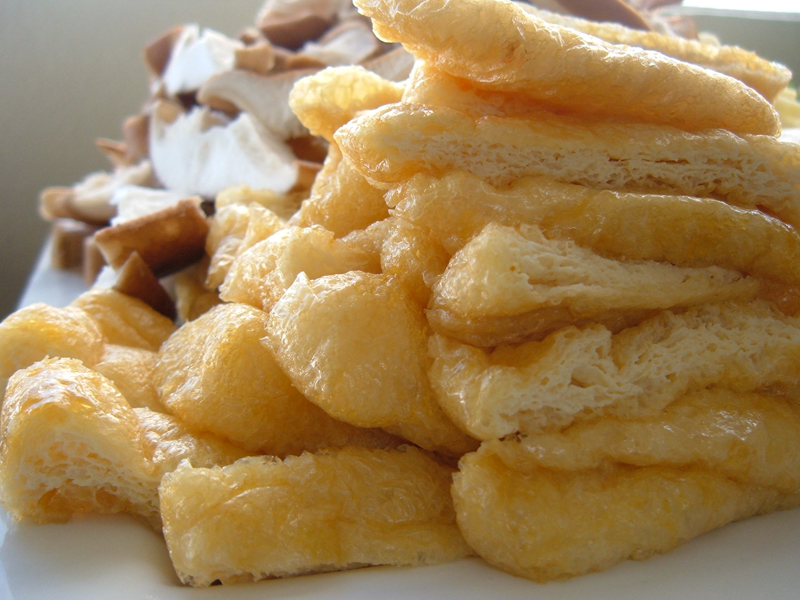
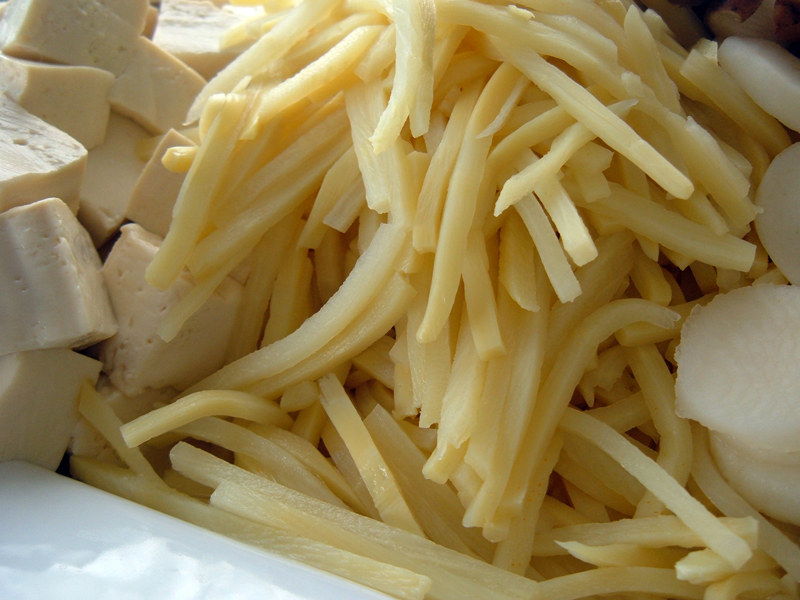
Pot ingredients in my mother’s recipe but not found in most traditional sukiyaki recipes include bamboo shoots, water chestnuts, aburaage (fried tofu pockets), and sweet yellow onion. I eliminated the onion in favor of less potent scallions, but kept everything else. The aburaage reminds me of home, but is somewhat unhealthy and should be kept to a minimum relative to the other ingredients.
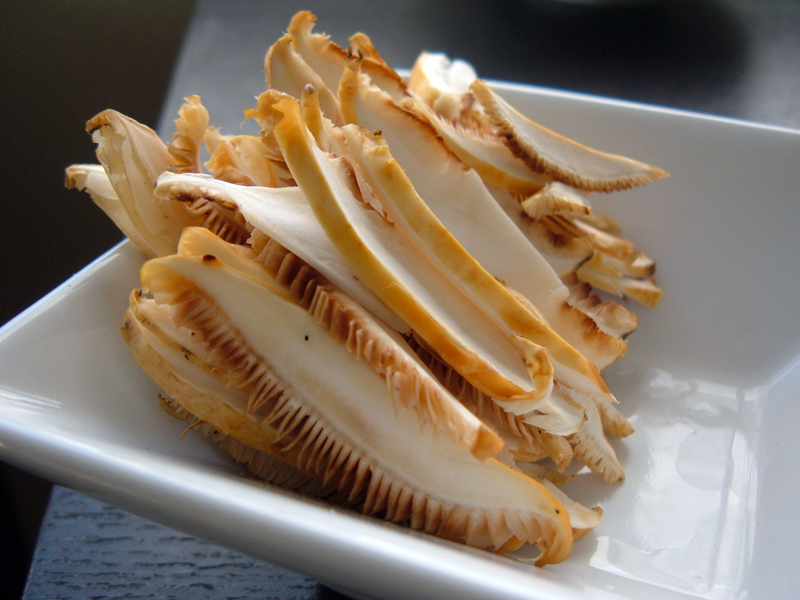
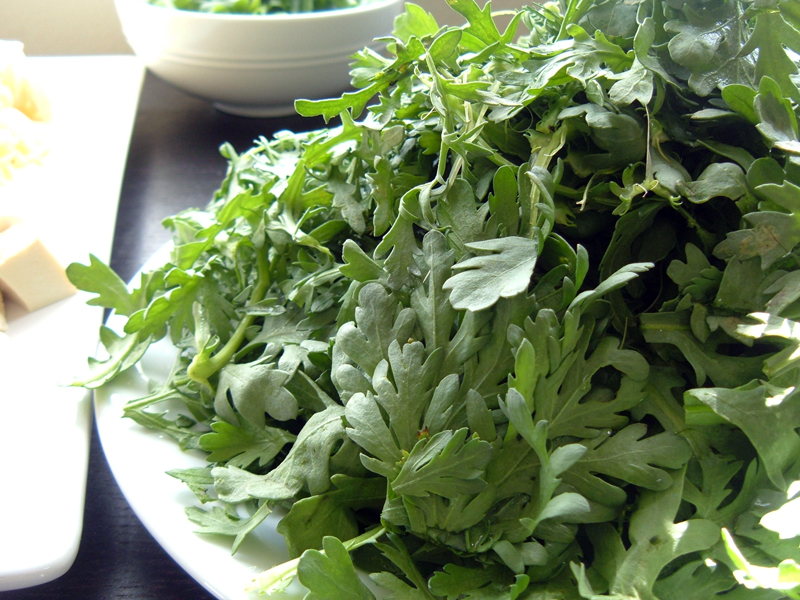
New additions to the pot included shungiku, which I’ve never tasted or used before in my life, and a whole host of mushrooms. The shungiku added a wonderful new dimension of flavor, but was somewhat difficult to find. The farmer’s market didn’t carry any, Freshia sold pitiful looking samples under the name "crown daisy," and Nijiya Market labeled them as “green chard.” (Thank you, internet, for pictures.) The mushrooms were absolutely fabulous: earthy, woodsy, with little delightful notes not at all hindered by the soup base. On my way to pick up the enokitake, I was also surprised by a stand full of matsutake or pine mushrooms. By coincidence, they are just coming into season in the Northwest U.S. and, in small quantities, are a great addition to sukiyaki. Their flavor is unique, potent, and difficult to ascribe words to without relating to other foods. (Think wine-tasting.) I would call their flavor intensely smoky with a bite of sour and a lingering "freshness," perhaps of pine. You can read more about the prized matsutake at Seattle Pi Food and Wine or Mycological Society of San Francisco.
Onto the recipe!
The Soup Base
6 cups of shoyu
6 cups of water
3 cups of sugar
1 cup mirin
20 grams (0.71 oz) dashi powder
Phase 1
3 lbs sliced marbled beef for sukiyaki, preferably wagyū
vegetable or canola oil
Phase 2
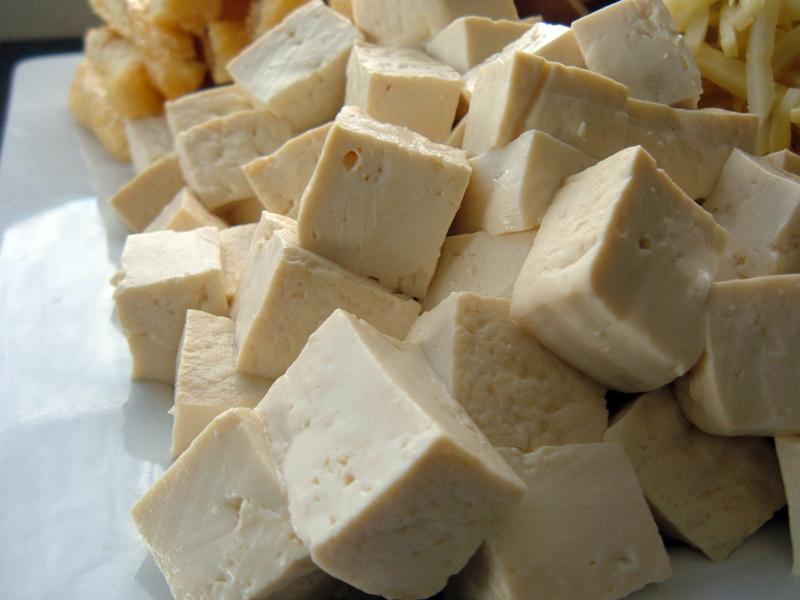
2 (14 oz) boxes firm tofu, cubed
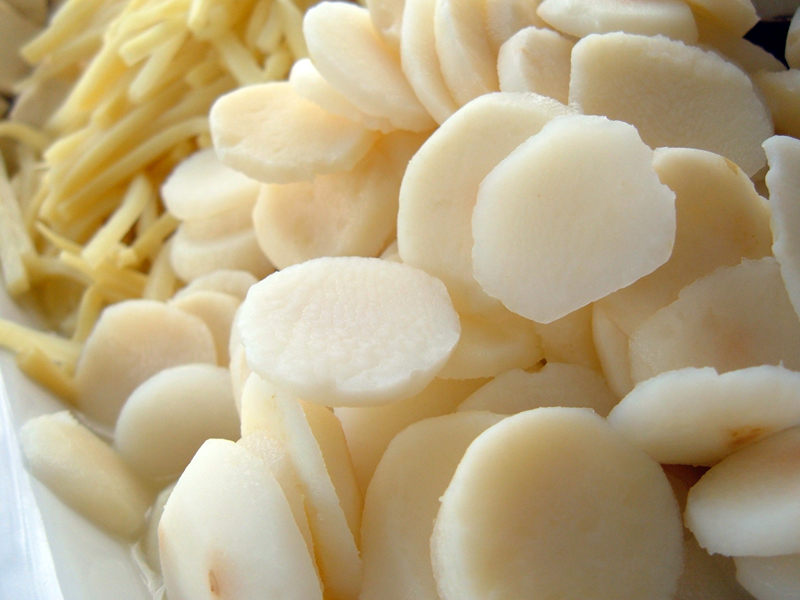
3 (8 oz) cans sliced water chestnuts, drained and rinsed
2 (4.58 oz) bags boiled and sliced bamboo shoots, drained and rinsed
2 (1.1 oz) packages aburaage, rinsed in hot water and sliced into strips
4 (8 oz) bags shirataki noodles, drained
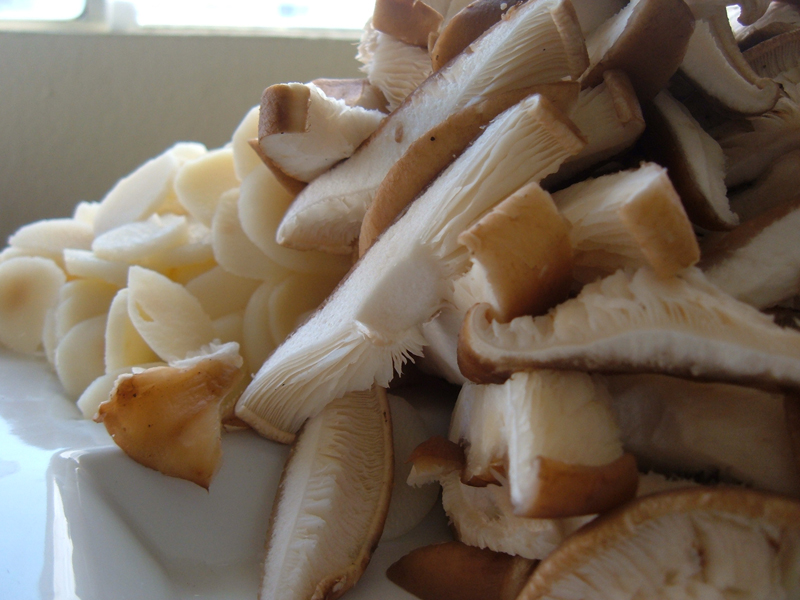
0.7 lb shii mushrooms (shiitake), cleaned, destemmed, and sliced
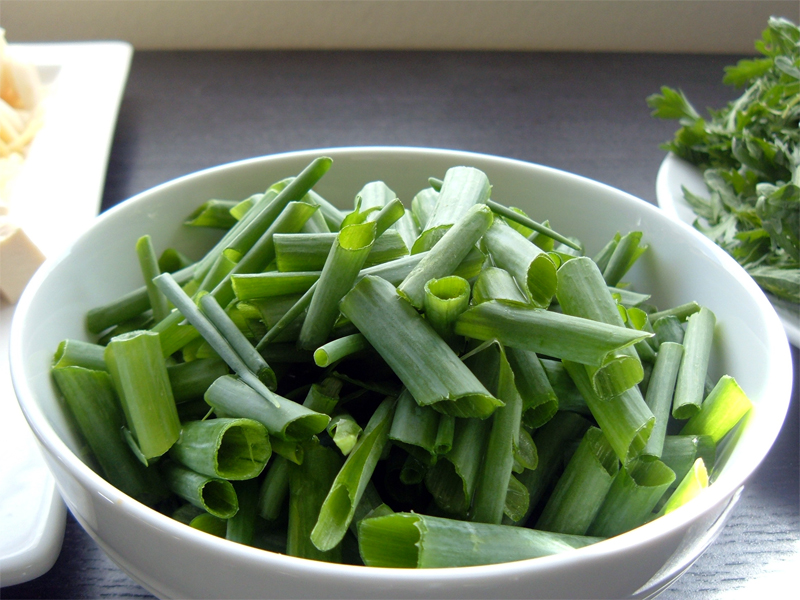
1 bunch scallions, sliced
Phase 3
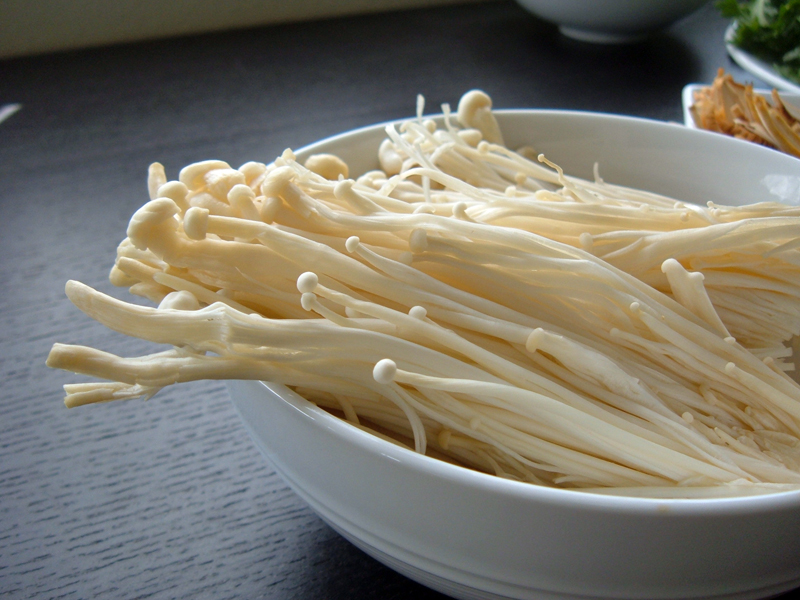
1 (7 oz) bag enoki mushrooms (enokitake), cleaned and with the bottom inch trimmed off
2 small pine mushrooms (matsutake), cleaned, trimmed, and sliced very thinly
1.5 bunches of shungiku, rinsed and cut to bite-size pieces
- The single most important aspect of making sukiyaki occurs before anyone touches the stove. Plan ahead, make a shopping list, and prepare all the ingredients before applying heat to anything. Rinse, clean, cut, etc and lay the ingredients out on platters or in separate containers so you can effortlessly add food to the pot within seconds. Make a checklist if necessary to ensure nothing is done at the last moment.
- Mix the shoyu, mirin, sugar, dashi, and only five cups of water in a large bowl. Reserve.
- In a hot pan, sear each strip of beef very lightly with a little oil. Remove all beef from the pan and reserve. Deglaze the pan with one cup of water, scrape up the bits on the bottom of the pan with a non-metal spatula, and add the resulting liquid to the soup base.
- To cook this quantity of sukiyaki, you will either need two large, wide cast iron dutch ovens (preferred) or two large, wide stockpots. Divide the beef into each of these cooking vessels.
- Evenly divide the Phase 2 ingredients between the two pots, grouping each single ingredient together and avoiding mixing. Carefully pour half the soup base into each of the pots.
- Turn on the heat to medium (Heat Setting: 6) and bring the liquid to a boil.
- As soon as the liquid boils, add Phase 3 ingredients, turn off the heat, and remove from the burner.
- Serve the sukiyaki with rice and a bowl of lightly whisked egg for dipping.
- 1.1 Concerning the subject of cleaning mushrooms: many web sites recommend against rinsing mushrooms in water because "they turn mushy" and absorb too much liquid during the rinse. Personally, I think mushrooms are capable of absorbing way more liquid than the little itty bit they see during a rinse. Also, mushrooms, especially wild ones, are infamous carriers of bacteria. If not properly stored in a brown paper bag (most are sold in plastic), the bacteria can multiply and make you sick—especially since two of the three kinds of mushrooms in this dish are not fully cooked. So, either rinse or rub with a damp paper towel. I highly recommend against using mushrooms without any kind of cleaning.
1.2 To prepare the shiitake, remove the stem by twisting it off (or, if tough, cutting very close to the cap). Slice the cap and use in the sukiyaki. You can freeze the stems for later and make a shiitake dashi.
1.3 To prepare enoki mushrooms, just slice off the last bottom inch. The long stem of each mushroom should still be intact but separable from its neighbor.
Suggestions to consider next time:
- I bought grade 4 matsutake. Next time, spring for smaller, grade 1 or 2 matsutake and use a bit more.
- Buy and use sake in the soup base.
- Reduce the amount of shungiku to one or ¾ bunch and add napa cabbage. Both my mother and Morimoto call for napa cabbage in their recipes. I attempted to substitute in more shungiku, but the flavor of the shungiku is almost too strong to have in excess.
- Try a different kind of scallion. Apparently there's several varieties of tasty Japanese bunching green onions with long white blanched stems. See this website for a few pictures.
- Update 10/09/09: Use fresh water chestnuts! I couldn't believe my eyes, but I saw fresh chestnuts at Albertsons the other day.