Molten Chocolate Cake with Custard Sauce
October 11, 2009 by The swedish meatball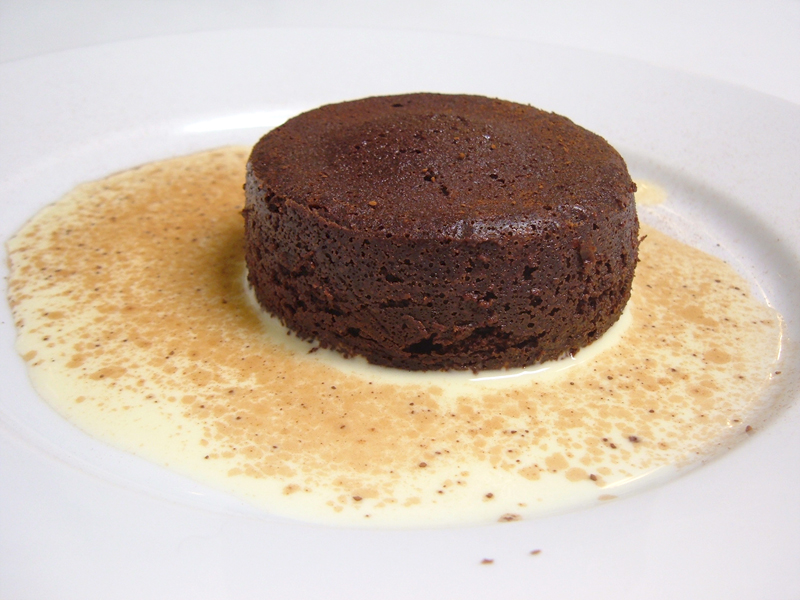
Unless a blog is dedicated to baking, I frown on attention-starved cooking blogs with a page full of dessert close-up photography. I also frown on most cakes. I usually can’t bring myself to enjoy eating a frosting-covered mound of flour, even to be polite. Other sweets like apple pie à la mode and oatmeal raisin cookies are more tempting, but I can pass them up without much suffering. But chocolate—well, that’s my weakness. I love chocolate, especially 70%-75% dark chocolate. (Milk chocolate is for wusses.) Pair the flavor of pure chocolate with espresso and a dash of salt, and you may as well pry the dessert from the hands of my stiff corpse.
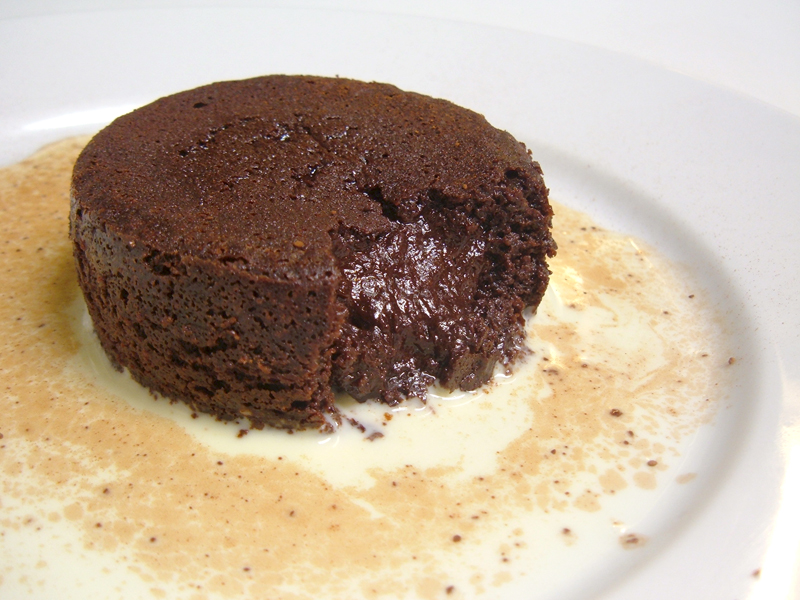
Molten chocolate cake is, for me, the essence of what chocolate desserts should be. The first commandment of chocolate desserts: thou shalt not impair the chocolate. For all you cake-lovers out there, this means very little flour and light on the additional sugar. So flourless chocolate cakes and soufflés are great, but say no to devil’s food cake please. (Show a little discrimination!) Molten cakes, however, reach an exceptional level of excellence in terms of texture. Their exteriors are light and sponge-like, while the insides are full of tongue-coating delicious warm chocolate goodness. If I’m going to eat a 500+ calorie dessert, molten chocolate cake is going to be the culprit. Thank kami there’s a gym downstairs.
Recipes from The Essence of Chocolate by Robert Steinberg and John Scharffenberger
Craig Stoll contributed this recipe for molten cake to The Essence of Chocolate; Stoll is the chef-proprietor of Delfina Restaurant in San Francisco, California, and you can learn more about him by reading his short online biography. A few minor changes to this recipe are noted in red.
Ingredients
4 (5.5 oz) ramekins
unsalted butter plus 8 Tbsp unsalted butter, cut into ¼ inch pieces
6 oz 70% chocolate, coarse chop
2 large eggs
2 large egg yolks
¼ cup granulated sugar
pinch of salt
1 Tbsp + 1 tsp all-purpose flour
½ tsp espresso powder
- Butter the whole interior of the ramekin, then line the bottom of each ramekin with parchment paper. Lightly butter the exposed parchment paper.
- Bring a pot of water to a gentle simmer. Choose a bowl which will rest comfortably on the edges of the pot, but without the bottom of the bowl touching the simmer water. Place the butter and the chocolate into the bowl. Stir as needed until the butter and chocolate are melted and smooth. Remove the bowl from the pot and set aside. NB: I use one of my favorite multi-taskers to stir the chocolate and butter. This silicone scraper allows you to scrape and fold the liquid chocolate over the still-melting solids also while keeping the sides of the bowl sterling clean.
- In a separate bowl beat the eggs, yolks, sugar and salt with a whisk until the mixture is thick and pale. When finished, waving the whisk over the surface of the mixture will hold a slowly dissolving ribbon.
- Sprinkle the flour and espresso powder over the egg mixture. Whisk in until just combined. Fold the egg mixture into the chocolate one-third at a time. NB: Again, you can use the scraper for this task.
- Fill the ramekins to within ¼ inch of the top. From here, you can cover the ramekins with plastic wrap and refrigerate for up to two days; just remember to bring the ramekins and their contents to room temperature. If you're ready now, however, you can set the ramekins on a baking sheet and prepare your oven for baking.
- Move your oven rack as close to the floor of the oven as possible. Then preheat your oven to 400°F.
- Bake 8-10 minutes. When done, the sides should be firm and the center should be set but soft to touch. Remove from the oven and let stand for one minute, then unmold the dessert onto a serving plate. Serve with custard sauce and dust with cocoa powder. NB: A finished cake will dome just slightly—maybe less than a ¼ inch. As to the official cooking time, we took the dessert out of the oven after 10 minutes and then shortly thereafter decided to bake for another minute and thirty seconds; the center wasn't set! The cake came out perfect—even more molten than the one seen in the photograph (yesterday's dessert). To unmold the dessert, use a wet dishrag; the ramekins will still be piping hot, but an oven mitt doesn't leave you much control and may result in an accident.
Ingredients
4 large eggs, yolks only
1¾ cup half-and-half
⅓ cup granulated sugar
pinch of salt
½ tsp pure vanilla extract
1-2 Tbsp Grand Marnier
- Place a fine mesh strainer over a medium bowl and set aside.
- In another medium bowl, whisk the yolks lightly.
- In a medium heavy saucepan, place the half-and-half over medium heat just until a wrinkled skin forms on the surface. Remove from heat.
- Slowly add a third of the half-and-half to the yolks while whisking the yolks constantly; start with only a few tablespoons at a time, then increase the amount added as the yolks are given time to temper. Once finished, add the yolk mixture back to the rest of the half-and-half.
- Whisk in the sugar and salt. Return the saucepan to low heat, stirring constantly until the sauce is thick enough to coat the back of a spoon. Strain the sauce with the setup from step one.
- Cool the sauce slightly, then add the vanilla and liqueur. Cool completely, cover, and refrigerate.
It’s painful for me to criticize this dessert, but there are a few suggestions and observations I can offer:
- Steinberg and Scharffenberger recommended the custard sauce to accompany the molten cake. The sauce itself was delicious; I loved the Grand Marnier paired with the sweetness of half-and-half and vanilla. However, the flavor of the custard sauce didn't stand-up well against the powerful duo of chocolate and espresso. Perhaps if the espresso was not included, the sauce might express itself better; however, if the espresso was eliminated, I might not have enjoyed the chocolate quite so much. Such a dilemma! Thickening the custard sauce a bit more might have helped the custard hold together better in the mouth. Or perhaps a tart fruit coulis would have added more to the dish. Decisions, decisions...
- I had nothing truly bad to complain about on the issue of texture, but I would like to see more variety and contrasts. Consider adding something crunchy to the plate—a crisp waffle-cone-like wafer dipped in white chocolate or (for the extra purist in me) a shaped hard piece of dark chocolate presented in an interesting way?
On my way to the treadmill with my running shoes…