
Cioppino: Celebrating Three Years Diet-Free
October 12, 2009 by The swedish meatball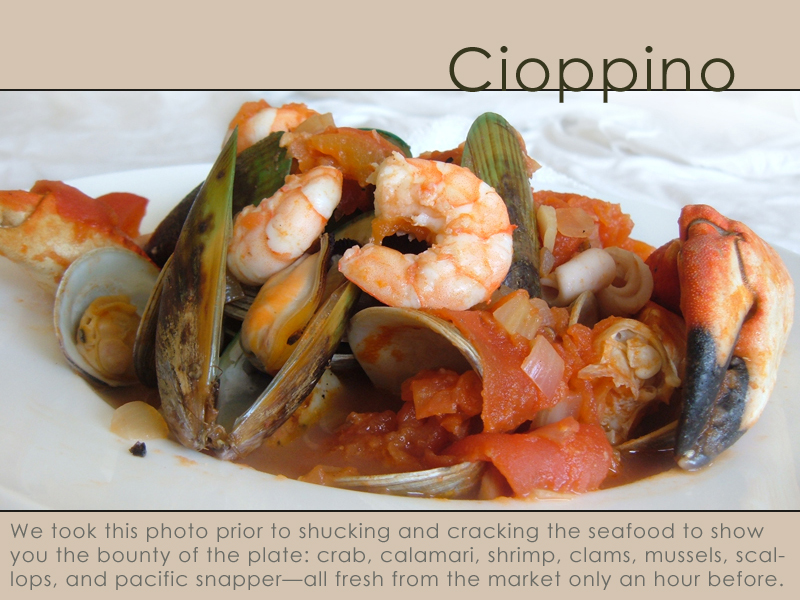
In the summer of 2006 I lost 40 lbs. Today, three years and some months later, the weight is still off and, in addition to staying on track, I’ve lost an additional five pounds. This recipe is a celebration of health and a farewell to my arch-nemesis: the up-and-down roller coaster of diet fads. For this success, I have the folks at SparkPeople to thank. I spent about a year with Sparky, and over those long months of tracking my weight, budgeting my calorie intake and expense, living on the forums, and listening to the advice of nutrition experts, I learned bunches about body maintenance and the negative impact of dieting mentality. That’s not to say I haven’t gone up or down a few pounds in all three years; hell, you can go down a pound or more just by sleeping eight hours. But every time I need to get back on track, I just remind myself of the principles and lessons I learned from Sparky.
Now onto the actual food!
Seafood is quite possibly my first love, in the culinary sense. I stalked fruit when I became older, and chocolate and I could only have our first liaison when I developed a mature appreciation for dark, bitter cocoa. But seafood and I have a very early history. Mom would go to the grocery store and bring home these beautiful slabs of fresh Ahi. Or, as a truly special treat, "uncle" Walter would gift us with lobster he had caught just a few hours ago. The ultimate unique experience, however, was reeling in a Moi (read more here) from the shores of my grandfather’s property; we baked the fish whole that same day, pouring peanut oil over the top to form a crust and later dipping the white flesh in a light soy sauce. I was truly blessed in my early life to have experienced the taste of seafood as it is meant to be experienced: fresh from the sea and cooked perfectly. Today I cannot imagine having anything less.
I usually prefer a light and swift hand when preparing seafood for the table. Like my husband, if I’m going to eat fresh crab, forget the lemon-butter, the cream, the aioli, the vinaigrette, et all. Seafood has a sweet, addictive aroma and flavor—like an edible perfume. ("Fruits of the sea," an expression common to several European languages, can refer not only to the bounty of the sea, but also to this same-said perfume.) Add too much to a dish with seafood and you risk overwhelming this prized scent and taste. Worse yet, overcook the seafood and the flesh becomes rubbery and dry.
Cioppino is an exception to the rule of light and fast, but cioppino is also an exceptional dish. The fish stock alone will require at least an hour. Then you will need additional time to skin and seed the tomatoes, cut up the squid, assemble the stew-base, simmer, and finally clean and cook the other seafood. The end result, however, is well worth the wait, and this dish remains firmly entrenched as one of my all-time favorites. Tyler mopped up and spooned in every last bite, even the broth—and broth is something I can usually count on him to leave well alone. Every morsel is gold. Just be prepared to spend a little time, as properly prepared cioppino requires tender loving care.
Ingredients
2.88 lbs roma tomatoes, or another variety of plum tomato
extra virgin olive oil
½ white onion, diced small
salt
pepper
½ bulb fennel, diced small
2 cloves garlic
about a ½ cup white wine
2.5 cups homemade fish stock
82g tomato paste
red pepper flakes
1 Tbsp honey
¼ tsp ceylon cinnamon
4 threads saffron
1 bay leaf
10 small squid
peanut, canola oil, and/or olive oil
1 fillet of ½ inch thick pacific snapper, 0.45 lbs
4 dry-packed eastern sea scallops
12 littleneck clams
12 New Zealand green mussels
9 jumbo shrimp
2 claws of Santa Barbara crab, cooked
½ set snow crab legs, cooked
- Prepare the fish stock from my previous post. If you have perfect timing, you can use the fish stock as is fresh from the stockpot; if you have slightly less than perfect timing or you prefer not to be rushed, chill the stock and place in the fridge.
- Cut out the stem-area of the tomatoes by removing a small conical section. Just barely piercing the skin, cut an "X" into the bottom of the tomato. Do this for all your tomatoes then prepare a pot of boiling water and an ice water bath. Place the tomatoes in the boiling water, three at a time, for 30-35 seconds. Then remove them with a slotted spoon and transfer to the ice bath. The ice bath will stop the tomatoes from cooking any further. Wait until the tomatoes are cooled, usually 10-15 minutes, then move onto the next step. NB: Tomatoes may feel cool to touch on the surface, but feel warm underneath the skin. Be sure to allow adequate time for the whole tomato to cool or the flesh will continue to cook.
- Peel off the tomato skins. Quarter the tomato, remove the seeds, and chop each quarter in half. Reserve in a plastic container or a bowl.
- In a dutch oven over medium high heat, saute the onions and fennel in the extra virgin olive oil and season with salt and pepper. Add the garlic (through a garlic press) and the red pepper flakes in the last minute of cooking.
- Add the wine, the fish stock, the tomatoes, and the tomato paste. Again, season with salt and pepper. Simmer for 20 minutes. Cover, turn off the heat, and go shopping for fresh seafood. NB: My seafood market is five minutes away; if yours is farther, you might reconsider assembling the stew base earlier (for refrigeration) or later when you get back home.
- Prepare the seafood by beginning with the squid. For a fairly good guide on dissecting squid into its edible parts, see this video. De-vein the shrimp and remove the shell if desired. Wash the clams; they should be fresh and hand-picked by your fishmonger, so you should have no throwaways. Scrub the mussels and remove their beard (pulling toward the hinge, not away), as well as any barnacles. Remove the tabs on the scallops.
- Bring your stew-base back up to a simmer. Mix in the honey, the cinnamon, the saffron, and the bay leaf. Add the clams and the mussels, then cover the pot. Remove them in 5-10 minutes or when they open. Divide them between two serving bowls and cover the bowls with an aluminum foil tent.
- While the clams and mussels are steaming, quickly season and pan sear the fish, the calamari, and the scallops. Do this quickly in a pre-heated pan with oils that have a high smoke-point, like canola or peanut oil. The fish should be cooked on high heat; for such a thin fillet, just very lightly brown both sides and you should be done. For the scallops, back off the heat and mix the higher smoke-point oil with a little olive oil; to be perfect, the scallops should be slightly undercooked in the center—about 2 minutes on one side, and 30 seconds to a minute on the other. With the calamari, use medium heat for 1½-2 minutes, but use only high-smoke point oils. Divide all the seafood between the two bowls and again, cover with the foil tent.
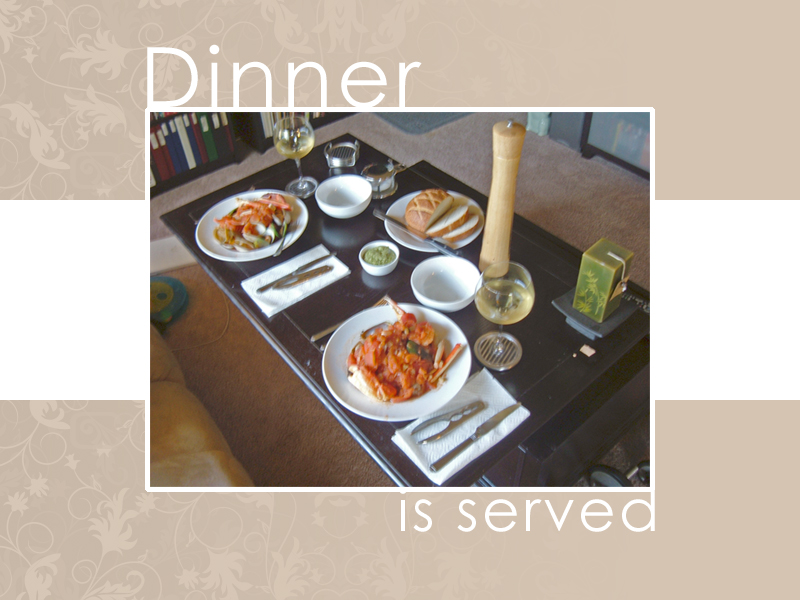
- Add the shrimp and the crab to the dutch oven. Cook until the shrimp just turn pink and remove the crab when it is just heated through. Divide the crab and shrimp between the two bowls. Ladle some of the simmering stock into both bowls. Serve with wine, sourdough bread, and tarragon anchovy pesto.
Here are my remarks and suggestions for the cioppino:
- Use only fresh seafood. If you're not sure what's fresh, ask your fishmonger or use your nose. Fresh seafood will smell very little; you will detect a slight odor of the sea and, if your nose is good, a sweet delicate perfume. Also, just because it's listed in the ingredients doesn't mean you have to use all the seafood listed here. Lobster tails and claws will do just as well as crab. Calamari isn't absolutely necessary, though it is nice. The only two ingredients I recommend against leaving out entirely are the fish and the shellfish. Bass, halibut, or any white-flesh fish will work fine in place of snapper, if necessary. Shellfish has no equal and adds a beautiful (read: irreplaceable) depth of flavor to the cioppino. If you absolutely must leave out the shellfish, add a little clam juice to the stew; it will help.
- The in-the-shell cioppino makes for a lovely photograph, but once you sit down to eat, I recommend doing the shucking, the cracking, and (if desired) the slicing all at once. Then you can enjoy cioppino as it was meant to be—in a spoon, with broth, tomatoes, fennel, and bits of seafood hitting your mouth altogether at the same time.
- Don't frown on the cinnamon, honey, and saffron. I think these ingredients a little extra something to the cioppino; they shouldn't be and aren't major players in the flavor game, but the little hints are very rewarding. They complement and enhance the natural sweetness of the seafood, while smoothing out the acidity of the tomatoes.
- If possible, serve the cioppino in a large wide bowl. I didn't have any of these, and I almost wish I had bought them beforehand. What we used worked fine, but the bowl is more traditional and functional.
- Careful there on the shrimp! They were just a tad overcooked.