
Chile Verde
October 22, 2009 by The swedish meatball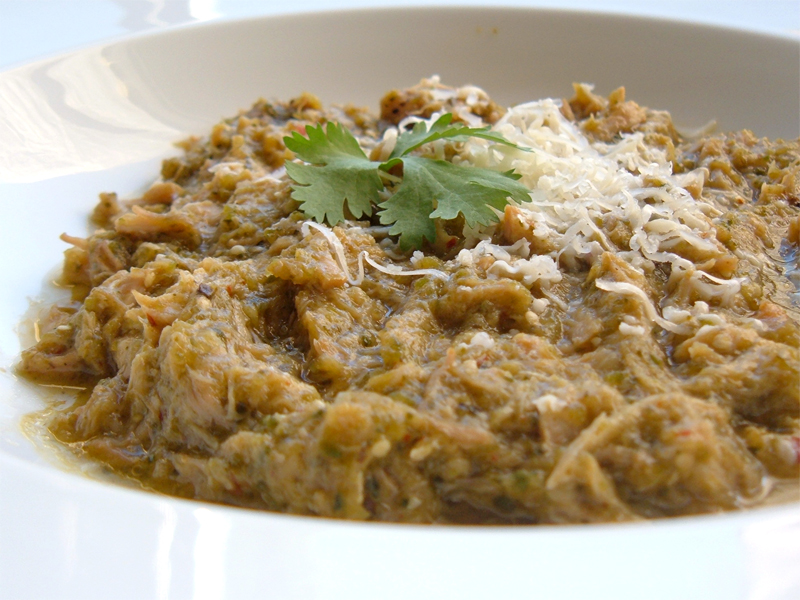
Chile Verde is a dish straddling the border between Mexico and the United States. It can be made with a distinctively Tex-Mex flair, served in burritos, or created as a rich broth for plain steamed rice called morisqueta. Even wilder variations of chile verde call for paprika, cinnamon, and yellow bell peppers or chicken instead of pork. To complicate matters further, there is another eerily similar dish, called Chilayo, which Diana Kennedy attributes to the Colima region of Mexico in her book The Art of Mexican Cooking. So given all this, what exactly is chile verde?
Well I can’t tell you what chile verde should be, because anything I say could be contradicted by at least ten Mexican grandmothers or world-class competitors in chili cook-offs (all of whom can hardly agree with each other). However, I can tell you all about my chile verde, which is a rather simple blend of common sense and personal preference.
Let’s start with the meat: pork. Most recipes will recommend using pork shoulder, ribs, or country-style ribs. However, I prefer a lean cut which will require minimal skimming during the braising process, so I usually use a large pork loin roast. I detect no difference between the cuts on the issue of tenderness; braising will turn any hunk of meat into stew, given enough time. Hence, by using the loin roast, nothing is sacrificed, effort is saved, and my arteries thank me for consuming less animal fat. Sounds good to me…
Tomatillos, or tomates verdes, are of course mandatory; how you prepare the tomatillos is the primary point of contention. Some use them raw, others roast them, and a few even include the tomatillo husks during the cooking process. I can’t speak on the issue of the husks—that would an experiment for future posts—but I prefer the tomatillos roasted or browned whole prior to pureeing. Roasting is done in the broiler. Browning in a pan over high heat is my usual go-to method, but I might try the broiler when the temperature cools a bit. Either procedure will provide extra depth to the flavor of the tomatillo.
The chiles themselves are usually poblanos and/or jalapeños, but in Chilayo you will also see anchos (dried poblanos), guajillos, and chilacates. I’m unlikely to ever see chilacates unless I hunt down someone who grows them. However, anchos and guajillos are interesting options. The anchos provide a smoky, rich flavor quite unlike their fresh kin, and the guajillos offer a different kind of heat than their distant cousin the jalapeño. For this recipe, I picked up the fresh poblanos, roasted them, and threw in puree of two guajillo chiles. I was quite pleased by the results. I definitely prefer the guajillos to the jalapeños, but I haven’t tried adding anchos. More room for experimentation!
On the issue of seasonings and herbs, I prefer simplicity. I use kosher salt, pepper, garlic, and cumin—that’s it. Some recipes call for more exotic combinations, usually involving cinnamon or cilantro. I can’t say I’ve tried using a verde recipe which calls for cinnamon, and cilantro is better suited to the jalapeno (or the serrano, if you’re a deviant). But grinding your own whole toasted cumin is something quite special. Freshly ground cumin hardly looks like the tan-gray stuff you buy at the grocery store; instead, the spice has more orange-red tones, and the smell is divine! NB: Can you tell how much I love my new spice grinder? I do wish it used burrs instead of blades, but hey—short of waiting 6 months to a year for a Sumeet Multigrind, the Cuisinart Spice and Nut Grinder is a godsend.
Ingredients
4-5 lbs pork loin roast
Canola oil
Salt
Black peppercorns, freshly ground
Homemade chicken stock
1 white onion, diced
2 cloves garlic
At least a dozen tomatillos, if not more
5-6 fresh poblano chiles
2 guajillo chiles, dried
1 Tbsp whole cumin
- Remove the fat from the pork loin roast exterior. Cut the roast into chops about 1.5-2.0 inches thick. Then slice each chop into quarters. Apply salt and pepper, and allow the meat to warm until it is cool to touch, but not cold. NB: Ideally, you should start with meat partially chilled in the freezer to enable easy, fast slicing. Starting from the fridge is also perfectly acceptable, however.
- Preheat a pan over high to medium-high heat with a little canola oil. Then, when the pan is very hot, sear the pork a minute or two on each side until the pork is lightly browned. You will probably need to do this in batches if you're using the recommended amount of meat. Transfer each batch into the crockpot as they finish. Deglaze the pan with a little homemade stock when you're done cooking the meat; scrape up the brown bits on the bottom with a nylon or silicone spatula. Transfer the deglazing liquid to the crockpot. NB: A smoking pan is a bad sign. If this happens to you at any time, just turn down the heat.
- Fill the crockpot with additional chicken stock until the liquid covers at half-to-three-quarters of the meat. Cover the crockpot and set the temperature to high. Let the pork cook for at least six hours. You may skim the surface of impurities every hour or so, if you wish, but with a pork loin roast, it's hardly necessary. NB: Don't worry about drying out the meat that's on top. Just keep the crockpot lid securely on—resisting the temptation to lift it up frequently—and the meat on top will do just fine in the wet steaming heat. Also, some crockpots may require more time than others to cook the meat. Mine is a rather small one, so the meat will be done in 6-8 hours easily. Larger crockpots may require the meat to cook overnight.
- Wash the tomatillos under warm running water, removing the husks as you work. Roast the tomatillos in the broiler or brown them whole in a large wide pan over high heat. Transfer the tomatillos to the blender and puree. Reserve for future use in a separate container. NB: If you prefer a chunkier stew, you may prefer to chop the tomatillos or pulse them in a food processor. The choice is entirely yours. Furthermore, at this point you can throw out the tomatillo husks or cook them with the pork. If you are using them as an ingredient, just make sure they are thoroughly washed.
- Roast the poblano peppers in the oven or (my preferred method) over the grill until the skin blisters. Place the peppers in a brown paper bag and allow them to steam for 10-20 minutes. Remove them from the bag and peel off the skin. Use a pairing knife to gently slice open one side of the pepper, then remove and discard the stem and seeds. Reserve the peppers.
- Place the guajillo peppers in boiling hot water, cover the pot, and set aside for 30 minutes. After this time is up, cut open one side of the pepper; again, remove and discard the stem and seeds. Place the guajillo peppers and the roasted poblano peppers in the blender and puree.
- Brown the onion in a pan over medium-high heat with a little canola oil. Season with salt and pepper while cooking.
- When the pork is fork-tender and falling apart, turn the heat down to low. Add the tomatillos, pepper puree, onions, and garlic (via the garlic press). Quickly toast the whole cumin, grind, and add to the crockpot as well. Cook for an additional 30 minutes or until the flavors have melded. NB: If your crockpot is not big enough to hold everything, you may need to transfer all or part of the meat to a stockpot, where you can add the other ingredients and simmer over medium heat.
- Serve over plain rice or with warm tortillas. Optional garnishes include: cilantro, white cheddar cheese (recommended), and sour cream.
Without a doubt, chile verde is one of the easiest, most delicious, and most versatile recipes in my repertoire.
Update 10/23/09: this verde recipe is quite mild (remember I have acid reflux). For an extra thrill, mix in a few drops of Death Sauce into your bowl.