
Hungarian Cabbage Rolls
November 10, 2009 by The swedish meatball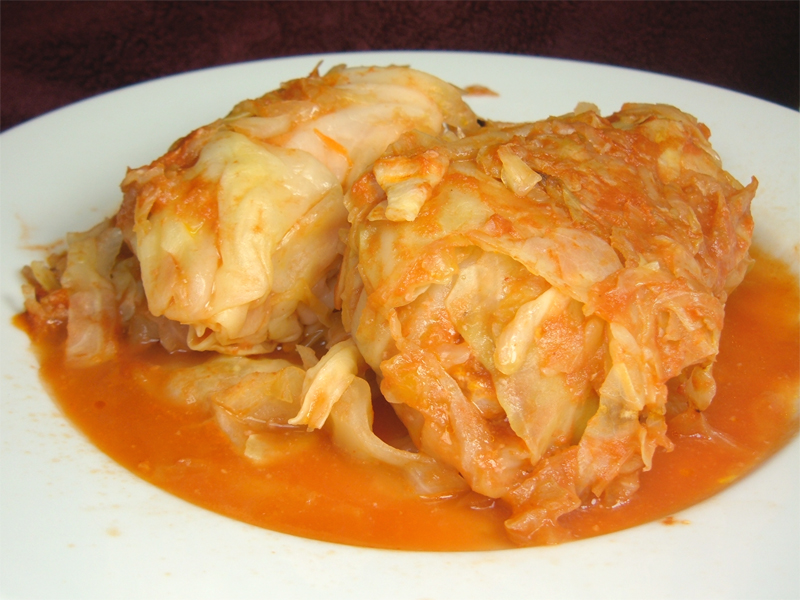
Occasionally, my mother served us "pigs in a blanket" for dinner—and no, I’m not speaking of pastry wrapped hot dogs or sausages! In our household, "pigs in a blanket" always meant meat rolled in whole cabbage leaves and simmered in a tomato-based sauce. I can’t imagine where Mom picked up the reference, since the term (when referring to cabbage rolls) originates from Slavic-influenced regions like Pennsylvania.
Regardless of what they’re called, cabbage rolls exist across Europe, parts of Asia, and parts of the U.S. which are heavily influenced by Eastern European immigrants. There are many variations on the recipe depending on the region of origin. Sometimes cabbage rolls are cooked in tomato juice. In other recipes, you’ll see a sour cream sauce. Occasionally, people use pickled cabbage leaves to wrap the meat or add citric acid salt (sour salt). Cabbage rolls may even be distantly related to meat-stuffed versions of the dolma wrapped in grape leaves. In summary, this dish is a ubiquitous classic of rustic country-fare and (in my opinion) one of the ultimate comfort foods of Fall.
The following recipe is mostly definitely not my mother’s. Mom’s Originals were fairly simple—usually a raw beef mixture wrapped in cabbage and simmered in tomato sauce. I wanted something with a bit more flavor, so I combed the internet for information, put my noggin to work, and came up with something a bit closer to the dish’s European roots. In particular, my search identified sauerkraut as a popular addition in Hungarian versions of cabbage rolls. Hence I aimed for a sweet and sour tomato sauce, with a mixture of pork and beef for the meat. The addition of smoked bacon is optional and can be substituted out for other varieties of smoked pork, like sausage. Also, white long-grain rice may be used in place of brown rice.
Ingredients for the Meat
1 cup brown rice, cooked
4 large heads of cabbage
vegetable oil
1 white onion, finely diced
2 carrots, finely grated
2 cloves garlic
3 tsp salt + extra
freshly ground pepper
2 tsps sweet paprika
½ tsp sharp paprika
2.3 lbs 90% lean ground beef sirloin
2.05 lbs ground pork
1 lb smoked sausage, finely diced
3 eggs
1 cup sour cream
Ingredients for the Sauce
46 fl ounces tomato juice
2 (32 ounce) containers of fresh sauerkraut
¼ cup lemon juice
12 ounces tomato paste
24 ounces water
7 heaping Tbsp Splenda (or to taste)
1 Tbsp molasses
extra salt to taste
- Prepare the rice and allow to cool.
- Separate individual, whole cabbage leaves. Trim the very bottom of the cabbage, so that the leaf is no long attached to the base; then, starting from the crisp bottom vein, gently work your hand up under the leaf until you can remove the leaf from the head. Do not attempt to peel up the leaf from it's tender outer edges or you will tear the leaf. Shred excess cabbage and reserve for later. NB: Do this work in front of the T.V. and recruit your husband for manual labor.
- Along the back of each leaf is a hard vein protruding outward. Shave the protrusion until the vein is level with the rest of the leaf, but do not remove the vein itself. If done properly, you will have no difficulty rolling the leaf around the meat mixture after blanching the leaf (see next step).
- Prepare a large pot of boiling water. Blanch each single leaf for 50s, then quickly remove with a slotted spoon and transfer to a bath of cold water. When the leaf is almost completely cool, remove the leaf and reserve. Rinse and repeat for all whole cabbage leaves. NB: You could probably develop a method for blanching all the leaves at once, but I prefer doing them individually as you can adjust cooking times for more fragile or more tough leaves. For example, if a harder inner leaf isn't quite done after 50s of blanching, I just wait a few seconds before adding the leaf to the cold water. Usually the residual heat is enough to finish the cooking process.
- Prepare the sauce. Separate the actual sauerkraut from the liquid in the container. Combine this liquid with all the other sauce ingredients. Taste the result and add more sugar or salt as necessary. Reserve the sauerkraut.
- Sweat the carrots and the onion over medium-high heat with a little vegetable oil, salt, and pepper. Using the garlic press, add the garlic to the pan and cook until aromatic (usually 1-2 minutes). Allow the mixture to cool.
- Gently combine the carrot-onion mixture with all remaining seasonings and ingredients in the meat mixture. Use clean hands for this task. (Yes it's messy, but get over it.) When everything is just barely homogeneous, stop. Do not overwork the meat or the meat will be tough when you cook. NB: The logic behind this advice is fairly simple. Properly ground meat is loose and has pockets of air. By mixing with your hands, you destroy these air pockets and begin compressing the meat. Less compression means less dense meat.
- Prepare your casserole pans. Place a thin layer of reserved shredded cabbage (step 2) down on the bottom of the casserole pan. Add a thin layer of sauerkraut. Top both with a very thin layer of sauce. The contents of the pan should look meager, but keep in mind you're just putting down this layer to keep the bottom of the pan moist and provide a cushion of sorts for your cabbage roll babies. NB: For this amount of meat, I needed 2 casserole pans and a dutch oven.
- Preheat the oven to 350°F.
- Take a cabbage leaf from step 4 and lay flat, with the base of the leaf nearest to you. Add a scoop of the meat mixture (I used about a heaping ⅓ cup) to the section near the base of the leaf. Fold the left and right edges in, then roll up. Place the cabbage roll in a prepared casserole pan. Continue to assemble cabbage rolls until each casserole pan has one layer of cabbage rolls.
- If you still have enough meat to roll more cabbage rolls, no problem. Just add the three layers of "cushion" (shredded cabbage, sauerkraut, and sauce) on top of your first layer of cabbage rolls. Then add a second layer of cabbage rolls.
- When you've completely exhausted your supply of meat, divvy up the remaining cabbage, sauerkraut, and sauce over the tops of your casserole pans. IMPORTANT: The casserole pans should appear somewhat dry; that is, the liquid should not surpass the half the depth of your pan. Lots of liquid will be released during cooking, so avoid over saturating your casserole pans or you will have a mess in the oven.
- Bake the casserole pans for 1 hr and 30 minutes. Serve.
Phew! This recipe is fairly time-consuming, but the technique is extremely simple. Just start early and entertain yourself with a little music or T.V. while you work. The end result is moist and flavorful—a very pleasing balance of sour acidity with sweetness. Surprisingly, the smoked bacon also adds a certain dimension of sweetness to the meat; it’s slightly distracting, in fact, and I may reduce the amount of bacon in future renditions. Either way, increase the amount of paprika slightly for a less subtle effect.
I have no complaints, however, about the texture of the meat. The meat was very tender. In the future, I might use raw rice and simply cook the cabbage rolls longer.
Read your 'philosophy blog" you might want to check mine out. I only blog about food that I am passionate about, and have knowledge of. I don;t post glossy mag photos or other peoples recipes. I have some food pics on my twitter page but shot only w/ my iphone, no glam shots. I will enjoy reading your upcoming posts. My twitter name is : StrawberryToast at twitter.
Thanks for visiting! Am reading your blog now...