
Thanksgiving Preparations: Part III. Pumpkin Ice Cream Cake, Crab Bisque, Sauce for Oeufs, Et Cetera
November 25, 2009 by The swedish meatball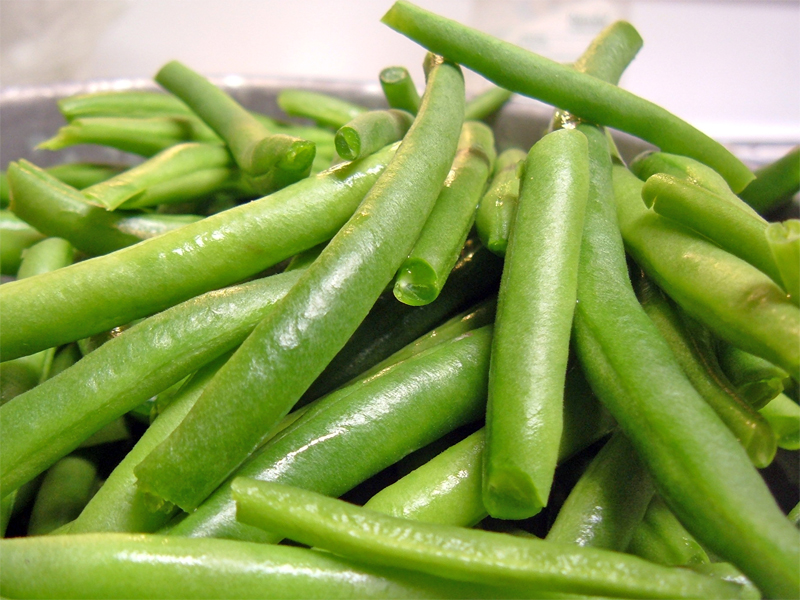
With just several days left before Thanksgiving, the preparations intensified. Tuesday was our busiest day, with last minute grocery stops at Freshia, Whole Foods, the European Deluxe Sausage Kitchen in Beverly Hills, Ralphs, and Albertsons. I assembled an arsenal. By Wednesday night, my kitchen was stocked with cream of mushroom soup, cider vinaigrette, candied pecans, pumpkin ice cream cake, roasted chestnuts, pomegranate cranberry relish, a brown sauce for the oeufs, blanched green beans, turkey brine, and a fabulous crab bisque. Why, you ask? Why would I go through all the effort to prepare such a feast? I call it the artist’s mania. Maybe my food isn’t what you would call art (I don’t), but the same kind of passion applies; and what I love best is this: after the fur is finished flying, my husband and I can share our delight (and our criticisms) on the subject of a well thought out, carefully prepared meal.
Remember: the primary purpose this article is to record procedure. More analytical commentary can be found in the full version of the 2009 Thanksgiving Roundup.
Roasted Chestnuts
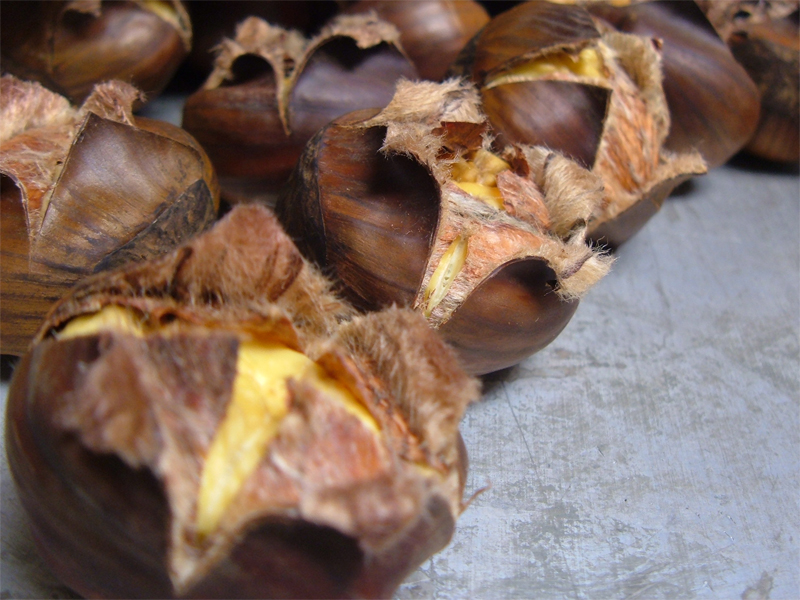
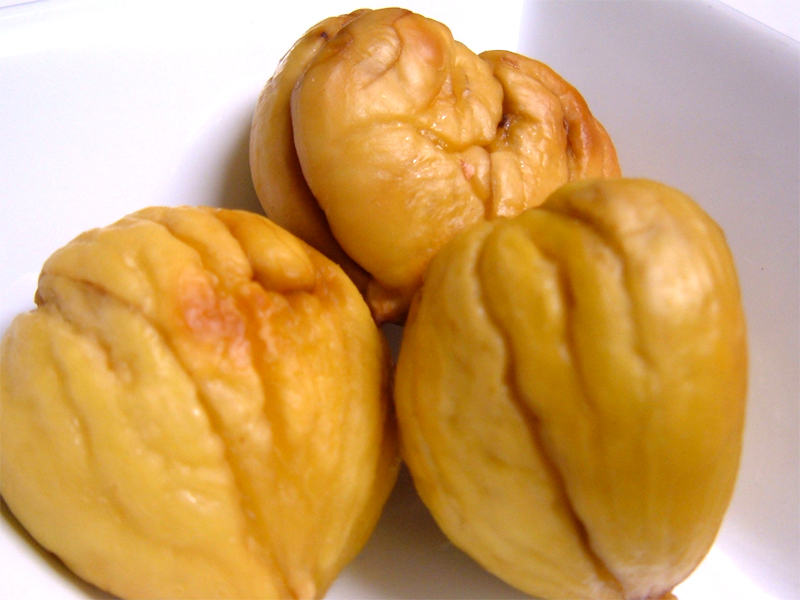
Roasted whole chestnuts are a treat. The flavor is somewhat similar to a sweet potato, but the texture is less grainy and more walnut-like. Unfortunately, chestnuts are rather annoying to prepare in large quantities—unless you own a gadget like this, which I don’t. Even two pounds of unshelled chestnuts will likely give your hand a cramp.
Obtain a sharp pairing knife or a woodcarving knife. Lay the chestnut against a flat, stable surface, and cut an X into the shell. Be sure to penetrate the tough outer layer (and not just scratch the surface) or the chestnut may explode in your oven. Preheat your oven to 425°F. While you wait, give your hand a rest.
Place the chestnuts on a baking tray, X-side up and roast for 22 minutes. Pull them out of the oven and cover them with a towel for two to five minutes. Then, using a damp cloth or an oven mitt, extract a single chestnut from under the towel and gently squeeze until the outer layer cracks. Peel away the shell.
It’s best to keep the other chestnuts warm and under the towel while you work. Cool chestnuts are much more difficult to shell. Also, always purchase more chestnuts than you plan to use. Because chestnuts are highly perishable, invariably some of your haul will be fodder for your garden. My yield was fair; about 1.42 lbs unshelled nuts produced 0.924 lbs of shelled nuts.
Pumpkin Ice Cream Cake
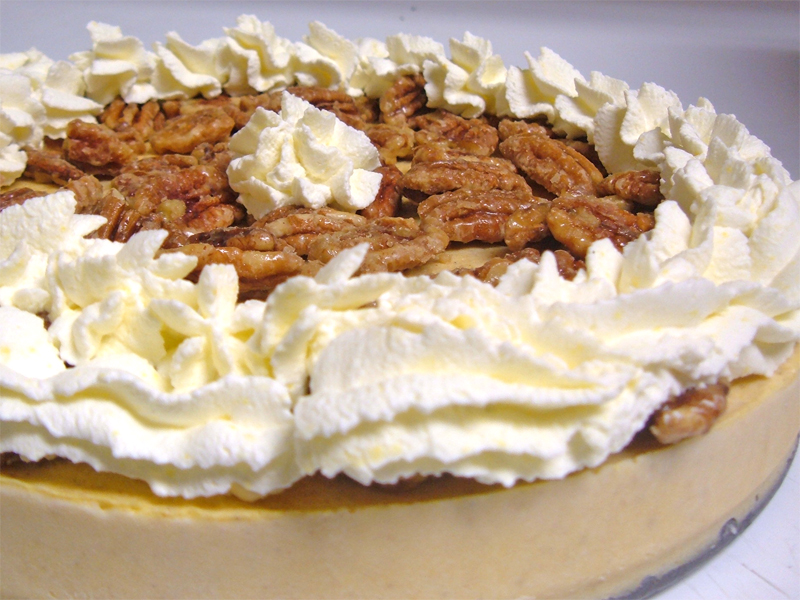
Pumpkin pie and pumpkin custard have graced the fridge for nearly three consecutive weeks. (When the fresh sugar pumpkins arrive in season, Tyler and I glomp them pretty fast.) So when Thanksgiving arrived, I was more than a little bored with the idea of a regular ol’ pie. Pumpkin mousse also seemed a bit too similar for my liking. My pumpkin jin deui, by comparison, strayed a bit too far from the realm of traditional Thanksgiving. But were those options the extent of the pumpkin’s dessert repertoire? Not a chance.
The following was adapted from Eating Well’s more traditional (and health-conscious) recipe. Notice where I deviate: no gingersnap crust, rich french vanilla ice cream instead of frozen yogurt, maple syrup in place of sugar, maple syrup candied pecans, and a partially stabilized, hand-made vanilla whipping cream. Serve that up with my homemade graham crackers and you’ve got yourself a classy Thanksgiving dessert. I’ll save further remarks and criticism for the 2009 Thanksgiving Roundup.
Ingredients
1 cup fresh pumpkin puree, from the sugar pumpkin
¼ cup and 2 ounces maple syrup
½ tsp Vietnamese cassia cinnamon
¼ tsp ginger
¼ tsp nutmeg
2 pints french vanilla ice cream, sweetened with sugar (and not corn syrup)
1 Tbsp unsalted butter
118 grams whole pecans
2 cups heavy whipping cream
2 heaping tablespoons of confectioner’s sugar
about 21 grams sugar-free instant vanilla pudding
- Assemble your 9 inch springform pan. I also usually wrap the outer surface of the pan with aluminum foil, secured by twine; this precaution ensures no disaster in your freezer should the pan leak.
- Set the ice cream out on the counter to soften.
- Combine the pumpkin, ¼ cup maple syrup, cinnamon, ginger, and nutmeg. Stir in two pints of softened ice cream until well blended.
- Pour the mixture into your pan. Place the pan in your freezer immediately. Allow the contents to set, usually several hours. You may want to check on the status of the cake prior to this point, just to ensure the springform pan isn't leaking horribly.
- When the cake is set, prepare the candied pecans. Place the pecans, the butter, and one ounce of maple syrup in a thick bottom pan over medium heat. Continue to cook, stirring occasionally, until the pecans just begin to stick together. Then add the extra one ounce of maple syrup. Cook until the excess syrup just begins to crystallize. Remove from heat immediately and transfer the pecans to the surface of your ice cream cake in the freezer.
- Place a metal bowl and your mixing attachment in the freezer. Allow the items to chill thoroughly, as the cream will whip better if both are kept very cold.
- Remove the metal bowl and mixing attachment from the freezer. Pour the cream into the bowl and begin whipping. Add confectioner's sugar and pudding mix just as the cream begins to thicken. The purpose of these ingredients is to sweeten as well as stabilize; while not as excellent a stabilizer as gelatin or piping gel (can contain corn syrup), the sugar and the cornstarch will prevent your cream from "weeping" at the dinner table. Continue whipping until the cream achieves the desired consistency.
- Remove the ice cream cake from the freezer. Discard the aluminum foil and twine surrounding the pan and pop off the sides of the springform pan. If you have any difficulty removing the sides (you shouldn't), run a hot knife around the edges of the pan to encourage release.
- Assemble your piping equipment. You can use whatever metal tip you prefer, but I usually prefer a large one that can pipe flower or star shapes. Using a broad spatula, transfer half of the whipping cream to the piping bag. Decorate the cake at will!
- Cut slices with a hot knife and serve on chilled plates.
Brown Sauce for the Oeufs
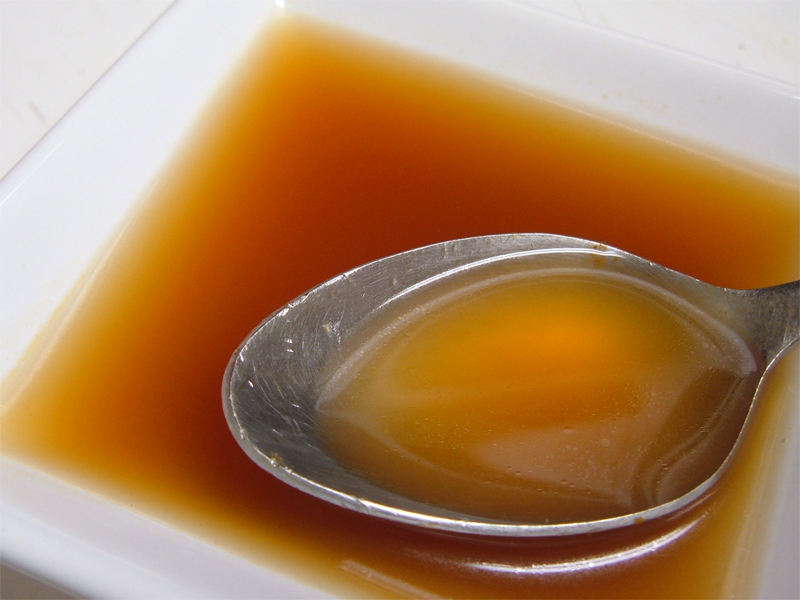
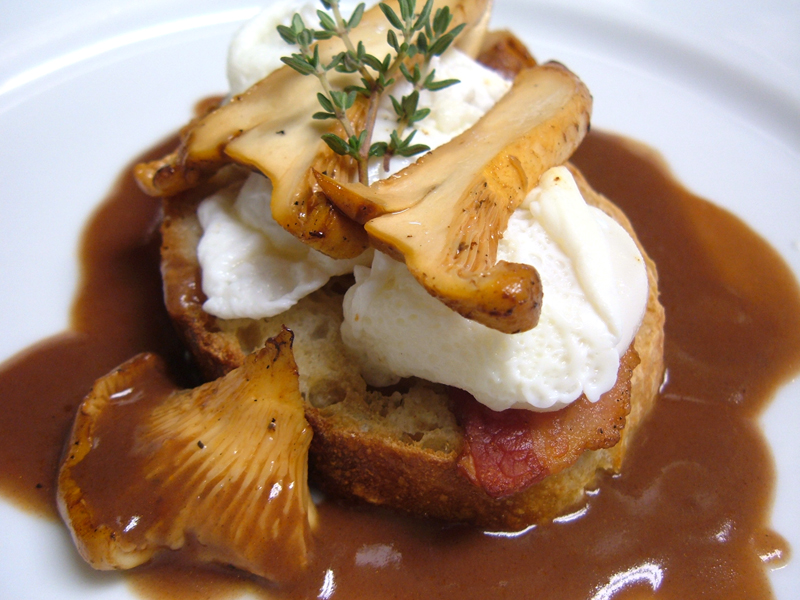
Rarely is my patience so sorely tested as a cook. But if there is a culinary subject which requires determination, time, and skill from the preparer, it is brown sauce. Coaxing beef stock (shown in the left picture) into glossy, rich, dark, smooth sauce with the appropriate finish, consistency, and flavor (shown at right) is art. I say "art" because many people simply don’t have enough experience or practice to control the process to the point of a reproducible scientific experiment.
To understand the sauce at hand, we must consider the context. What of the dishes which use said sauce? Oeufs en meurette, our appetizer, is essentially the brown sauce equivalent of eggs benedict. But whereas lemon juice lends acidity to hollandaise sauce in eggs benedict, red wine usurps that role in the brown sauce of oeufs. A brown sauce finished with red wine—does that sound familiar? It should, if you’ve ever consumed beef bourguignon. It’s no surprise then, that oeufs en meurette is sometimes called oeufs a la bourguignonne; both dishes use very similar (if not the same) brown sauce.
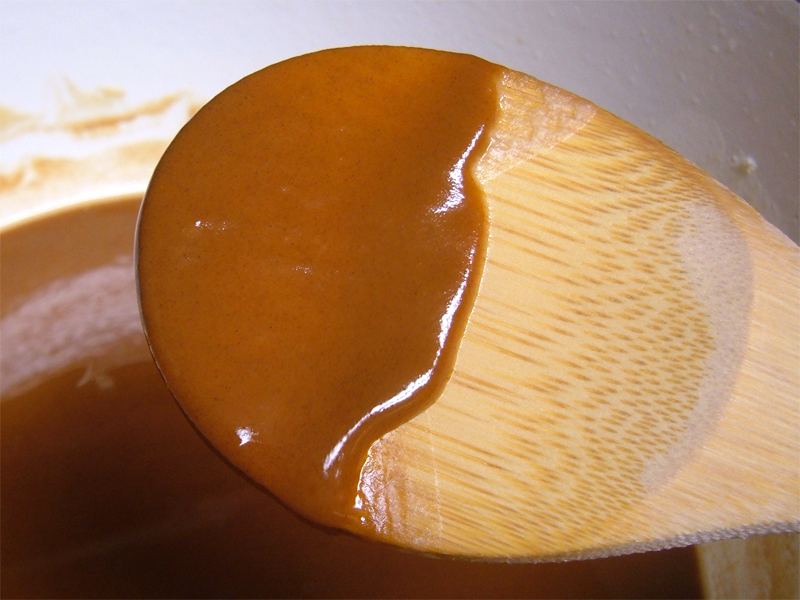
Now that we are familiar with the flavor profile, we are confronted with the actual preparation. A popular point of reference appears to be the entry on oeufs at the Traveler’s Lunchbox, which features an adaptation of Julia Child’s recipe. I hate to contradict such a legendary icon in the culinary world, but right away I’m not really satisfied with the recipe. Beurre mani—that is, the pasty mixture of uncooked flour and butter—is something I try to avoid whenever possible. My experiences with beurre mani as a thickener are uniformly bad; heated only briefly or given a long simmer, the sauce always has this residual flour taste. Ick! And why use beurre mani when we could thicken with roux or (even better) arrowroot? What about adding a brown roux (seen in the picture below) for a little flavor? I admit, maybe I need to retest the logical foundations of this prejudice against beurre mani, but for now I will simply explain my own method.
Ingredients
1 gallon of beef stock (liquid) or a half gallon of beef glace (gelatinous)
1 (750 mL) bottle of red wine, preferably burgundy pinot noir
1 shallot, diced finely
1 sachet (thyme, parsley stems, bay leaf, garlic)
1 box dried "Forest Mix" mushrooms (usually about .14 lbs or thereabouts)
Blond roux or arrowroot, as needed to thicken
Chocolate brown roux, to taste
Salt
Black peppercorns, freshly ground
A pinch of sugar
- If using beef stock, reduce the gallon of beef stock to half it's original volume. Reserve.
- Place the wine and shallot in a saucepan, and bring the wine to a rapid boil. Reduce the wine to half its original volume. Pass the contents through a sieve to filter out the shallot.
- Combine the beef stock from Step 1 (or your beef glace) with reduced wine; add only as much wine as needed. I used all of the reduced wine in my own experiment, but I'm not decided on this ratio at the moment. Use your judgment.
- Simmer this mixture with the sachet and dried mushrooms for 30 minutes, covered. Remove the sachet and discard. Save and store the rehydrated mushrooms for future use.
- Thicken the sauce with either blond roux or arrowroot. I recommend adding only as much thickener as necessary to let the sauce coat the back of your spoon.
- Finish the sauce with salt, pepper, sugar (to mollify the acidity of the wine slightly), and chocolate roux to taste. The additional roux should impart a delicious toasty, nutty flavor to the sauce.
Cranberry Pomegranate Sauce
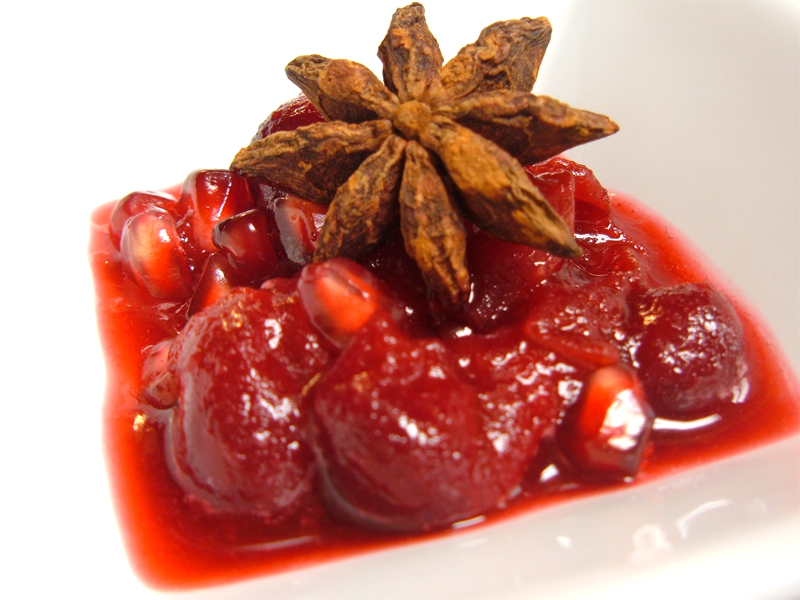
Cranberry sauce is entirely a matter of personal preference. Savory, sweet, tart, spiced, pureed or whole berries—in whatever direction you decide to take cranberry sauce, the ultimate test is the cranberry itself. Cranberries have a potent flavor which (for the most part) shuns subtlety for bold taste. This year’s edition is a remix of last year’s popular cranberry pomegranate sauce. Tyler and I love the little "pop" of the pomegranate seeds in your mouth as they burst.
Ingredients
1 (12 oz) bag fresh cranberries
½ cup pomegranate juice
Orange syrup, to taste (leftover from making candied orange zest)
1 whole star anise
½ stick ceylon cinnamon
½ cup port
2 Tbsp grand marnier
½ tsp orange zest
salt, to taste
black pepper, to taste
210 grams pomegranate seeds (the content of one pomegranate)
- Combine the first five ingredients in a saucepan over medium heat. Stir occasionally. Remove from heat when the cranberries begin to pop and the sauce just begins to thicken.
- Immediately add the port, grand marnier, orange zest, salt, and black pepper. Stir.
- When the sauce cools to room temperature, add the pomegranate seeds.
Crab Bisque
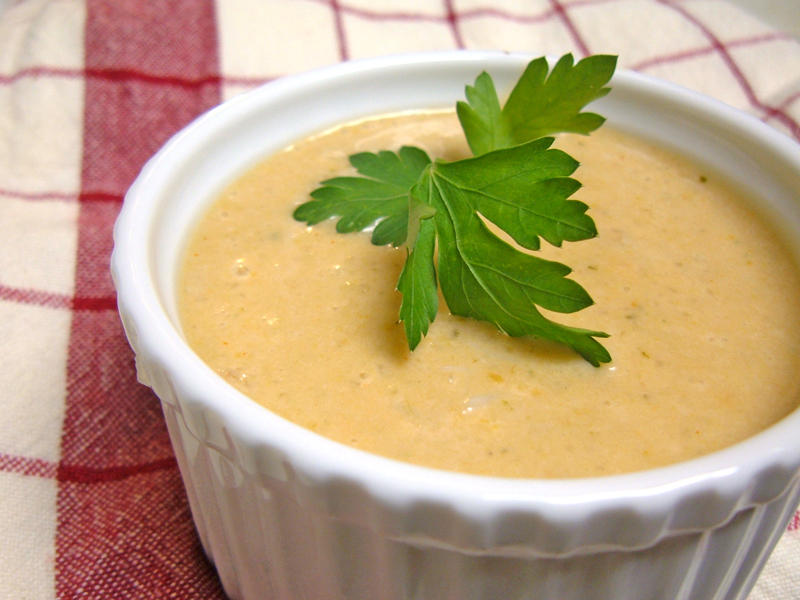
In my "finalized" Thanksgiving menu, my first appetizer was listed as lobster bisque. However, I could not source the primary ingredient for the bisque—uncooked lobster shells, minus the meat. The only other alternatives were to (a) buy whole lobster at $25.00/lb or (b) adapt to restrictions of the purse and buy whole local crab at $6.00/lb. You can see what I chose. Let me say this much right now: this bisque doesn’t taste like anyone’s second choice. Heh.
The recipe for this bisque was adapted from Wolfgang Puck’s Dungeness Crab Bisque. The modifications were practical in most cases. With two live, wriggling (well, not wriggling) Santa Barbara crabs, I was hardly going to kill them first and then quarter the bodies. Simply steam the crabs with fish stock, about 6 cups per pair of crab. Have your husband or expert crab cracker separate the shell from the meat—preferably over a bowl, to catch any more liquid. Combine the residual liquid with the stock, then filter the stock with a sieve. Sweat the mirepoix with the large sections of crab shell. You can also place smaller shell fragments in a cheesecloth sachet during the boil and remove the sachet, along with the large shell pieces, before stirring in the cream. (Be sure to strain the pureed soup as directed, or you may end up with bits of shell in your soup.) Add the hand-picked crab meat back to the soup before serving.
Three other slight adjustments were made to the recipe:
- The addition of Arborio rice, approximately 47 grams per pair of crab. Italian risotto rice, like Arborio or Carnaroli, are excellent thickeners for this soup. Add the rice with the fish stock. Also, the 15 minute gentle boil in the original recipe should be slightly altered to account for the rice; bring the mixture to a boil, but lower the temperature slightly and simmer for 20-25 minutes, covered.
- Substitute leeks for shallots. I didn't have enough shallots, so I reached for leeks and just a little extra garlic. NB: a whole carrot is roughly 100 grams. For a 100 grams of carrot, you'll want about 100 grams of celery and 200 grams of leeks.
- No fresh tomato. I didn't have the right variety of tomato on-hand for this dish, so I added a smidge of extra lemon juice for acidity.
Fish stock is liquid ambrosia of the sea. I highly encourage you to prepare your own stock for this recipe; no substitute will do. You will be well rewarded for your efforts, padawan.
Turkey Brine
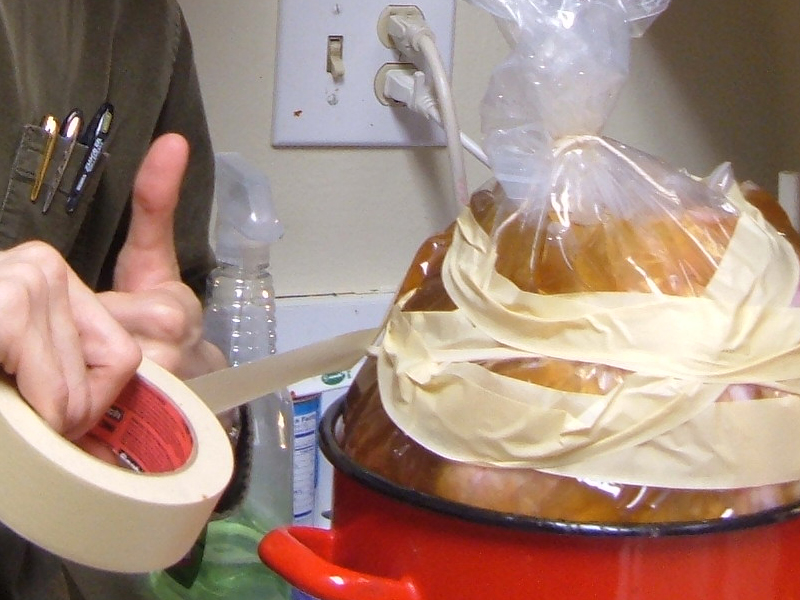
The picture itself is half tragedy, half comedy. To soak the bird, we stuffed our 20 lb monster into an industrial sized brining bag, placed the whole contraption in a stockpot, poured on the liquid, and wrapped the top with masking tape, forcing the brine to cover most of the poultry. It’s not what I would call an elegant solution, but it’s functional. If you prefer not to place the bird in your fridge, you could also use an ice-filled cooler or bucket, but frankly I’m not sold on the food-safety aspect of that solution.
The brining solution—a heavily seasoned vegetable stock—is just about as elaborate as a brining solution can be. But, I figured, if I’m going to try the method, I may as well go all out.
Ingredients
1.5 gallons water
2 lbs 13.7 oz leeks, finely diced
1 lb 9 oz celery root, finely diced
1 lb 8 oz parsnip, finely diced
26 grams ginger, finely diced
1 large sachet (thyme, parsley stems, bay leaves, garlic)
14.8 oz salt
219 grams brown sugar
All spice berries
Szechuan peppercorns
Combine all ingredients in a stockpot. Bring to a simmer and cook for 30-40 minutes. Cool the solution to room temperature. Remove your turkey from its original bag, set aside the giblets, wash the turkey exterior and cavity in cool water, and begin brining. You should allow the turkey to brine for a minimum of eight hours and a maximum of twelve hours. See the 2009 Thanksgiving Roundup for further information on Thanksgiving-day turkey preparations.