
The 2009 Thanksgiving Roundup
November 27, 2009 by The swedish meatballThanksgiving Day procedures are at the bottom of this article, below the extra photos.
First Appetizer: Crab Bisque
Made from homemade fish-crustacean stock and fresh, live crabs.
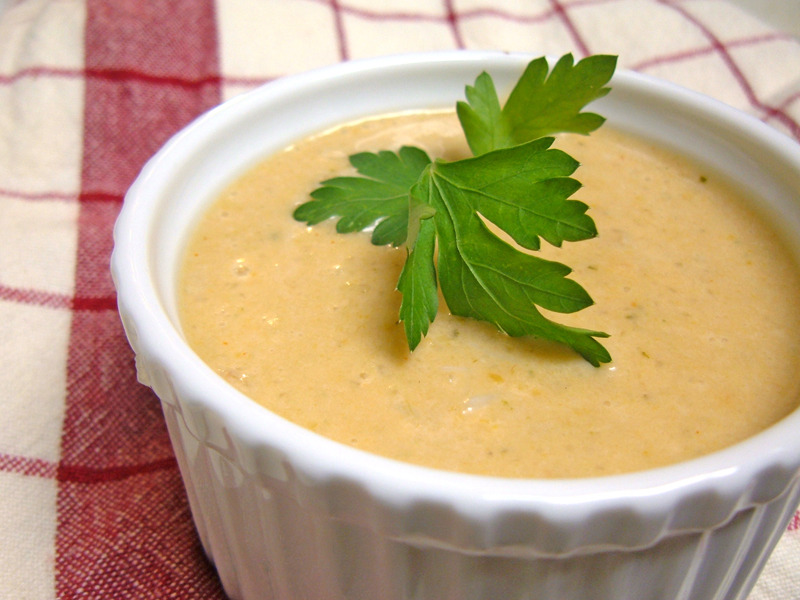
The Good: Cream highlights and embellishes the natural sweet "ambrosia" of the excellent fish-crustacean stock. Each taste has just enough crab meat and finishes with the gentle heat of a little cayenne pepper.
The Bad: The bisque needs that bit of fresh tomato for acidity. A hint of fennel would not go amiss either.
Commentary: As the first appetizer, the bisque was an excellent start—warm and soothing during a cool Fall morning. But I would love to see an extra something from this dish. Perhaps I could add a colorful emulsion or puree swirled gently into the surface for presentation and contrasting flavor; cranberry might even function well here, if sweetened appropriately and applied in very small quantities. Food for future thought.
Tip: Do not forget to strain after pureeing! Also, break up the crab meat by hand before combining with the bisque.
Second Appetizer: Apple, Arugula and Frisee Salad with Cider Vinaigrette
With crumbled bacon, thin slices of radish, toasted almonds, and curls of manchego cheese.
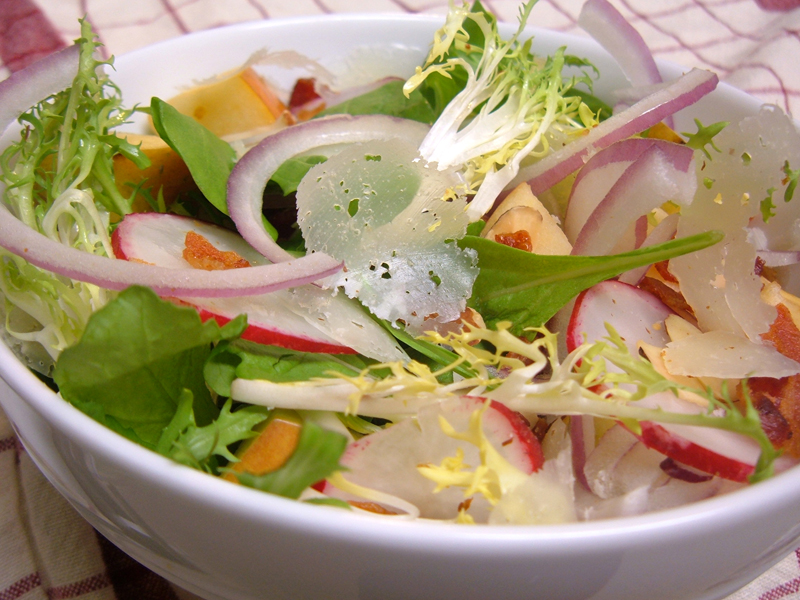
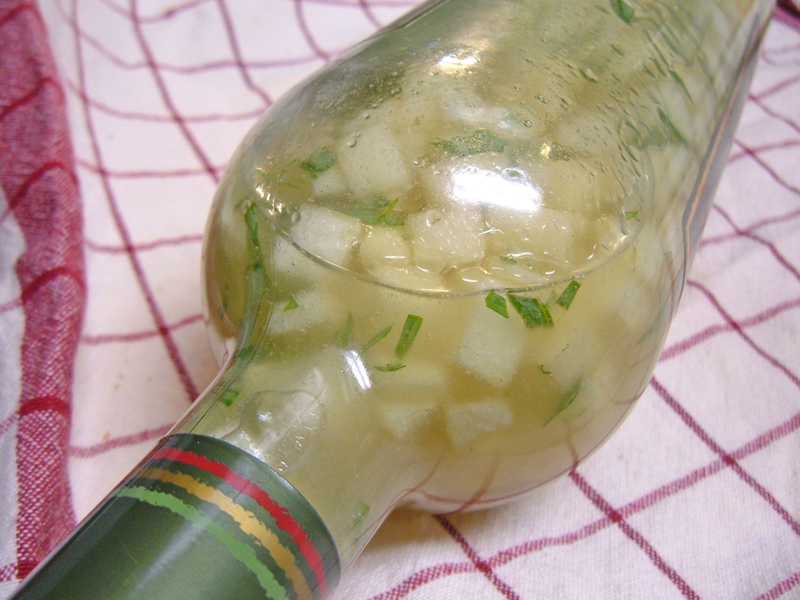
The Good: A beautiful meld of bitter, peppery, sweet, and savory flavors. After the creamy bisque, the salad was a crisp and refreshing break—slightly acidic due to the vinaigrette, but not overpoweringly so. The granny smith brunoise was a nice aesthetic touch on the vinaigrette, especially when presented in the wine bottle.
The Bad: The apple and red onion should be in smaller bites, say a ½ inch dice or smaller. Onion slivers as shown in the picture are too strong.
Commentary: Of all the dishes presented today, this one was perhaps the most "complete" in every category of evaluation. I developed the dish concept and recipe myself (with no input), each individual ingredient could be tasted alone or enjoyed as a part of the whole, nothing was extraneous, the colors present in the salad were lively, the presentation of the vinaigrette was excellent, and the role of the salad in the menu was bang-on. I was quite pleased, which is unusual as this is "only a salad." Tyler was also quite vocal in his appreciation.
Third Appetizer: Homemade Seasame Honey-Glazed Crackers with Red D’Anjou Pears and St. Andre’s Triple Cream Cheese
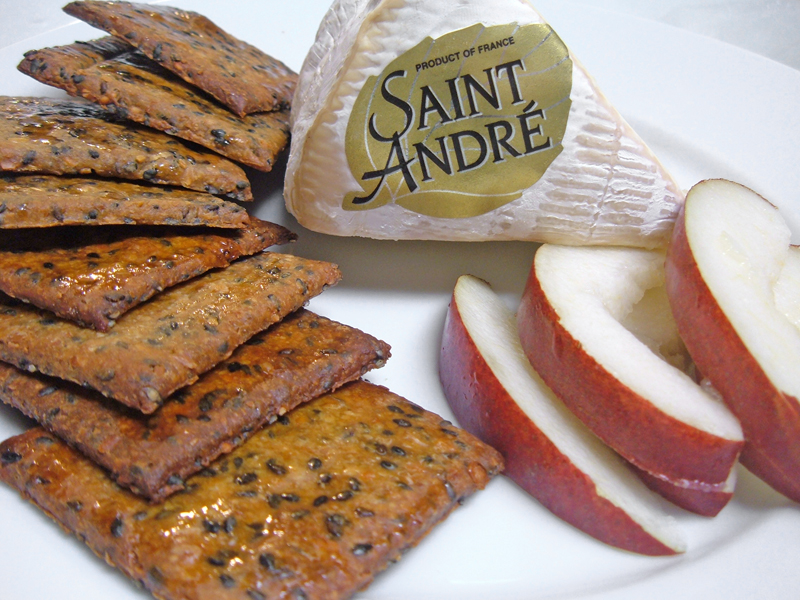
The Good: The distinct note of onion in the cheese complemented the crackers quite well, actually. The honey glaze (on the crackers) was an excellent choice, as were the black sesame seeds. The pears were juicy, ripe, and sweet.
The Bad: The pears couldn’t really be enjoyed in the same bite as the cheese and crackers; the flavors just don’t function well together. The pears served more as palate cleansers. Also, as discussed in a previous article, the toothiness of the crackers was a bit much—a consequence of not rolling the crackers thin enough.
Commentary: It had its flaws, but this appetizer was actually quite addicting. Placement in the menu order was also excellent.
Fourth Appetizer: Mini Oeufs en Meurette
Quail eggs, bacon, and seared chanterelle mushrooms over a thin slice of homemade pain de campagne (country bread). Served over a rich brown sauce finished with reduced red wine.
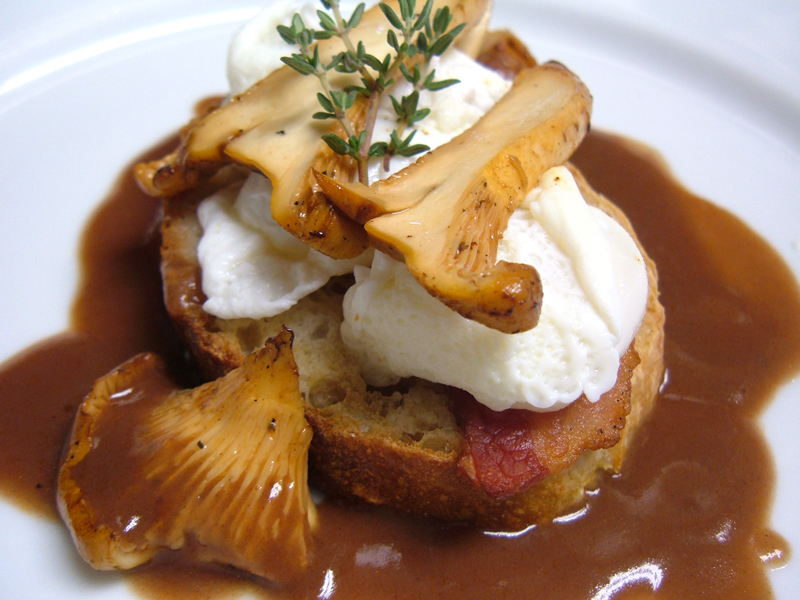
The Good: A decadent, rich, earthy appetizer, but not too "heavy." The quail eggs were bite-size, which meant you could get a complete egg (yolk and white) in one mouthful, rather than just yolk or egg white alone. The chanterelle mushrooms were the perfect texture and doneness. The toasty, nutty contribution of the brown roux was delicious. Also, lovely presentation.
The Bad: The sauce is really tasty, but it isn’t perfect in terms of thickness and flavor. Several factors could be the cause: quality of the brown stock (a tad too much tomato paste, I think), the ratio of beef glace to wine, and the use of blond roux as a thickener instead of arrowroot, which I didn’t have on hand. Practice, practice, practice.
Commentary: my new favorite eats. Tyler and I had some disagreement on where this dish out to be placed in the menu. He suggested switching the oeufs with the bisque because he would rather eat oeufs for breakfast. (We ate our first appetizer at about 6:30 a.m. and had the Thanksgiving meal at 3:30 p.m.) I, on the other hand, perceive oeufs as a brunch item. They ought to be served nearer to the main roast because rich beef brown sauces are too intense for the early meal. Hot soups, however, are very appropriate—especially when the day is cold. The subject is a matter of personal preference, I assume.
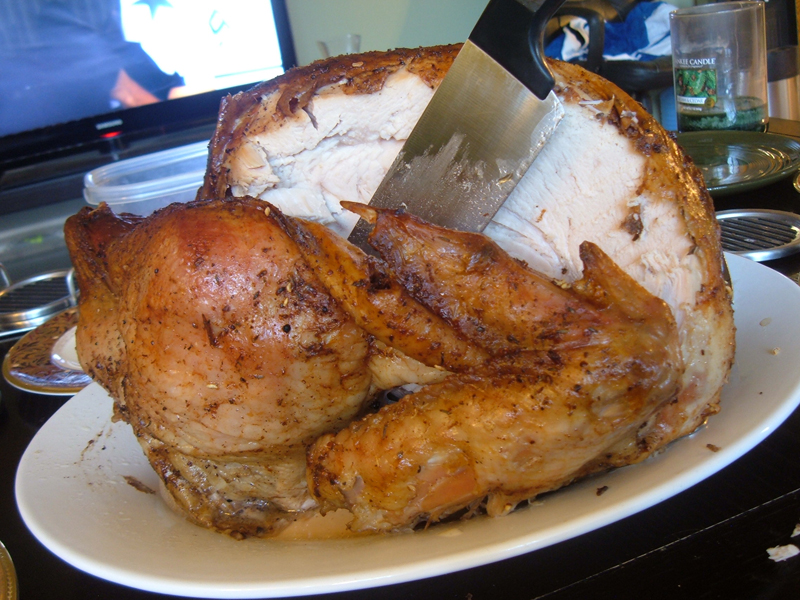
Main: Moist Roast Turkey, Brined and Rubbed with Aromatic Spices and Herbs
Accompanied by fresh pan gravy seasoned with black peppercorns, all spice, and a hint of nutmeg.
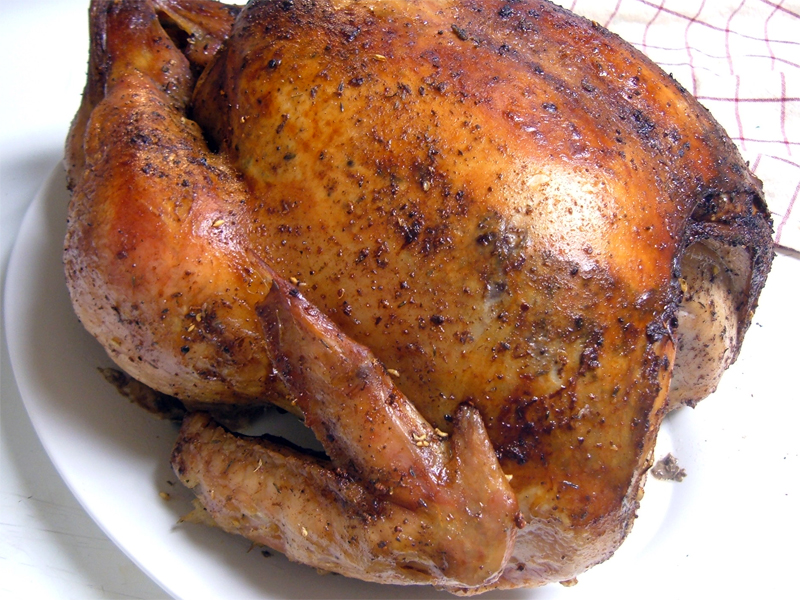
The Good: Moist almost everywhere, and the skin browned nicely.
The Bad: Tyler, the man in charge of washing the bird, trimmed too much of the neck fat, exposing a small bit of the breast. And as we all know, exposing the breast to dry heat during a long roast is bad. Fortunately, the damage was very minimal. Most of the breast and all other parts of the turkey were tender and juicy.
The pan gravy wasn’t bad, but neither was it impressive or original. Next year, let’s develop a more creative sauce.
Commentary: Tyler and I were split on the issue of brining. He claimed to notice a subtle difference in flavor, which he attributed to the brining solution. Personally, I think the spice-herb rub is more potent than the brine; I couldn’t really taste the influence of the vegetable stock or the allspice berries in the interior meat of the turkey. Neither of us noticed an improvement in texture or tenderness. Our roast turkeys are perfectly juicy without brining, thank you.
Tip: Cover the wingtips with aluminum foil immediately. Place the turkey in the oven, uncovered. Allow the turkey to brown, and just before the turkey is finished browning, cover the whole roast with aluminum foil and finish cooking the turkey. Baste the bird every two hours or so.
Side: Cranberry Pomegranate Sauce
Spiced with freshly ground ceylon cinnamon and a hint of star anise.
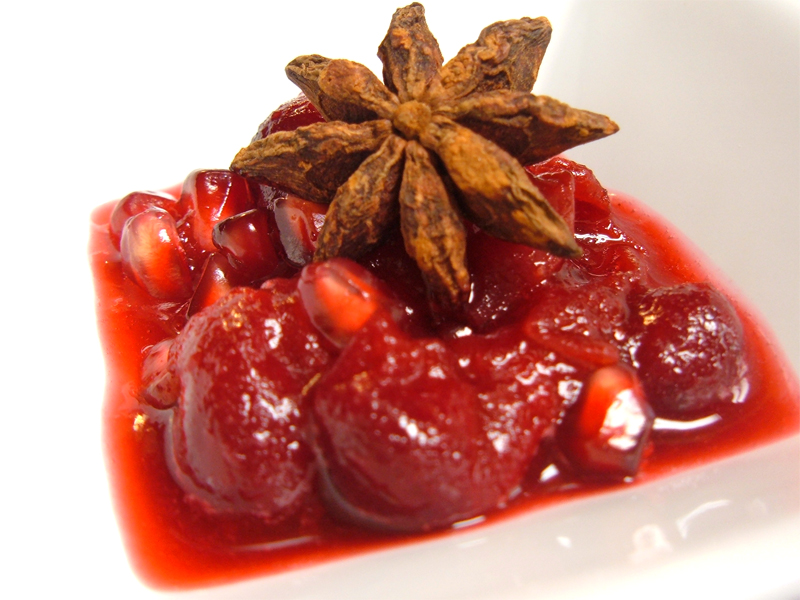
The Good: Interesting co-mingling of ingredients. The port and the grand marnier melded well with the fruit, but still lent distinct flavors to the sauce.
The Bad: The cranberries should be pureed before adding the pomegranate seeds. (The "pop" of the seeds would be more noticeable, and the taste of the sauce would be more uniform in every bite. Whole cooked cranberries still remain noticeably less sweet on the interior.) Also, I would prefer to see a more prominent contribution from the spices; perhaps the cinnamon and the star anise should be simmered in the juices for 15-20 minutes prior to adding the cranberries.
Commentary: Usually Tyler prefers very tart flavors over sugary ones, so I was quite surprised when he recommended adding more sweetener to the sauce. Next year, I would suggest having husbot in the kitchen to tailor the balance of sweet and tart to his liking.
Side: Lamb Sausage Stuffing with Figs, Pine Nuts, and Roasted Chestnuts
Two kinds of homemade bread cubed, toasted, and moistened with lamb juices and beef stock. Seasoned with crushed juniper berries, cumin, rosemary, garlic, and black peppercorns. Lamb sausage provided by the wonderful European Deluxe Sausage Kitchen in Beverly Hills.
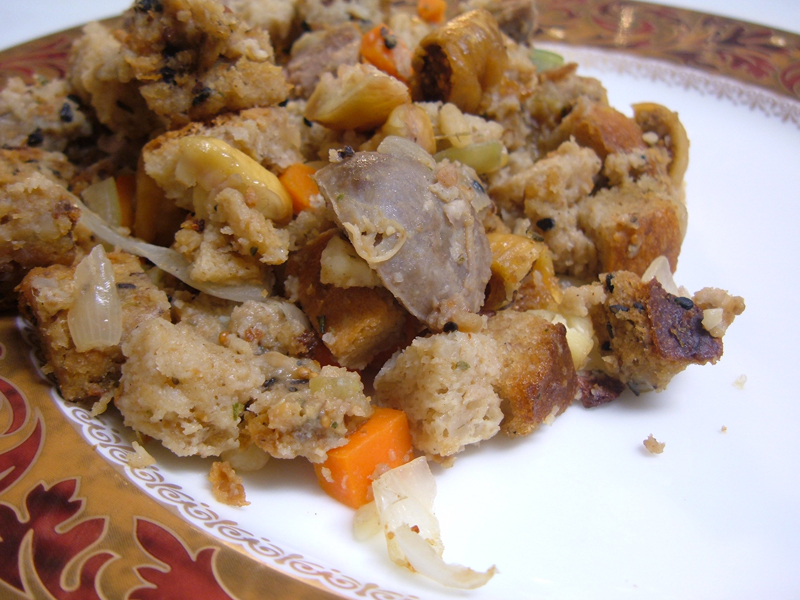
The Good: The sausage was excellent; the intense, substantive flavor of the lamb was very pleasing, especially after the light, melt-in-your-mouth roast turkey. The surprise bites of dried fig kept the lamb in check, however, preventing the meat from becoming overwhelming. The ratio of sausage to bread was perfect. The bread was wholesome and moist, but didn’t turn to mush. The herbs and spices were tasty and appropriate.
The Bad: Add more pine nuts. The stuffing wasn’t quite as cohesive as I would like. Consider cubing the bread with slight irregularity—that is, cut some pieces larger and others smaller. It goes against the culinary instinct to uniformly chop your ingredients, I know, but I think this method might help the stuffing stick together.
Commentary: I was somewhat torn on the issue of the roasted chestnuts. I did notice a slight contribution, but the flavor was so mild and subtle that one might remove them and not taste a noticeable difference in the dish.
Side: Traditional Green Beans with Cream of Mushroom
The cream of mushroom is made from scratch, with a hint of smoked ham and sharp white cheddar cheese.
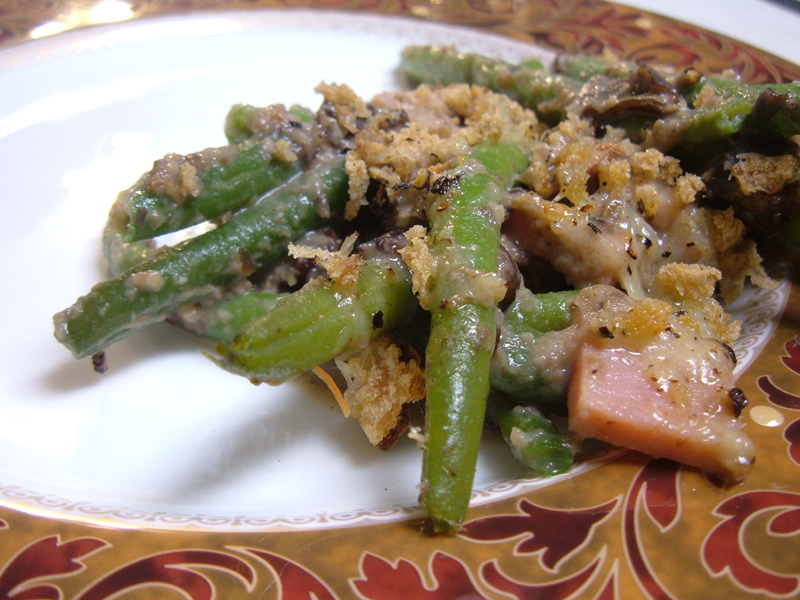
The Good: The flavors were amazing. The homemade cream of mushroom soup and the vegetable ham stock outperformed even my expectations. The green beans were perfectly cooked. The proportion of green beans to cream of mushroom was perfect.
The Bad: There were a lot of minor things about this dish that bothered me. The green beans should be cut into halves or thirds. The ham should be in cubes, rather than slices. Also, I would not recommend assembling this dish as a large casserole unless you expect all of the casserole to be eaten on the same day. The topping will turn soggy in the fridge, due to condensation, and the green beans will tend to release liquid. If you must use a casserole dish, only include as much material as you expect to be eaten in a given day. Furthermore, you may wish to increase the amount of breadcrumbs; toss a small amount with the cheese, layer on top of the casserole, and cover with additional breadcrumbs.
Commentary: Simply delicious. I did not include the fried leeks in the topping (as planned), but I may do so next year.
Tip: Blanche the green beans for 5-7 minutes. Then, if using a casserole dish, bake in the oven for 30 minutes; uncover the dish in the last 10 to 15 minutes to crisp the top.
Side: Potato Rosemary Knots with Roasted Garlic
Made with a rustic mash of colorful fingerling potatoes.
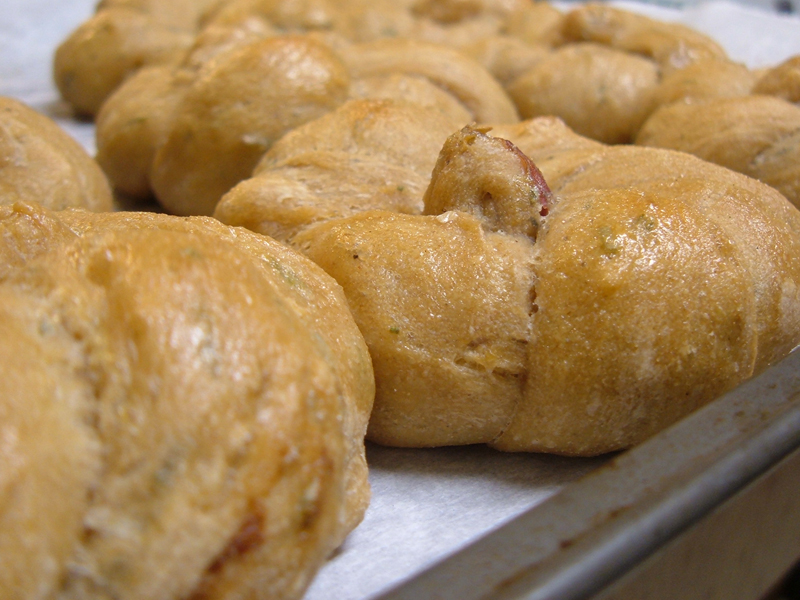
The Good: Addictive. Pleasantly textured with the roughly chopped rosemary and rustic mash of fingerling potatoes. Nice presentation. Easy to freeze and reheat. A great bread for anyone who loves roasted garlic. Great for Thanksgiving, in general.
The Bad: Not what I would call a complex bread of interesting, subtle flavors.
Commentary: Best served to the "meat and potatoes" type or at large gatherings.
Dessert (Option 1): Pumpkin Vanilla Ice Cream Cake with Candied Pecans
Sweetened with maple syrup and served with fresh whipped cream. Homemade graham crackers are served with this dessert on request ;)
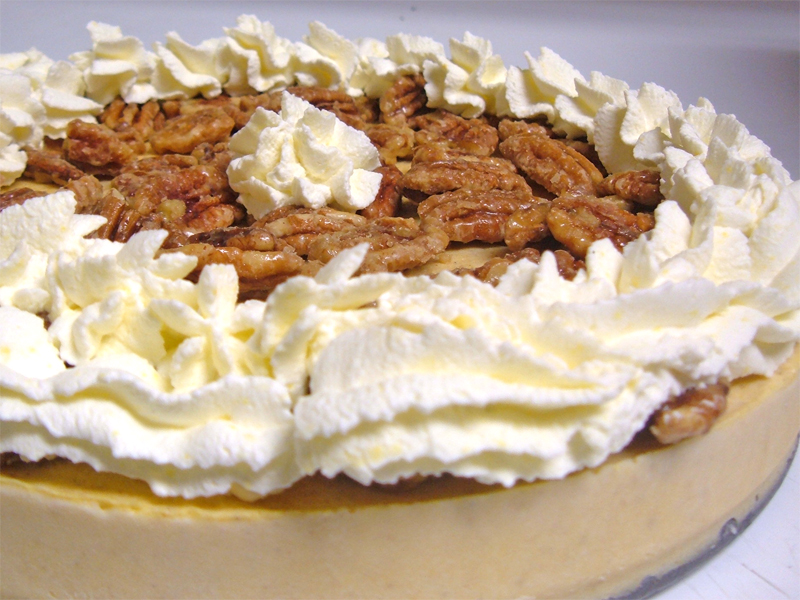
The Good: The flavor of the maple syrup was noticeable, but very pleasing. The candied pecans were a delightful addition, providing a contrasting texture (crunch) to the creamier ice cream and even lighter whipped cream. The whipped cream itself was excellent—sweet, airy, but not weepy, hinting vanilla, and balanced with the other ingredients.
The Bad: The addition of the pumpkin, which is primarily a carbohydrate, introduced a certain level of starchiness to the ice cream. It was only slightly noticeable, so I’m not terribly concerned, but the situation is obviously not optimal.
Commentary: Tyler and I had a slight disagreement about the role of vanilla in this dish. He thought it was too strong; the next day, as he sampled the dessert again, he recanted somewhat and said only that the flavor of pumpkin and pumpkin spices ought to be stronger. Personally, I feel that the vanilla plays an important role in this cake, melding together the maple syrup and the pumpkin into a cohesive taste. Would decreasing the amount of vanilla destroy the coherency? Also, there’s the issue of texture. Introducing more pumpkin would likely cause the cake to be less creamy and more grainy. The matter requires further thought, but perhaps the starchiness of the pumpkin could be better ameliorated by the introduction of something even thicker and creamier than ice cream—say, mascarpone? After addressing that issue, the amount of vanilla could be easily controlled.
Dessert (Option 2): Homemade Dark Chocolate Bark with Candied Orange Zest, Pistachios, and Dried Cranberries
Alongside a small serving of Grand Marnier.
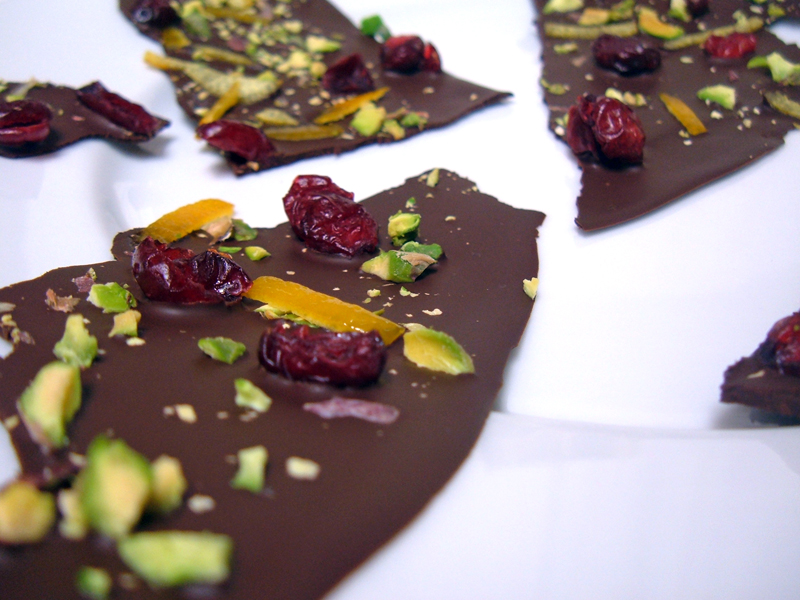
The Good: The bark was very thin, thereby balancing the chocolate with the craisins, zest, and pistachios. The complementary flavors of sweet, bitter, and tart were delicious. The bark was also very simple to make, break apart, and serve.
The Bad: The zest could be in slightly smaller pieces.
Commentary: Overall quite pleasing. Tyler’s only other complaint was, "going to kill me from eating too much of it." You can never hear too many comments like that :)
Photo Extras
My fabulous, loving husband who surprised me this Thanksgiving with tickets to Handel’s Messiah at the Walt Disney Concert Hall.

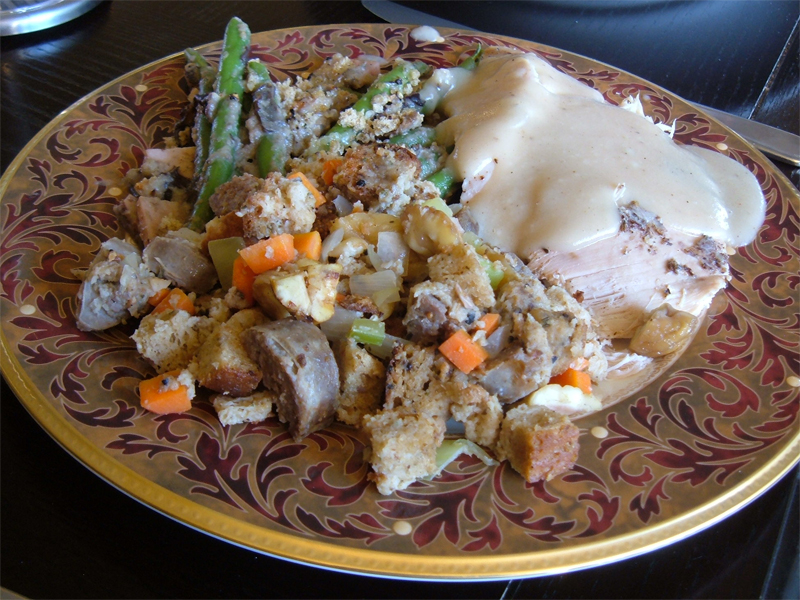
One fancy plate of hunky, messy thanksgiving. Not really plated with presentation in mind, so much as eating… like, now…
Apple, Arugula, and Frisee Salad Recipe
Serves: 2
Ingredients
Arugula
½ bunch frisee
½ fuji apple, diced
2 red radishes, thinly sliced
⅛ onion
3 strips bacon, cooked until crispy and crumbled
Almonds, slivered and toasted
Manchego cheese
Combine the first seven ingredients and lightly toss. Top with curls of manchego cheese. Serve with cider vinaigrette.
Oeufs en Meurette Recipe
Serves: 1-2
Ingredients
white vinegar
4 quail eggs
1 chantrelle mushroom, sliced
2 slices pain de campagne
1 clove of garlic
butter
1 slice of bacon, cooked until crispy
Brown sauce finished with red wine, to taste
thyme, for garnish
- Poach the quail eggs in a solution of water and one tablespoon of white vinegar. For runny yolks, one minute is sufficient. Remove and blot away excess water with a paper towel.
- Sear the mushrooms in a pan over high heat.
- Toast the bread until crusty. Immediately after removing from heat, cut open the clove of garlic and rub the exposed surface over both sides of the bread. Spread a smidge of butter on the top face of the bread.
- Assemble the dish. Lay down the slices of toast, and top each with a half slice of crispy bacon, two eggs, and seared mushrooms (in that order). Spoon warmed brown sauce over the top or around the edges. Garnish with thyme and serve.
Roast Turkey Recipe
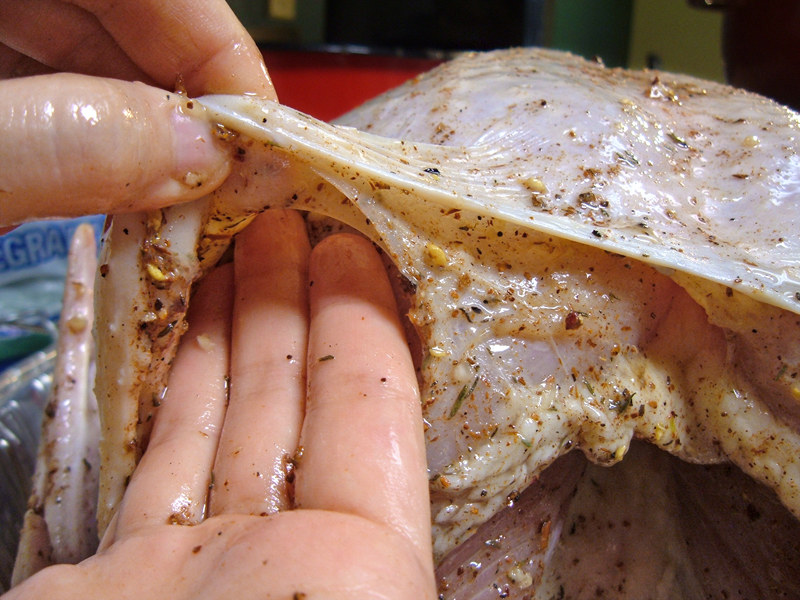
After brining the bird, rinse the external body and cavity. Pat dry. Prepare a rub of fat, spices, and herbs. This year, I used vegetable oil, all spice berries, grated ginger, star anise, garlic, szechuan peppercorns, french thyme, salt, and just a touch of ceylon cinnamon. Rub the exterior surface of the bird with this mixture; then reach under the skin and rub the exposed meat. Pour any excess into the cavity of the bird. Refrigerate the turkey, covered, for two hours.
Preheat the oven to 350°F. Remove the turkey from the refrigerator. Stuff the internal cavity with sage, thyme, leeks, half a fuji apple, and half a granny smith apple. Roast the turkey until the breast meat registers at 160°F (about 4 ½ to 5 hours); be sure to follow the tips I mentioned earlier in the roundup critique. Allow the bird to rest before carving.
Traditional Green Beans in Cream of Mushroom
Ingredients
3 lbs fresh green beans, snapped and cut into bite size pieces
5⅓ cups cream of mushroom soup, made from scratch with smoked ham-vegetable stock
12 ounces smoked ham, sliced
sharp white cheddar cheese
breadcrumbs, as needed
- Bring a large stockpot of water to a boil. Add the green beans and blanche for 5-7 minutes, or until the beans are slightly underdone. Then immediately transfer the hot green beans to a bucket of cool or ice cold water to stop the cooking process. When all of the green beans are sufficiently chilled, drain and shake off any excess water.
- Combine the green beans with the smoked ham and cream of mushroom soup. Season with additional salt and pepper if necessary. Spread into a casserole pan. Top with breadcrumbs and white cheddar cheese. Bake for 30 minutes, uncovering the dish during the last 10-15 minutes.
Lamb Sausage Stuffing Recipe
Ingredients
2 lbs 6.9 ounces multigrain hearth bread
1 lb 14.7 ounces power bread
4 lbs lamb sausage
3 cloves garlic
2 tsps whole juniper berries
1 tsp whole cumin
several sprigs of rosemary
305 grams carrots, finely diced
346 grams celery, finely diced
537 grams white onion, finely diced
salt
black pepper
0.82 lbs dried figs, cut into eighths
0.924 lbs shelled chestnuts, cut into eighths
2 oz pine nuts
white beef stock
¼ cup port
½ cup white wine
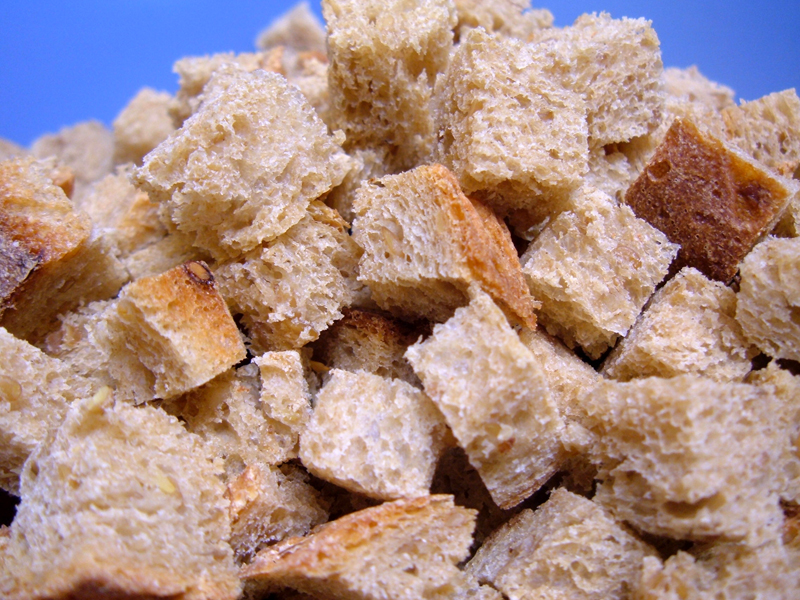
- Preheat the oven to 350°F. Cut off the darker crust portions of the multigrain hearth bread. Cube all bread to desired size. (In general, use a large cube for more rustic stuffing and a smaller one to obtain the more traditional texture.) Evenly space out a batch of bread cubes on a cookie sheet. Do not overcrowd. Bake until crispy and toasted, usually 9 minutes for multigrain and 11 minutes for power bread. Transfer the cubes to a place where they can cool without sweating.
- In a large wide pan, cook the lamb sausage. First, set the sausages in a pan over medium high heat and add water; the liquid should reach at least halfway up the sides of the sausage. Cover and steam the sausages. When the sausages are ready to brown, remove and reserve most of the water. Uncover the pan and allow the rest of the water to boil off. Then sear the sausage. Reserve excess fat from the pan. Set aside sausages and allow them to cool.
- Cut the sausage into half-rounds or quarter-rounds.
- Prepare the spice blend. In a spice grinder, combine garlic, juniper berries, cumin, and rosemary. Pulse until all ingredients are uniformly distributed and no large chunks remain.
- In a large wide pan, sweat the mirepoix with a little bit of the reserved fat from step two. Continue cooking until all ingredients are tender. Then add salt, pepper, and the spice blend from step three. Stir until thoroughly combined. Allow the ingredients to cook for one additional minute, then remove from heat.
- Transfer the mixture from the last step to an oversized bowl or pot. Toss with toasted bread cubes, sausage, chestnuts, pine nuts, and figs. Add all of the reserved cooking water from step one (about 2 cups), as well as the port and white wine. Mix again. If needed, add beef stock to further moisten the stuffing. NB: Added 1½ cups beef stock for our Thanksgiving stuffing.
- Preheat the oven to 350°F. Transfer a portion of the stuffing to a casserole pan and refrigerate the rest. Bake the casserole dish for 30 minutes, uncovered.