
Sesame Pork Tenderloin with an Apricot-Port Sauce
December 6, 2009 by The swedish meatball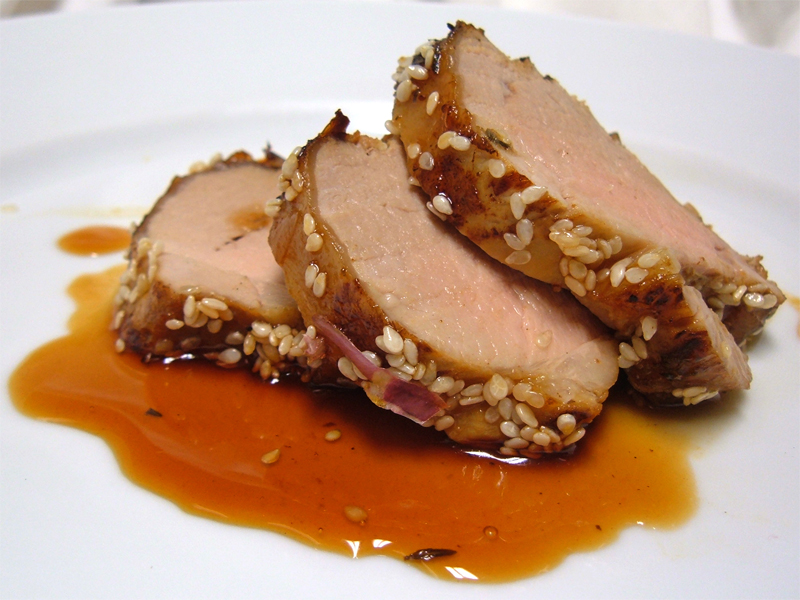
In recent weeks, Creative Comestibles has featured the heavier, classic sauces and stocks of French-influenced cuisine. But today I mutinied and embarked in a new—or should I say old?—culinary direction. So-called "modern" sauces are popular, mainly because they are considered lighter, healthier, and less preparation intensive. The apricot-port sauce featured here generally fits these characteristics; the sauce can be assembled in minutes, is devoid of fat, and in appropriate quantities accents (not overrides) the savory with an aspect of sweet. I pair the sauce with marinated pork cooked to juicy perfection and sliced into medallions. Pork pairs very well with apricot and, as a tenderloin, is just as easy to finish as the sauce itself.
I first formulated this recipe for a Christmas dinner in 2007. Back then, the sauce accompanied a large pork loin roast with an interior apple-onion stuffing. I happen to think this revision is superior in multiple aspects; the savory was brought to the fore with a tangy marinade and a sesame crust, while the sweeter sauce was put through a sieve, refining the texture. Also, the form factor of the smaller pork medallions increases the ratio of the exterior surface area to the interior volume. Hence, the sesame "crust" makes a proportionately larger contribution to every bite.
Ingredients
pork tenderloin, about 1.3 lbs
lemon juice
spicy brown mustard
molasses
french thyme, dried
black peppercorns, freshly ground
salt
Apricot-port sauce, recipe follows
white sesame seeds, toasted
- Combine the lemon juice, mustard, and molasses until the marinade attains a shade of color similar to peanut butter. Stir in thyme. Marinade the pork loin in this mixture for at least several hours.
- Preheat the oven to 400°F
- Remove the pork tenderloin from the refrigerator and season with salt and pepper. Allow the pork to warm from cold to cool. Pork closer to room temperature will sear better and cook more evenly in the oven.
- Place a wide oven-safe pan over very high heat and add a high-smoke point oil, like safflower or peanut oil. Quickly sear the pork tenderloin on all sides, lowering the heat should the oil start to smoke. Each side should brown in one minute or less.
- Immediately transfer the pan to the oven. Continue to cook until the internal temperature of the thickest part of the roast reaches 138°F. My tenderloin finished in about 14 minutes.
- Remove the tenderloin from the oven and allow to rest. Baste the pork with a thin layer of apricot-port sauce and then sprinkle the toasted sesame seeds over the top. Slice and serve over a small portion of extra sauce. In this case, a little sauce goes quite far, so do not douse the pork!
Ingredients for the Apricot-Port Sauce
75 grams shallots
2 cloves garlic
½ cup soy sauce
13 ounces apricot preserves*
¼ cup port
* Avoid jams or products sweetened with corn syrup. I prefer Bonne Maman Apricot Preserve, which uses only apricots, sugar, lemon juice, and pectin.
- Cook the shallots over medium high heat until semi-translucent. Add garlic (via a press) in the last minute of cooking.
- Stir in soy sauce, apricot preserves, and port. Simmer until the sauce obtains the desired consistency. Remember: the sauce will thicken slightly as it cools.
- Optional: pour the sauce through a fine sieve. Filtering will produce a very smooth texture.
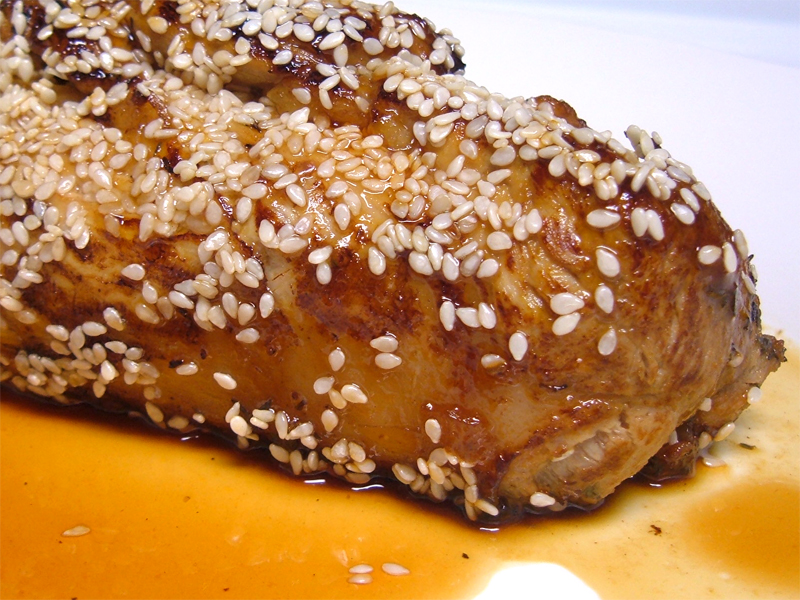
There is only one feature of this dish which I dislike (and intensely so): the sesame seeds do not behave at all. They will clump, they will fall off, they will stick to your fingers, they will frustrate your plating if you are not careful and quick, and in general they will become an even greater nuisance the longer you interact with them. You can see what I mean by inspecting the photographs. I’m not exactly sure how to address this issue, short covering the pork with a thick, very sticky, very sweet substance, which defeats the balance of flavors. So. For now, I will put up with this inconvenience because the recipe is entirely too good to simply throw out altogether.
Oh! And one more thing—consider using scallions instead of shallots, which is too subtle for the stronger flavors.