
Christmas 2009 in Review
December 25, 2009 by The swedish meatballComments are not yet completely assembled. Standby for future updates.
Conceptually, my idea for this menu was to introduce an international element while also reminding us of the comfort and flavors of holiday fare. I can’t speak much for the cohesiveness or overall "progression" of dishes here. The acidity peaks at the sauerbraten, and I flirt with varying levels or elements or sweetness in every menu item. But, Tyler and I thoroughly enjoyed ourselves!
Appetizer: Yellow Dal Puree
Spiced with fresh ginger, coriander, cumin, turmeric, garam masala, and a hint of cayenne. Served with wilted spinach and fresh chopped tomato.
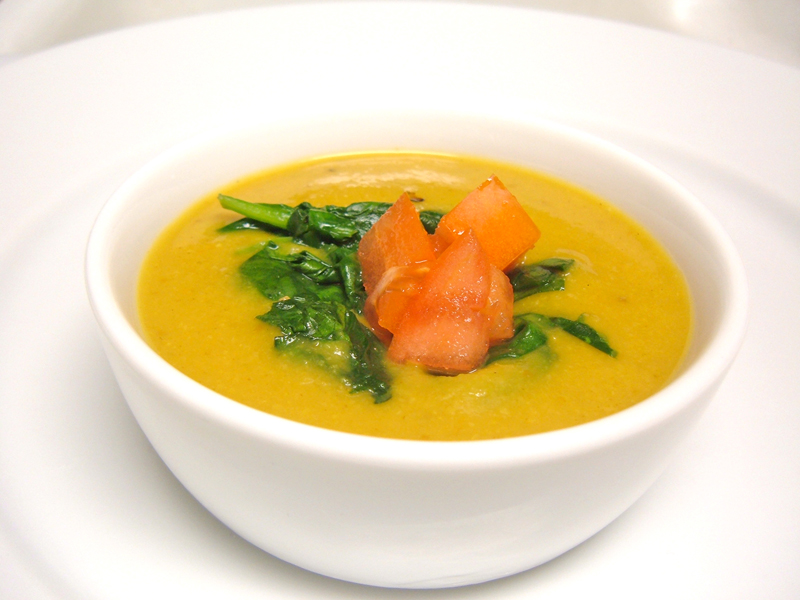
The Good: Warm and "sweet" spices are very pleasant for early Christmas day, and they reflect our preferences—neither too spicy, too creamy, or too sugary (as in butternut squash puree). The colors are vibrant and seasonally appropriate. The tomato relieves some of the heavy starchiness of the dish with a burst of bright fresh acidity, while the contrasting bitterness of the spinach brings out the sweeter notes in the spices. An excellent menu-starter.
The Bad: The puree was a nice change in texture, but I still prefer the non-pureed, more traditional form of this dish.
Comments: The consistency of dal puree is much like that of potato soup—completely logical as dal is pretty starchy.
Appetizer: Salmon-Potato Nests and a Light Salad
Tangerine perfumed baked salmon and sugar snap peas in a potato nest with a light miso sauce. Served with a side of napa cabbage salad with cucumber, carrot, black sesame seeds, and a very light sweet-soy vinaigrette.
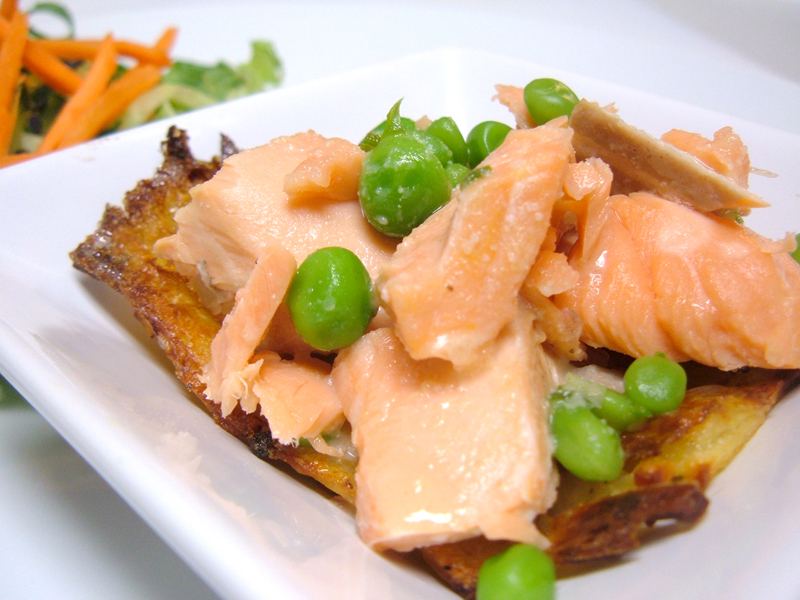
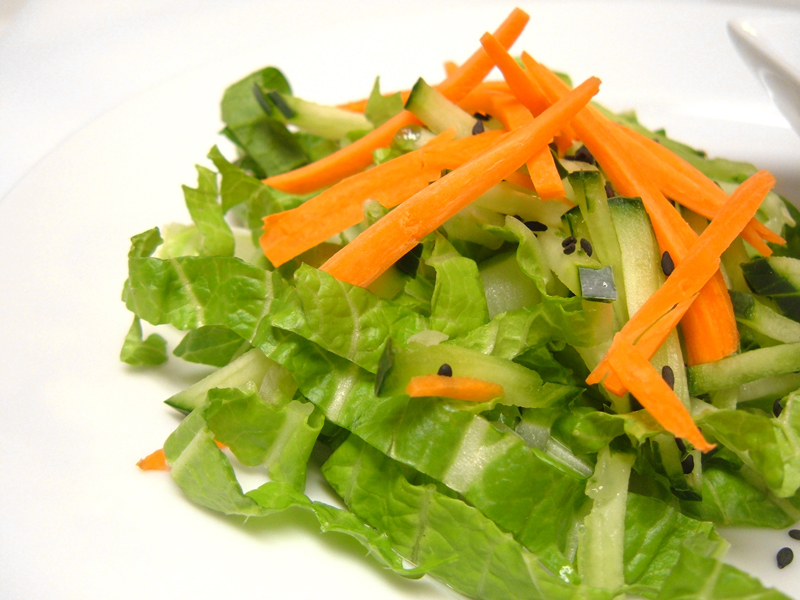
The Good: The contrasts and flavors in this dish are excellent. The potato is crispy, while the salmon is moist and flaky. The salmon-potato nests are warm, while the salad is cool and refreshing. The fattiness of the fish and the potatoes is balanced by the mild acidity of the salad’s vinaigrette. The addition of the sugar snaps provides a very pleasant burst of flavor and texture. Also, the miso sauce is a delicious complement for the salmon—sweet, salty, and full of tasty umami.
The Bad: The salmon-potato nests are a little difficult to eat; I eventually picked up the whole lot (using the potato nest as a kind of wrap) and munched away. The miso sauce was too thin for my liking. Also, the presentation and appearance could be improved rather a lot, especially the salmon which appears disorganized.
Comments: the soy "vinaigrette" has a highly un-traditional formula. Most classical vinaigrettes use a 1:3 ratio of vinegar to oil, with minor additions like mustard, herbs, shallots, etc. The ratio of vinegar to oil in this case is 1.000:1.714, resulting in a very light dressing (which is my intention). However, do not use an excessive amount of cucumbers when plating the dish; cucumbers may water down the salad and the dressing even further. Other flavors to consider in future renditions of the salmon: stronger tangerine or a little ginger. This plate clearly has quite a bit of potential, but requires further refinement.
Appetizer: Sauerbraten on a Stick
Rump roast marinated for three days, braised, and served with a golden raisin-gingersnap gravy. Plated with a ring of braised cabbage.
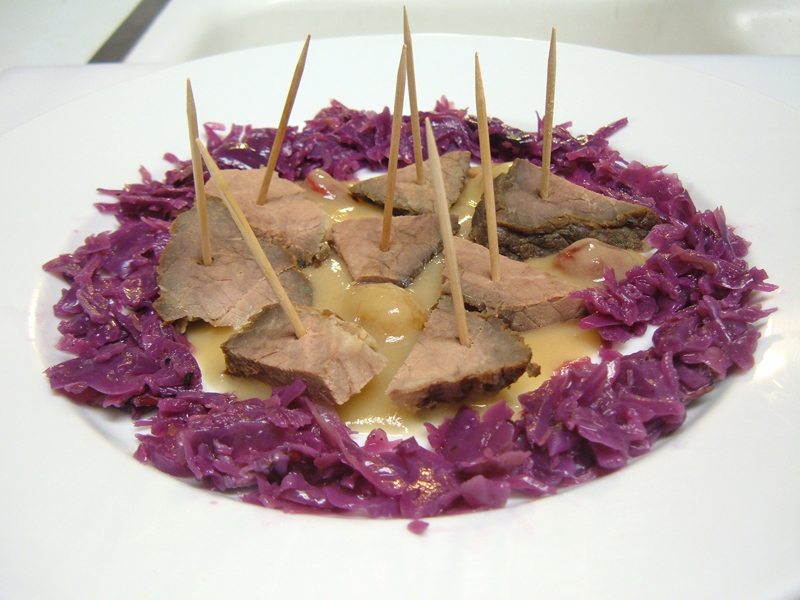
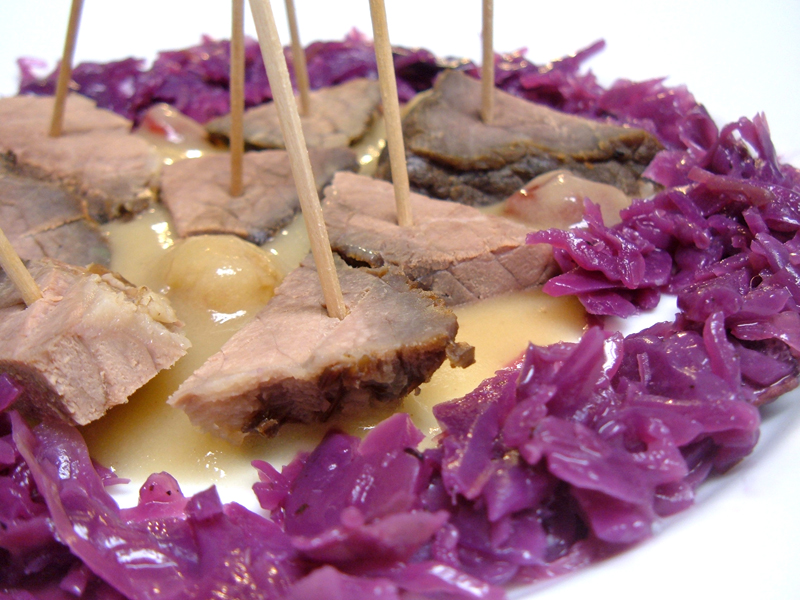
The Good: Both Tyler and I adore the sour-sweet flavors in here; even the raisins are fun and delicious. The presentation is visually enticing and practical. The gravy is bang-on (acidic, sweet, warm spices, and no lumps). The cabbage braising-juices are properly thickened, clinging to the cabbage and thus providing flavor and moisture.
The Bad: The meat is slightly dry from its 24 hour stay in the refrigerator. Furthermore, while everything tastes wonderful, as a single dish, it is somewhat uninteresting; there is insufficient contrast or variation in flavor or texture.
Comments: In the future, braise the sauerbraten on Christmas morning.
Appetizer: Squash Endive Boats with Candied-Mustard Walnuts
Kabocha squash cubed, tossed with herbs and spices, and roasted. Served in an endive boat with bacon and apple. The boats are served with a small handful of sweet and mildly hot walnuts.
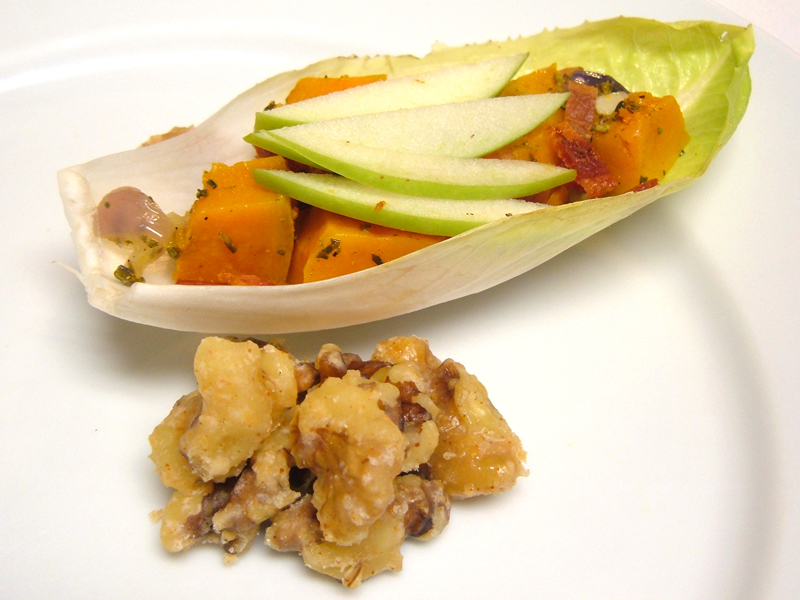
The Good: Textures are varied and interesting; the roasted squash mixture is fork tender, while the apple, bacon, and endive are crisp. The nuts are excellent by themselves.
The Bad: While all the ingredients are complementary, the flavors in the endive boats just didn’t blend well. Also, I assumed the acidity in both the nuts and the boat would provide a "bridge" between these two plate elements; the bridge, however, was too weak. Fail! I’m not completely disappointed, but it’s a close thing. Also, do NOT chop the apple as shown in the picture above; a small dice is better, even if it doesn’t cure the flaws in this dish.
Comments: Apples, bacon, squash, sage—until now, I took for granted how well these ingredients worked together! Ugh.
Appetizer: Wild Mushroom Ravioli with Brown Butter Sage Sauce
A variety of mushrooms cooked with cognac and dried herbs, blended with parmigiano reggiano and ricotta, and encased in fresh transitional pasta. The golden brown butter sage sauce uses a rich turkey stock made after Thanksgiving.
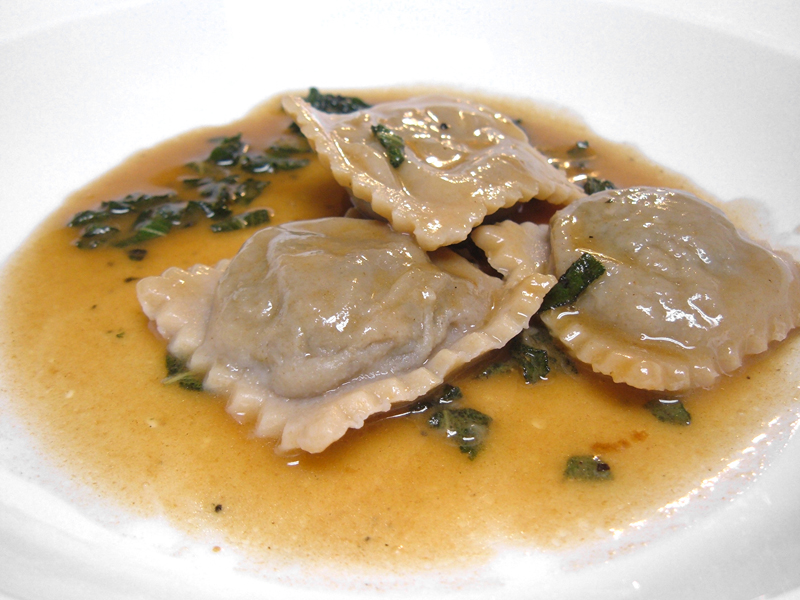
The Good: O let me count the ways! The flavors in this dish are simply exquisite. The ingredients are subtle and can be easily overridden with more potent contributions (e.g. garlic); but if treated gently, the earthy mushrooms and herbs de provence are a heavenly combination with the slightly nutty, sage-perfumed butter sauce.
The Bad: The ravioli isn’t perfect; the outer rim of the ravioli has just a bit too much toothiness while the "bubble" containing the filling is too thin. I can’t quite tell how this occurred. The problem could be any combination of three things: (a) our rolling method (b) moisture content in the filling (c) not cooking the ravioli long enough.
Main: Roast Saddle of Lamb
Tender, moist lamb is served with an au jus, mild-but-rich goat cheese millet spoon bread, cardamom-ginger spiced creamed carrot, and a small touch of wilted spinach topped with freshly grated nutmeg.
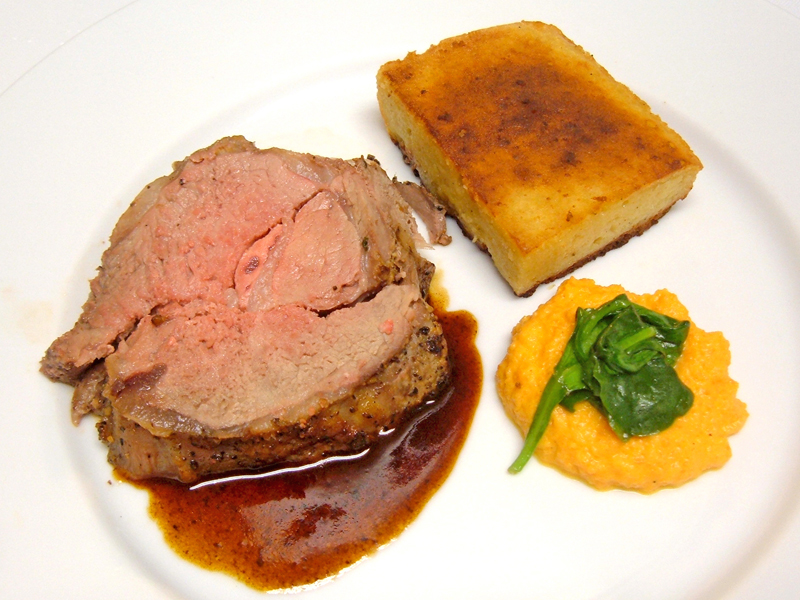
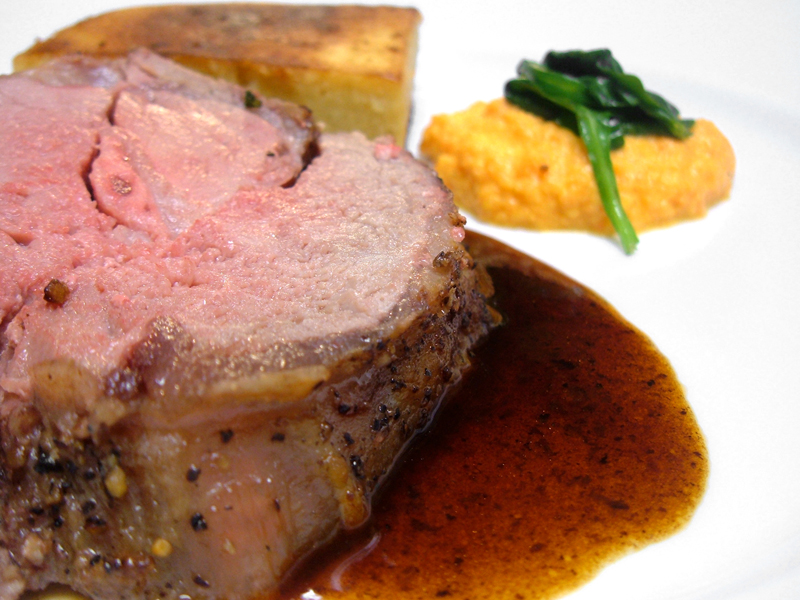
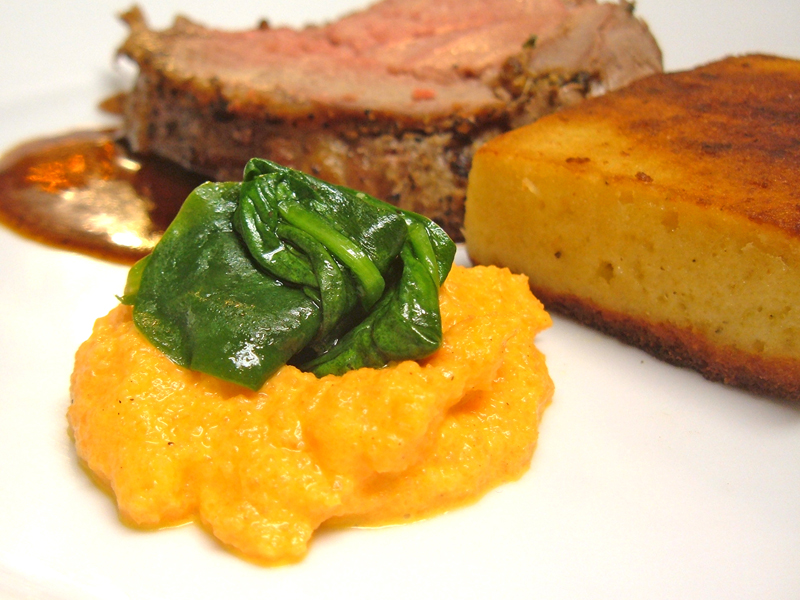
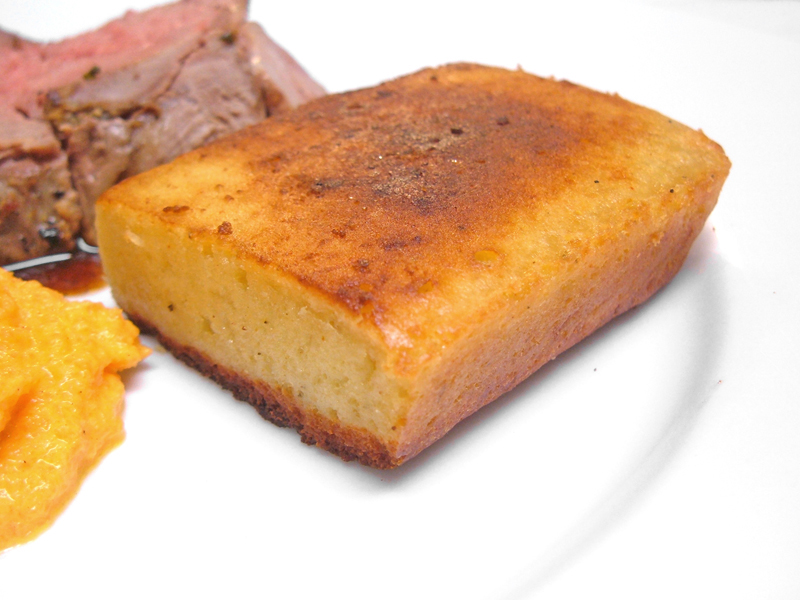
The Good: I’m immensely pleased with the outcome of the main. The lamb is done perfectly. The seared millet spoon bread is a wonderful complement, thanks to the oregano, the texture of the millet flour and the flavor of the goat cheese. (Soledad Goats is awesome. They let me taste a few of their products before I hit on this particular hard cheese, which has a very mild start but a rich, almost smoky finish.) The creamed carrot puree is an amusing touch and, combined with the spinach, isn’t at all awkward or standout-ish. Altogether, every element comes together beautifully and the whole is very gratifying. Even the colors are varied and interesting.
The Bad: The presentation isn’t perfect. The lamb could be sliced more evenly, the millet bread might be sliced circular rather than square, and I’m not really certain the plate arrangement is designed for maximum aesthetic appeal. Also, the au jus could also be run through a cheesecloth to produce a clearer mixture.
Comments: I called a few butchers before settling on South Shores Meat Shop in San Pedro. They were the only store to have a saddle in stock, without any pre-ordering, on the Tuesday before Christmas. When I explained that I wanted it boneless and rolled like a roast, the butcher behind the counter seemed a little confused. He eventually delivered on the order, but cut straight through the saddle for deboning and simply tied the two sides together—a workable solution, but (from what I understand) not the proper way to prepare a saddle for roasting. Oh well. Altogether, the whole thing turned out smashingly well anyway.
Bread: Transitional Rustic Olive Bread
Adapted from a Peter Reinhart formula.
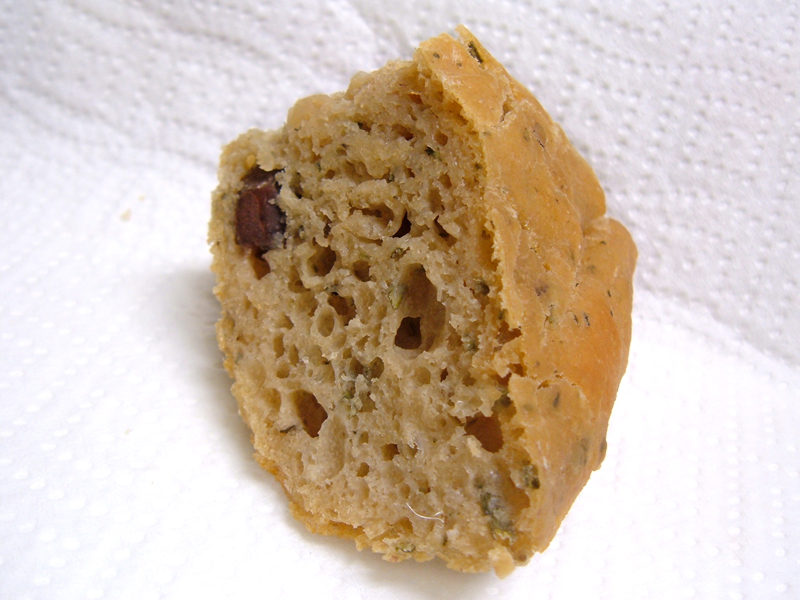
The Good: Very easy to put together, tender on the inside, a little crusty on the outside, and the right proportion of herbs and chopped olives.
The Bad: The bread needs less olive oil (or none) and a few more minutes in the oven. Also, I would actually prefer a drier formula, if possible.
Comments: I baked three batches of olive bread; this one, the third, is arguably the most satisfactory. (The first one was fairly good too.) On a practical note, it was much easier to mix in the olives when the final dough formula was wet and sticky; drier doughs resisted the incorporation of the olives and required more manipulation. Also, the dutch oven performed admirably well as a bread baking vessel; I wish it was a tad smaller (less wide), but that’s a minor bitching point.
Dessert: Pear Compote with Mascarpone Cream
Pear brandy crepe shells (transitional) cradle a pear compote sweetened with honey and complemented by a lavender-honey mascarpone.
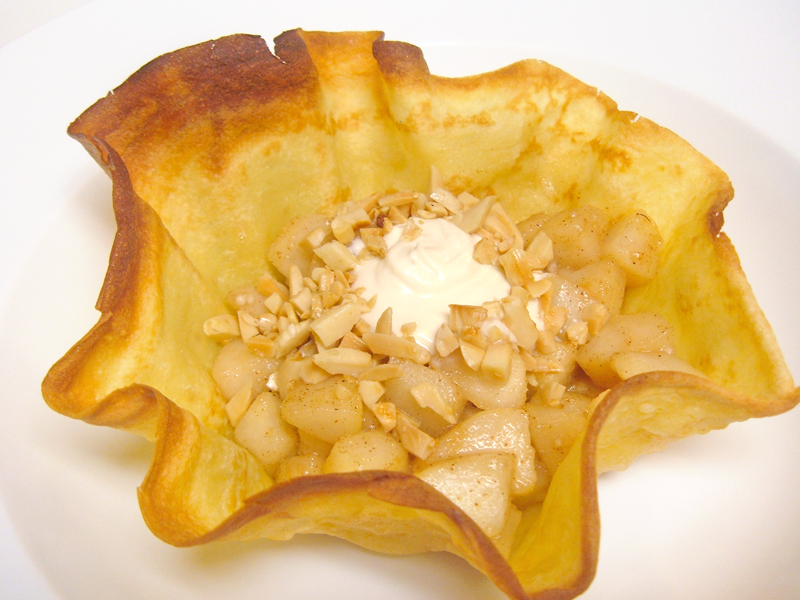
The Good: The crepe shells are simply adorable; after baking in the oven and being filled with compote, the edges remain crispy while the bottom softens just enough to return to a normal crepe texture. The flavors of honey, lavender, and toasted blanched almond complement one another extremely well. The lemon juice in the compote brightens the sweetness of the dish.
The Bad: The dessert is not difficult to eat per se, but neither is it easy or natural. Also, the mascarpone needs to be stabilized (probably with gelatin). And finally, the colors in the dish are somewhat unvarying, diminishing the presentation.
Comments: Unfortunately, while the pear brandy did perfume the fresh crepes, there was no detectable scent after the shells were baked.