
Partially Whole-Grain Spinach Fettuccine
February 2, 2010 by Tyler McHenryGuest article by Tyler
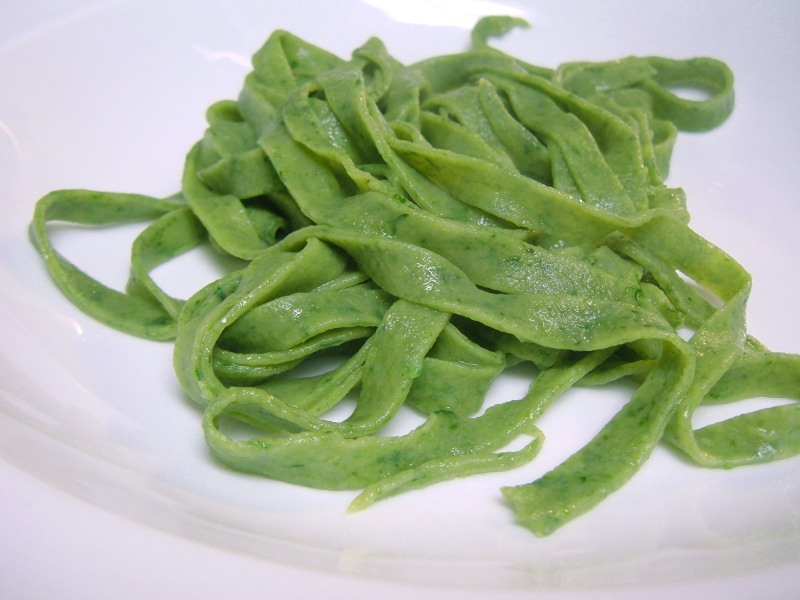
As part of the preparation for our Christmas feast, we obtained an Imperia Pasta Machine from Williams-Sonoma, initially for the construction of wild mushroom ravioli. We had a really pleasant experience making the ravioli. Despite being a manually operated machine, once you get the hang of how to work it, it’s quick, simple, and produces fantastic pasta as advertised.
We decided to give it a second workout, and this time to actually use the pasta cutting attachment, by making some spinach fettuccine. And, as usual with anything we make involving flour, we made an attempt to get some whole grains in there as well. Without further ado:
Ingredients
75g cooked spinach
100g all-purpose flour
80g hard white whole wheat flour
1 egg
10g extra virgin olive oil (optional)
Directions
- Wash the spinach and wilt it over medium-low heat in a skillet. The 75g weight is post-cooking, but shouldn't differ too much from pre-cooked weight
- Using a spice grinder or food processor, finely puree the cooked spinach, and then let cool to room temperature (you can speed this up by putting the spinach puree in the refrigerator or freezer, but don't let it freeze).
- Using about a half cup of all-purpose flour and a half cup of whole wheat flour, form a small mound of flour on a clean, flat counter top or large cutting board. Then, clear a hole in the center so it looks like a little flour volcano.
- Crack the egg into the center of the "flour volcano". The flour should keep the egg trapped within the hole. If using the optional olive oil, add this along with the egg.
- Top the flour "volcano with egg lava" with your room temperature spinach puree. This is why it is important to cool the spinach to room temperature. If the spinach were still hot, it would cook the egg, leading to bad results.
- Thoroughly mix together all of flour, egg, and spinach. It is strongly suggested to use a pastry scraper to assist with this, since doing it with your hands will quickly become a gigantic mess. I suppose you could also use a stand mixer for this, if you're lazy like that.
- Once the ingredients are all combined, add additional flour, alternating between the two types of flour, until you achieve a dough consistency similar to malleable play-doh.
- Wrap the finished dough in cellophane, and let it sit for five minutes.
- Working in batches, use your pasta machine to roll the dough out into thin sheets, then apply flour liberally to both sides of the sheets, and cut into fettuccine strips. We ended up distributing the dough into four batches. I suppose you could do this by hand without a pasta machine, if you're masochistic.
- Hang the fettuccine noodles on a rack to dry for at least ten to fifteen minutes, or until completely dry if not cooking immediately. If cooking immediately, the noodles will only need about three minutes in briskly boiling salted water before they are ready to eat.
This recipe makes about four servings worth of noodles.
Note that while the ingredients list gives precise measurements for flour, the directions never call for measuring these out. We used the subjective method described in the directions, and then measured how much flour we had removed from our flour bags afterwards. It is pure chance that these numbers turned out to be so round and nice-looking. Ideally, we would have preferred 90g of each type of flour, but such is estimating.
We also tried the noodles with and without the olive oil, and we both preferred the version without the olive oil. We both agreed that the noodles without the olive oil retained a nicer al dente texture when cooked. However, the olive oil is listed above since the batch in which we measured the flour used olive oil, and if omitting the olive oil, less flour would be required.
I would recommend consuming the pasta immediately whenever possible, since one of the wonderful things about it is its lively, fresh taste. It also holds a strong, pleasant flavor of spinach, while maintaining the structure and texture you would expect from fettuccine noodles. Not really much bad to say about this dish at all. Spinach fettuccine, or simply “spinach noodles” as I called them, were one of my absolute favorite things to eat as a kid, so it’s great to be able to have, on demand, home-made fresh spinach noodles that taste better than anything out of a box.
Serving suggestion: Spinach fettuccine with grilled chicken and roasted red peppers in pesto sauce.
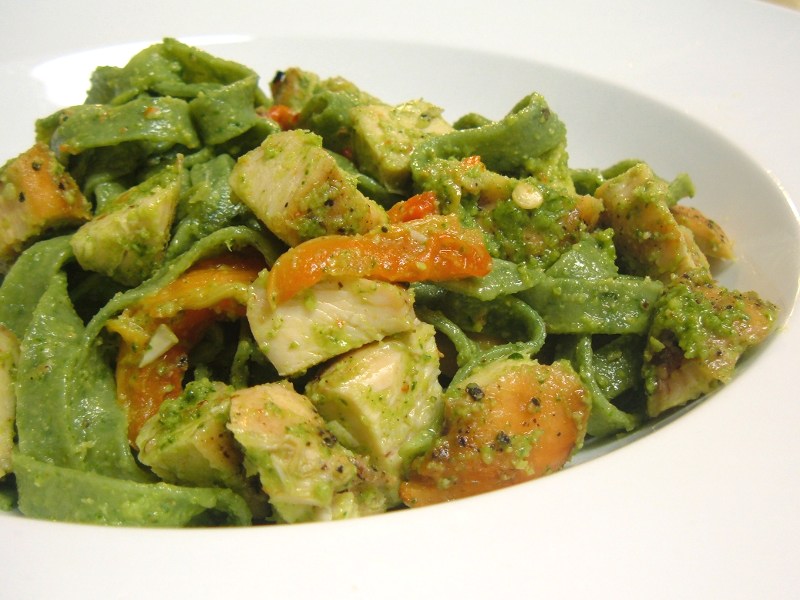
Unfortunately, there will be no recipe posted for this specific complete dish, since we whipped it up quickly in a rather ad hoc fashion and didn’t measure the ingredients.
Personally, I would have preferred a slightly drier dough; this batch turned out a bit too wet. The texture of the dough should tell you when it's ready. The final dough should be firm, not sticky, and pliable enough to hold different shapes. As Tyler mentioned: like play doh. Do not forget the cellophane in Step 8. Otherwise, a properly prepared dough will crack and crumble when the moisture on the surface of the dough evaporates.