
Spring and Fava Beans
April 29, 2010 by The swedish meatball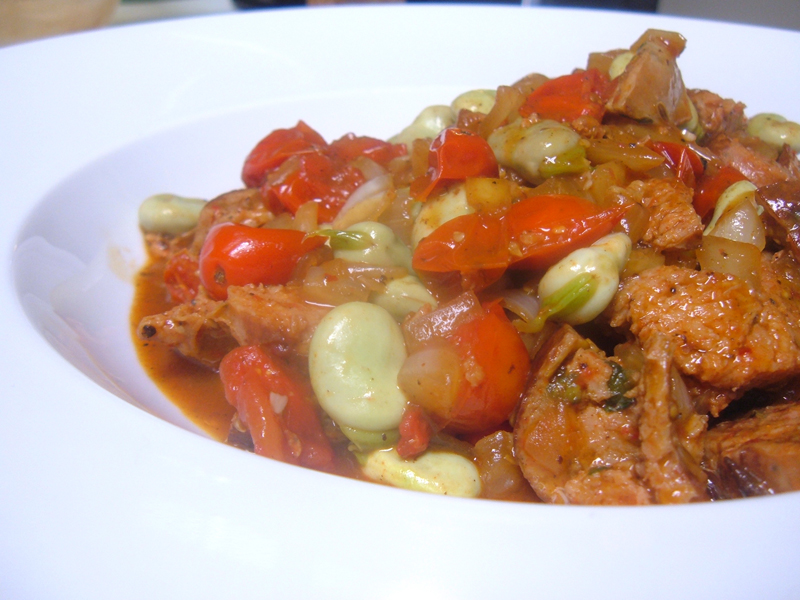
With the arrival of Spring, farmer markets throughout Los Angeles are experiencing a revival of crop. The end of winter was very tedious; the herbs were dour looking, and many of our favorite stalls downsized their inventory. In the last month or two, however, there’s been an abrupt shift in momentum. Strawberries, fava beans, carrots, asparagus, artichokes (particularly the baby artichokes), and cucumbers are now available in abundance. The strawberries are hit-or-miss, so you always need to sample before buying. But the other produce is fairly consistent, especially a new favorite of mine: fava beans.
Fava beans are sold fresh in broad green pods approximately 6-10 inches long. Once stripping the beans from the pod (very simple), the bean itself is actually composed of an outer layer and an inner one. Persnickety fellows will steam the whole bean and then strip the outer layer, which is a little bitter. For the dish that I’m going to discuss today, the additional labor is unnecessary. If I were making a fava bean spread for small slices of toasted baguette, then I might trouble myself with isolating the interior of the bean.
Today’s fava bean recipe is a bastardization of a Portuguese dish called Favas Guisadas, which is originally made with chouriço. I’ve adapted the recipe to include fresh, on-hand ingredients:
Yield: 785 grams
Serving Size: 250 grams
Nutrition Data. Calories: 268. Total Fat: 12 g. Saturated Fat: 3 g. Carbohydrates: 14 g. Protein: 25 g.
Ingredients
2 tsps olive oil
350 grams chicken sausage*
150 grams diced Maui onion, about half a large bulb
salt and pepper to taste
2 cloves of garlic
150 grams fava beans**
247 grams grape tomatoes, halved
¼ tsp sweet paprika
1 tsp arrowroot powder
* I used Sprouts Farmers Market’s chicken sausages: one California Caliente, and one Spicy Italian.
** Approximately 425 grams of the green pods will yield this quantity.
- Preheat a cast iron skillet (with a lip at least 2-3 inches high) on medium low. Note: on my ghastly electric stove, the setting for this is approximately 4 out of 10. If possible, use an enameled cast iron skillet with its own top; the enamel will allow you to observe the color and consistency of the "sauce" more easily. You can also use a dutch oven if you prefer.
- When the skillet is hot, add the olive oil to the pan. Then cook the raw sausage, resting on one side for several minutes before turning. The sausage should be thoroughly browned. Remove the sausage from the pan and slice into chunks.
- Once the sausage is out of the pan, immediately add the onion. Season with salt and pepper. After 30 seconds, push the cloves of garlic through a press. Stir. Do not clean the skillet or turn off the heat between Step 2 and Step 3!
- The onion should shrink slightly and turn a brown-reddish color. Once you observe these characteristics and the garlic smells aromatic (approximately 1-2 minutes), add the fava beans, tomatoes, paprika, and sliced sausage. Mix the contents briefly. Cover the pan and allow the contents to simmer for 5 minutes.
- Remove the lid of the pan and turn off the heat. In a small bowl, combine the arrowroot with a few tablespoons of lukewarm water. Mash with the flat side of a spoon until the resulting milky white liquid is homogeneous. Then add the mixture to the skillet and stir quickly. (The sauce should noticeably thicken.) Immediately plate the contents, as the cast iron will remain hot even if removed from the stove.
The flavors here are simple, but very adaptable. You could add chicken stock and develop the dish into a soup, or you could stir fry the produce contents with herbs for a lighter, more crisp variation. I happen to prefer this rendition, as I enjoy developing the leftover sausage bits into an easy sauce. Green bell peppers might make a tasty addition in future experimentation.