Posts Tagged ‘Main Course’
October 26, 2009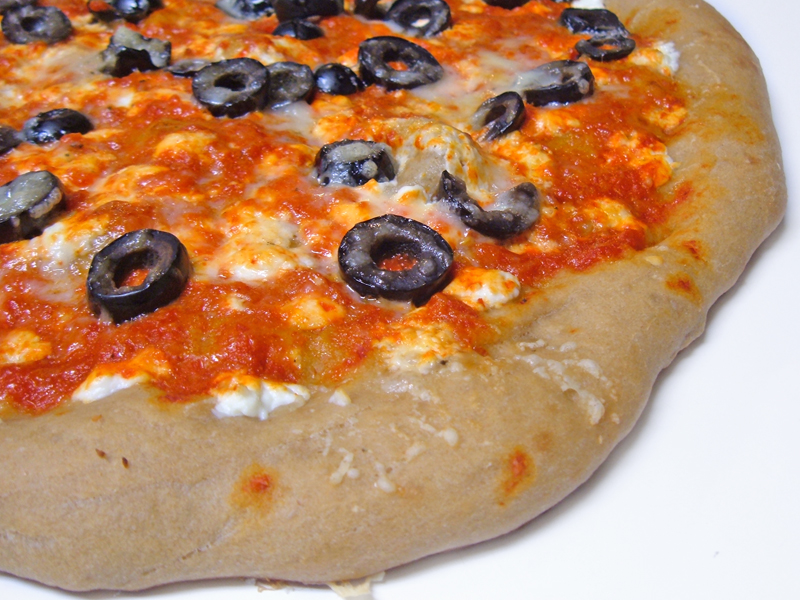
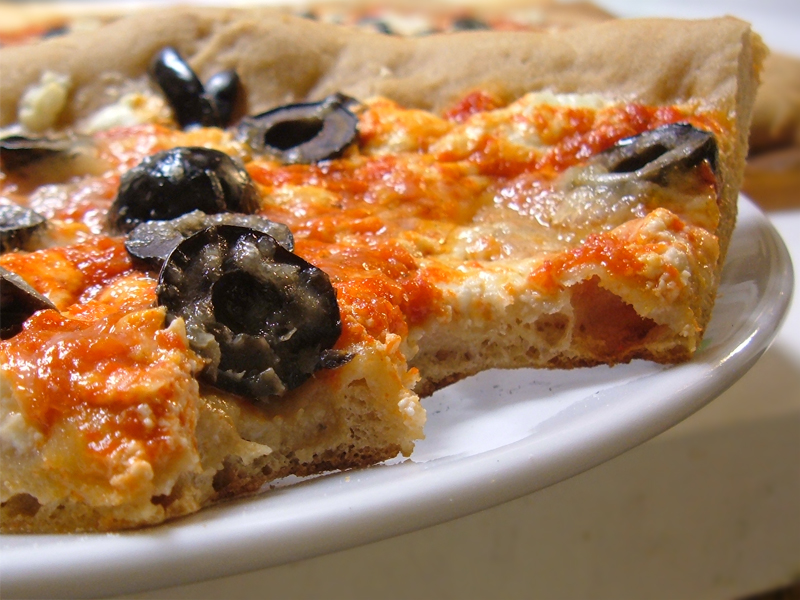
Having obtained a fabulous baking stone from Fibrament in August, I’ve subjected the stone to a rigorous baking schedule—boules, batards, and sandwich loaves at least twice a week. I was quite pleased with the performance, but as of last weekend the final test had yet to be performed: pizza. Years prior, I’d experimented with several hand-made whole wheat pizza crusts on cheap sheet metal; the results were o.k., but nothing worth preserving in the annals of Jenn kitchen-history. However, this time ‘round I was armed not only with the proper equipment, but also a baker’s formula from Peter Reinhart. The stage set, Fall arrived just in time to crank my oven up to 525°F.
Continue reading »
Tags: black olives, cheese, goat cheese, hard white whole wheat flour, instant yeast, Manchego cheese, paprika, Peter Reinhart, piquillo peppers, pizza
Posted in 100% Whole Grain, Baking, Main Course
| No Comments »
October 26, 2009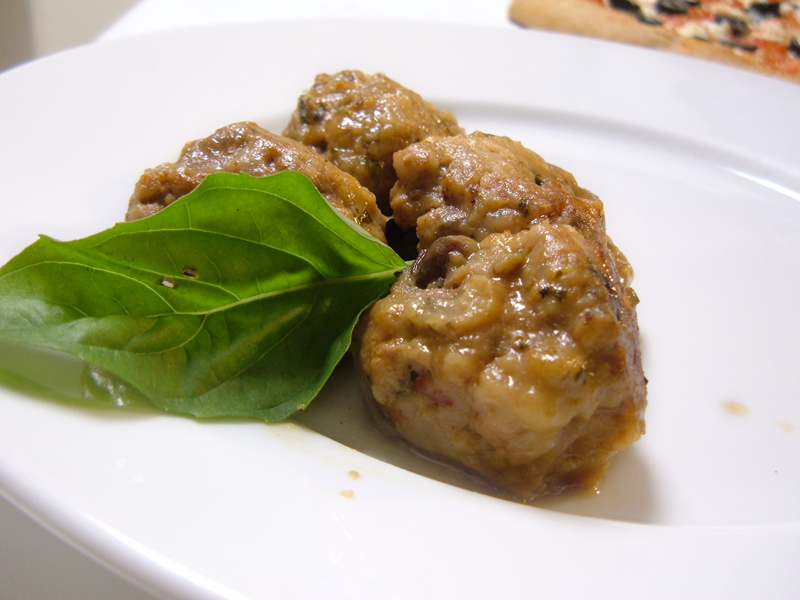
The theme this week was Spanish cuisine and flavors. (More on why in the next article.) I needed an all-meat dish to accompany the other main, so I bumbled around on the internet until I ran across "albondigas"—or meatballs. The snafu: the online recipes were all over the map. Many of the meatballs were basted in a tomato sauce, but some were in wine-vegetable broths. Beef, pork, veal, bacon, and chicken were all candidates for the actual meat content. One of them called for Parmesan cheese, and that’s where I just drew the line. Parmesan cheese? As in the Parmigiano Reggiano of Italy?! Why would Spain, with all its lovely and wonderful cheeses, use Parmesan in what is considered a classic dish of Spain? I dove for the nearest bookstore. Save me from the hordes of sameness! I was not going to be conned into some American rendition of spaghetti and meatballs (minus the spaghetti), no matter what the internet said.
Continue reading »
Tags: almonds, mushrooms, pancetta, paprika, pork, portobello mushrooms, saffron, sherry, Spanish, veal, wine
Posted in Appetizer, Main Course
| No Comments »
October 22, 2009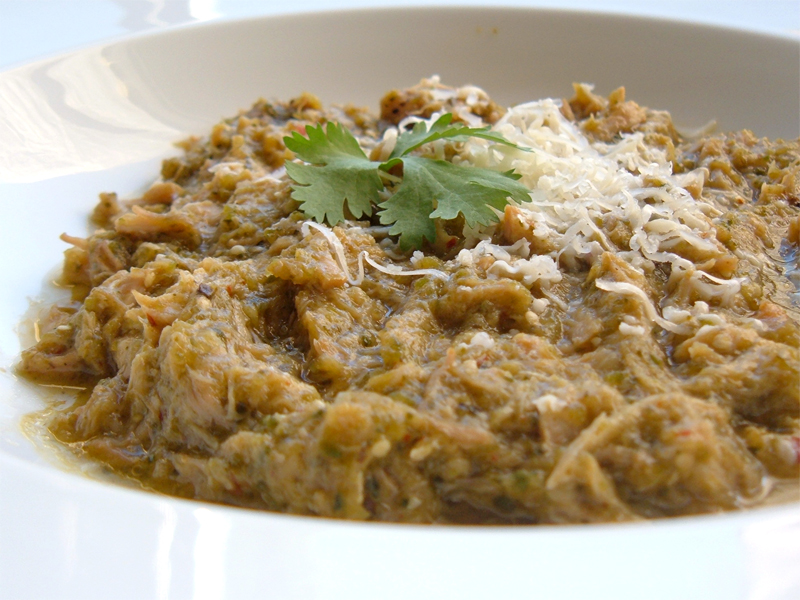
Chile Verde is a dish straddling the border between Mexico and the United States. It can be made with a distinctively Tex-Mex flair, served in burritos, or created as a rich broth for plain steamed rice called morisqueta. Even wilder variations of chile verde call for paprika, cinnamon, and yellow bell peppers or chicken instead of pork. To complicate matters further, there is another eerily similar dish, called Chilayo, which Diana Kennedy attributes to the Colima region of Mexico in her book The Art of Mexican Cooking. So given all this, what exactly is chile verde?
Well I can’t tell you what chile verde should be, because anything I say could be contradicted by at least ten Mexican grandmothers or world-class competitors in chili cook-offs (all of whom can hardly agree with each other). However, I can tell you all about my chile verde, which is a rather simple blend of common sense and personal preference.
Continue reading »
Tags: chiles, crockpot, cumin, guajillo chiles, Mexican, poblano chiles, pork, tomatillos, tomatoes
Posted in Main Course
| No Comments »
October 19, 2009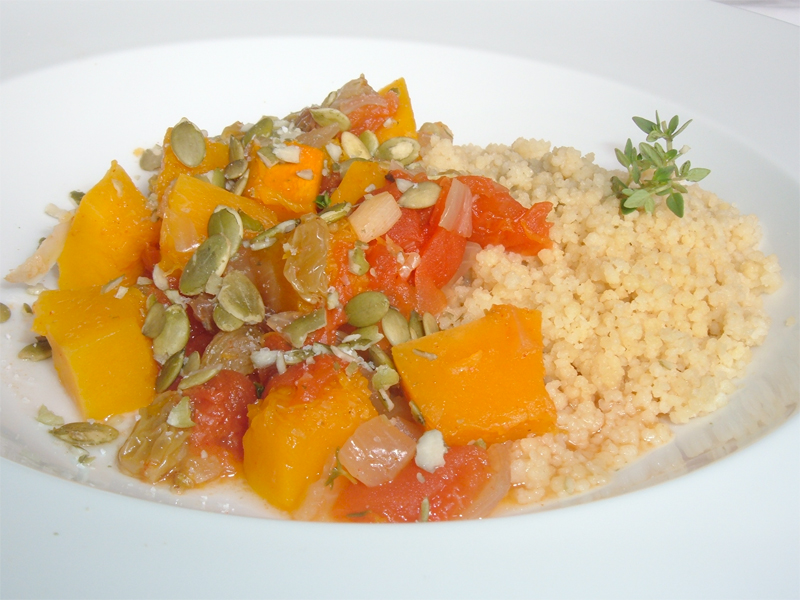
The weather in coastal Southern California can’t seem to decide what season we’re in, but I’m already jazzed about the arrival of Fall. Hot chocolate, morning fog, shorter days, impending food-filled celebrations, time off with the husbot—can I count the ways I love thee? And perhaps more than any other produce, squash is the signature item of the season. There’s quite a selection of squash readily available these days. Butternut squash, pumpkin, acorn squash, and kabocha are only a few of the varieties sold at the local grocery mega-mart and farmer’s market. That said, I don’t cook as often with squash as I would like. The few times I had squash served to me when I was young, the squash was bland or overly sweetened. (Think candied yams.) My husband is even more averse to squash than I am because of his prior experience. But I don’t think the humble squash is to blame for this poor reputation; I think many recipes for squash are just plain boring or poorly thought out. So when I got the yen to use some butternut squash this weekend, I avoided reaching for the traditional (and overused) butternut squash soup and instead tried to recall cuisines that might blend the savory with the sweet in a delicious, but starchy dish. Morocco and Algeria anyone?
Continue reading »
Tags: African, butternut squash, couscous, paprika, raisins, saffron, squash, tomatoes
Posted in Main Course
| No Comments »
October 19, 2009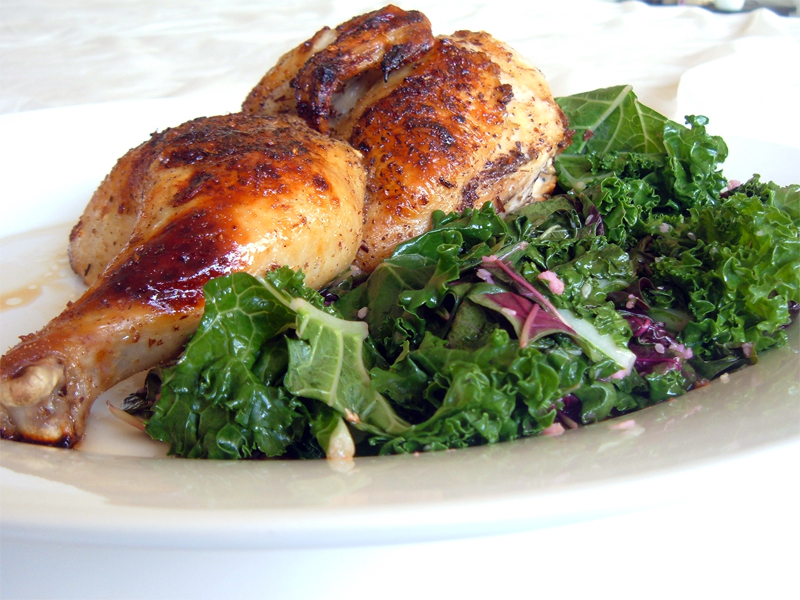
Okay, I had planned on roasting the chicken with a persimmon glaze. However, there were two major problems with this approach. Problem One: persimmons are delicately flavored and, short of a mild cream or custard sauce, are difficult to pair with other flavors. Even too much sugar or honey seems to destroy the subtlety of the persimmon. Problem Two: fuyu persimmons, the kind I usually buy, don’t really have the texture to make a proper glaze. Imagine trying to make a glaze out of something like partially cooked carrots. (Usually you glaze the carrots themselves, not make a glaze out of them.) Nothing I did, including softening the persimmons via cooking and straining in a sieve, yielded the smoothness you associate with a glaze. Arrowroot might have given me a more shiny or glossy sauce, but without the texture, the whole deal was a bust anyway. So there’s a lesson learned: never, ever try to make a savory sauce out of fuyu persimmons. Hachiya persimmons might do better, but you’d have to use the softest, ripest fruits to avoid the astringency associated with that variety. It’s such a shame; I love persimmons. I was really hoping to bring their deliciousness to a main course.
That said, dinner was far from a bust. The spice rub was good, the chicken was beautifully tender and juicy, and the wilted greens were fabulous—that last bit is the real surprise because I usually find myself saying "meh" to most green side-dishes. Also, spatchcocking a chicken is just plain darn fun.
Continue reading »
Tags: Asian, brown rice vinegar, experimental, poultry, sesame, sichuan peppercorns, star anise
Posted in Main Course
| No Comments »
October 13, 2009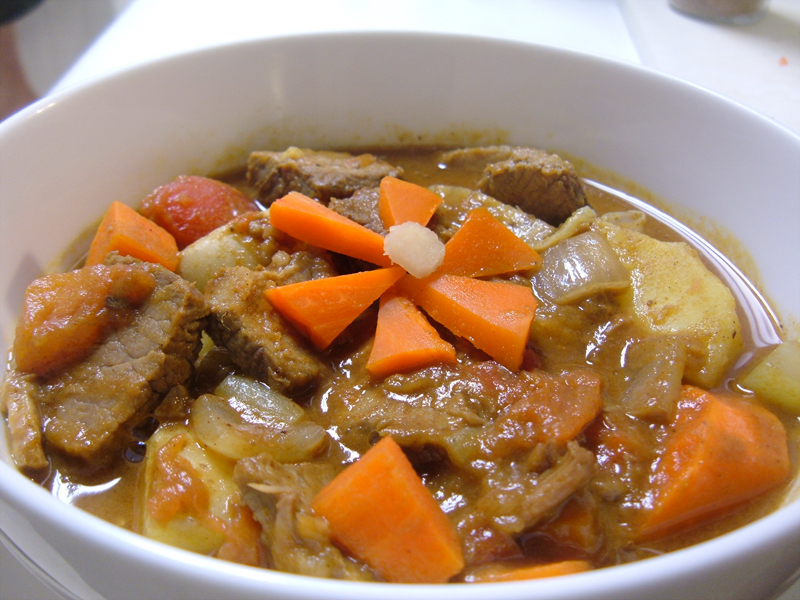
Occasionally I get the urge to cook what no sane, modern man or woman should ever try. Take today for instance—I thought, "Wouldn’t it be great to make Mom’s Japanese curry, but without the help of roux from a box?" Ha bloody ha-ha. Okay, so maybe starting this the day after the cioppino was not my brightest idea. Starting this after finishing a fish stock, a molten cake, a cioppino, and a pesto while also working on two loaves of bread was truly the pinnacle of brilliant scheduling. But like you, I thought, "I just need to make a roux. How hard could it be?" I’ve made roux thousands of times and killed thousands of roux babies. I eat roux for breakfast (okay, not really). But still!
Continue reading »
Tags: apple, Asian, beef, brown stock, carrots, curry, experimental, ginger, Japanese, roux, sauces, yoshoko
Posted in Main Course
| No Comments »
October 12, 2009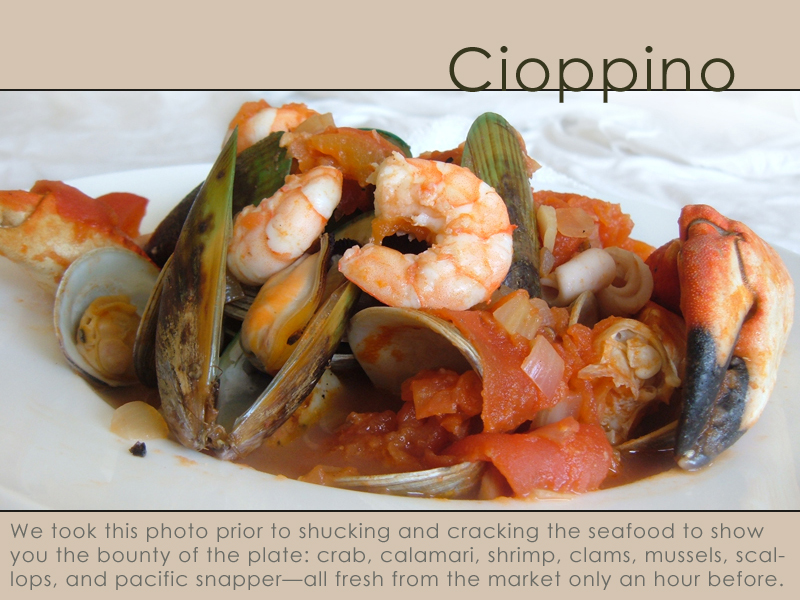
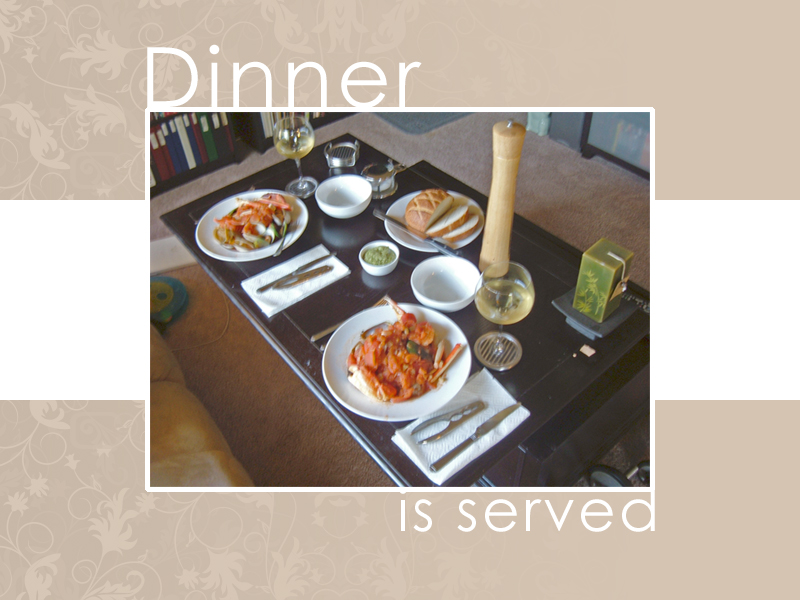
In the summer of 2006 I lost 40 lbs. Today, three years and some months later, the weight is still off and, in addition to staying on track, I’ve lost an additional five pounds. This recipe is a celebration of health and a farewell to my arch-nemesis: the up-and-down roller coaster of diet fads. For this success, I have the folks at SparkPeople to thank. I spent about a year with Sparky, and over those long months of tracking my weight, budgeting my calorie intake and expense, living on the forums, and listening to the advice of nutrition experts, I learned bunches about body maintenance and the negative impact of dieting mentality. That’s not to say I haven’t gone up or down a few pounds in all three years; hell, you can go down a pound or more just by sleeping eight hours. But every time I need to get back on track, I just remind myself of the principles and lessons I learned from Sparky.
Now onto the actual food!
Continue reading »
Tags: crab, favorite, fennel, fish, pacific snapper, scallops, seafood, shellfish, shrimp, special occasions, squid, tomatoes, wine
Posted in Main Course
| No Comments »
October 6, 2009No kitchen can truly be great without homemade stock. Stock is the fonds de cuisine, or "the foundation of cooking," and is a major component of rich stews and many excellent sauces. (And as for sauces—well, no aspiring chef or gourmet cook can truly claim fame in the culinary arena without demonstrating command of sauces.) Furthermore, a properly prepared stock made from scratch will always outperform prepackaged stock from the supermarket or stock made from powders; the two cannot even compare. If you haven’t already, do yourself a favor and upgrade your kitchen with a little homemade stock. Prepare stock the night before and refrigerate or make in advance and freeze for up-to several months.
There are at least a dozen, if not several dozen, variations of stock, depending on the ingredients and the methods employed. However, we can usually break down a traditional stock into three basic components:
Continue reading »
Tags: fish, mirepoix, sachet, sauces, seafood, stock, wine
Posted in Main Course, Miscellaneous
| No Comments »
October 4, 2009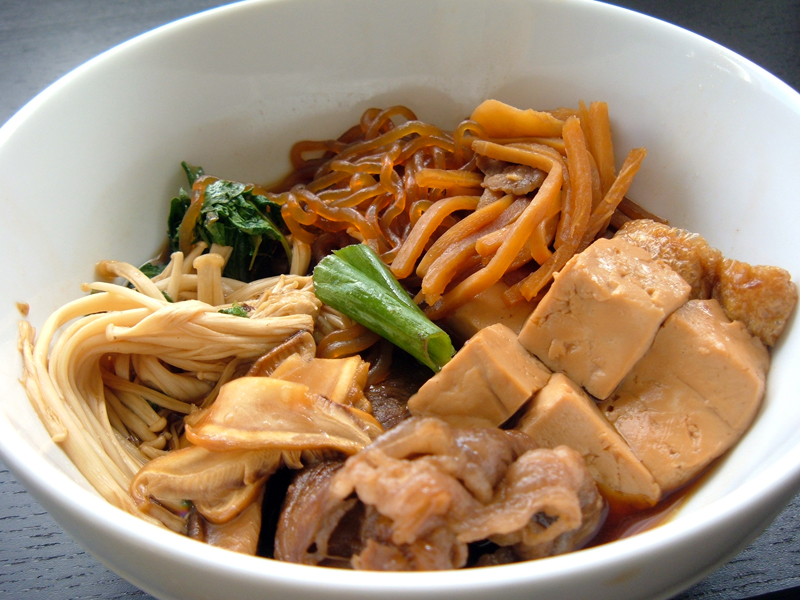
As a child I ate from a variety of cuisines which reflected the life and travel of my mother and her mother. My grandmother was a typical White Anglo Saxon Protestant (WASP), famous in the family for her apple pies, her delicious meat-and-potatoes Midwest cuisine, and her generous, welcoming table. She married a missionary of the church and traveled overseas with him to Hokkaidō. There she raised my mother with the help of a Japanese nanny, whom Mom fondly remembers as oba-san. Between my grandmother sharing her apple pies with the locals and, in turn, "oba-san" preparing traditional country-style Japanese meals for the family, my mother grew up in the epicenter of a small cultural exchange. She took this experience with her and traveled to the U.S., France, Spain, Mexico, and other countries, studying language, literature, and, occasionally, new cooking techniques and recipes. Later, she married a third generation Japanese son of Hawaii and adapted some of the recipes for him. I had the pleasure of enjoying the accumulated results descended through the line of women in my family.
Continue reading »
Tags: aburaage, Asian, bamboo, dashi, enokitake, garland chrysanthemum, Japanese, konnyaku, matsutake, mirin, mushrooms, nimono, pine mushrooms, scallions, shiitake, shirataki, shoyu, shungiku, soy, tofu, yam noodles
Posted in Main Course
| No Comments »
September 28, 2009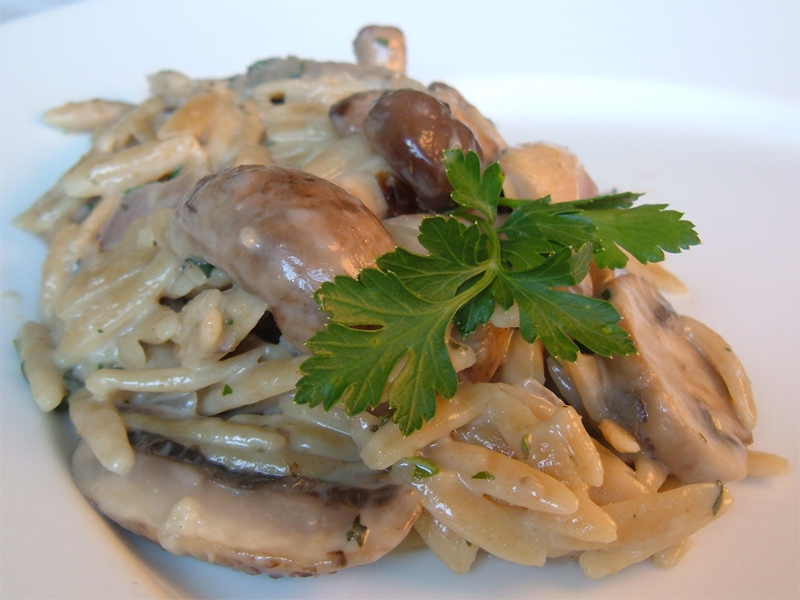
One of the joys of cooking is the opportunity to work hands-on with new or unfamiliar ingredients. This week I wanted a mild side-dish to accompany the leg of lamb; I also knew I wanted Greek flavors, mushrooms, and a carbohydrate in risotto-style or something very similar. Off I went to the farmer’s market, which coincidentally has a booth selling exotic foods imported from Greece. There I sampled and bought a wonderful 6 oz hunk of Kasseri, a type of cheese which I had never tasted before. From Whole Foods I also bought whole wheat orzo and (on a whim) truffle oil, the latter of which is also foreign to my pantry. Thus began my grand experiment!
The dish came together like this:
Continue reading »
Tags: cheese, cream, Kasseri cheese, mushrooms, oregano, orzo, pasta, thyme, truffle oil, wine
Posted in Main Course
| No Comments »