October 24, 2009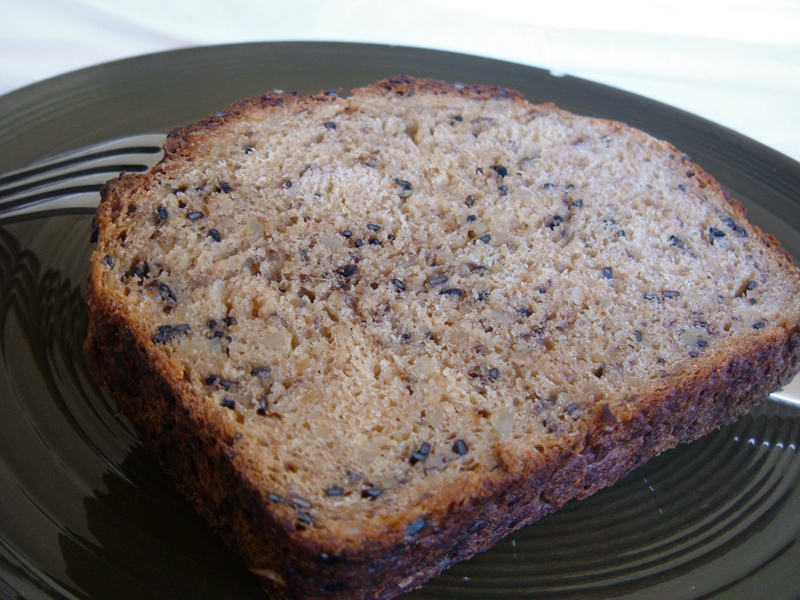
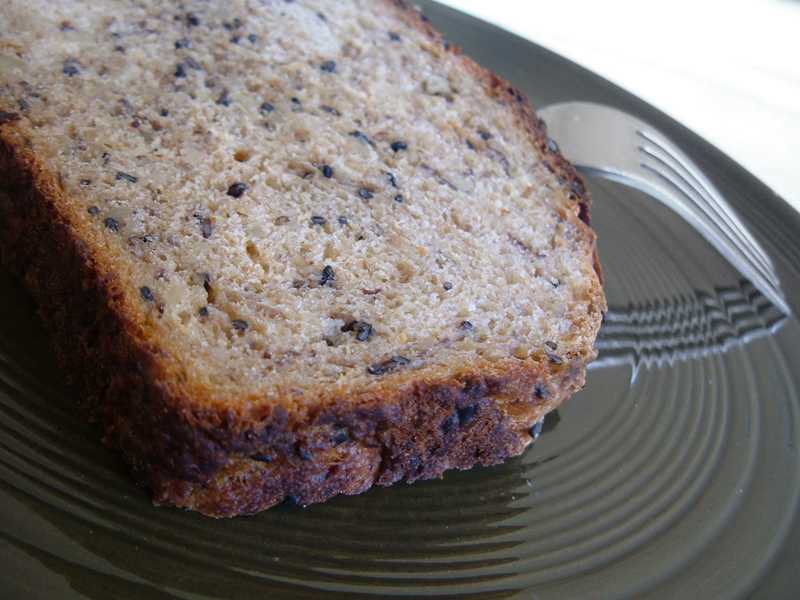
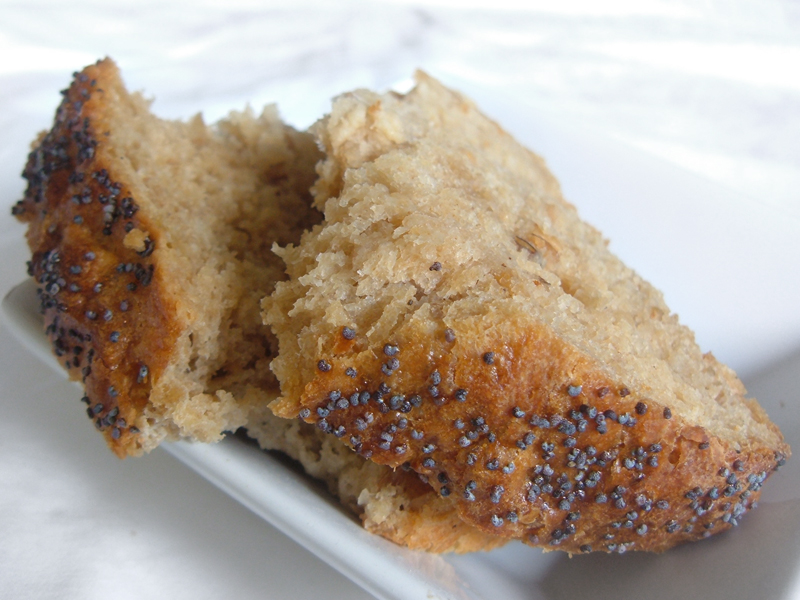
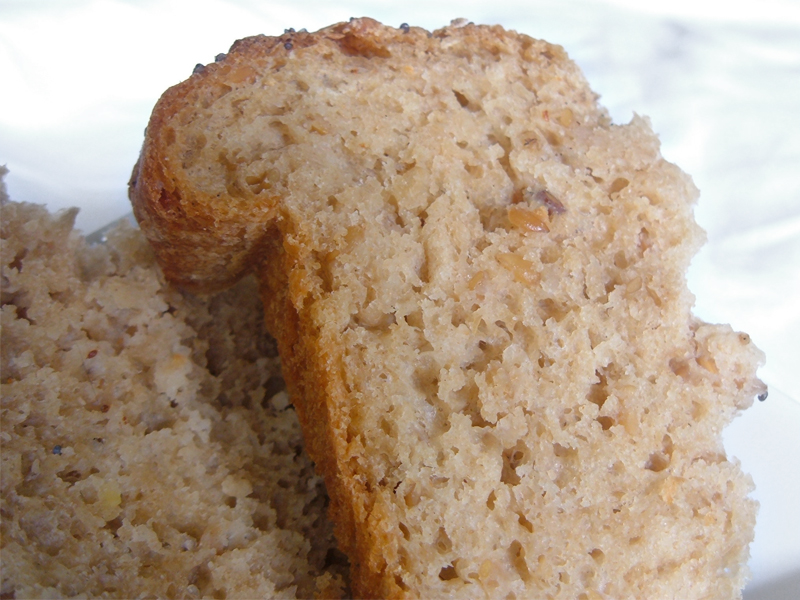
Very few recipe books are "essential." When you understand kitchen fundamentals, when you begin to grasp the concept of ingredients by ratio, when you have no fear of exploring new flavors—you can free yourself from the dreaded recipe and have a lot of fun cooking. That’s not to say you can’t learn from someone else’s recipes. A good recipe book will refine your basic techniques, familiarize you with foreign cuisines, and help you develop unique "dish concepts." However, I rarely find myself attached to one book and hauling the bugger around like a trusty sidekick. It’s just part of my personality. For better or worse, I have an innate resistance to listening and following the directions of any one person.
But these days I’m often not very far from Peter Reinhart’s Whole Grain Breads. This book is gem.
Continue reading »
Tags: enriched bread, flaxseeds, hard white whole wheat flour, instant yeast, Peter Reinhart, raisins, steel cut oats, sunflower seeds
Posted in 100% Whole Grain
| No Comments »
October 23, 2009
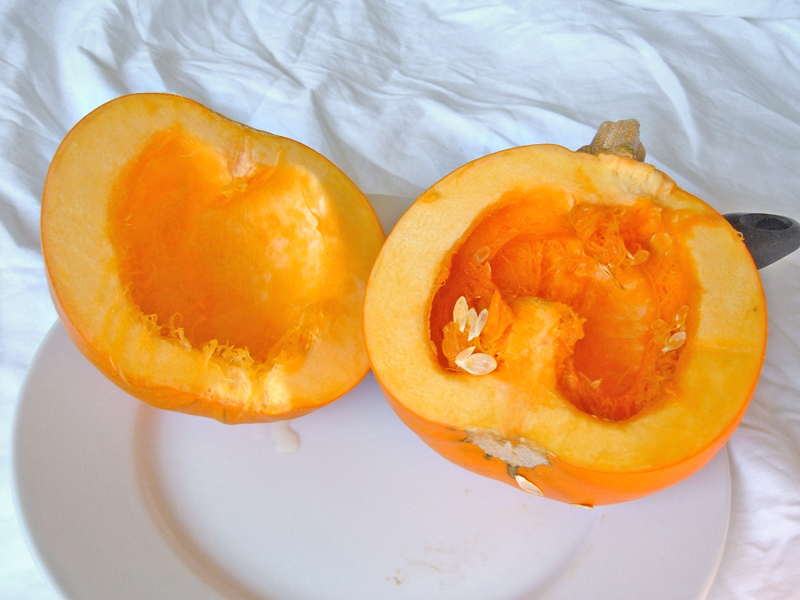
Well here’s a crazy idea I’ve been tossing around for a while. These sweets don’t really jive with the Mexican food we’re eating at the moment, but hey—I thought of this back when I was making Japanese Curry. And this is kind of… maybe.. sort of… okay, vaguely… Asian, so in my mind it works :P
I’m not really sure what to call this concoction. It’s a dim-sum wrapper made with sweet glutinous rice and pumpkin instead of sweet potato; on the inside, there’s a pumpkin puree spiced with the cinnamon, all spice, nutmeg, sugar and grated crystallized ginger. So basically I crossed jin deui with pumpkin desserts and this odd little deviant child came out. And if I haven’t scared you yet, there are more mutant babies inside my head at the moment. Parents: this is what happens to your kids when they play with their food as wee children.
Continue reading »
Tags: cinnamon, crystallized ginger, dim sum, experimental, glutinous rice flour, pumpkin, rice, squash
Posted in Dessert
| No Comments »
October 22, 2009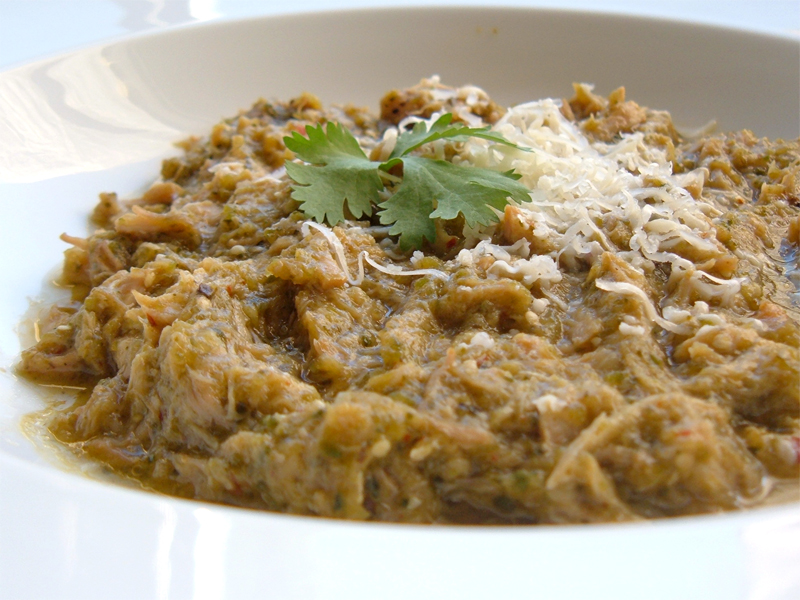
Chile Verde is a dish straddling the border between Mexico and the United States. It can be made with a distinctively Tex-Mex flair, served in burritos, or created as a rich broth for plain steamed rice called morisqueta. Even wilder variations of chile verde call for paprika, cinnamon, and yellow bell peppers or chicken instead of pork. To complicate matters further, there is another eerily similar dish, called Chilayo, which Diana Kennedy attributes to the Colima region of Mexico in her book The Art of Mexican Cooking. So given all this, what exactly is chile verde?
Well I can’t tell you what chile verde should be, because anything I say could be contradicted by at least ten Mexican grandmothers or world-class competitors in chili cook-offs (all of whom can hardly agree with each other). However, I can tell you all about my chile verde, which is a rather simple blend of common sense and personal preference.
Continue reading »
Tags: chiles, crockpot, cumin, guajillo chiles, Mexican, poblano chiles, pork, tomatillos, tomatoes
Posted in Main Course
| No Comments »
October 19, 2009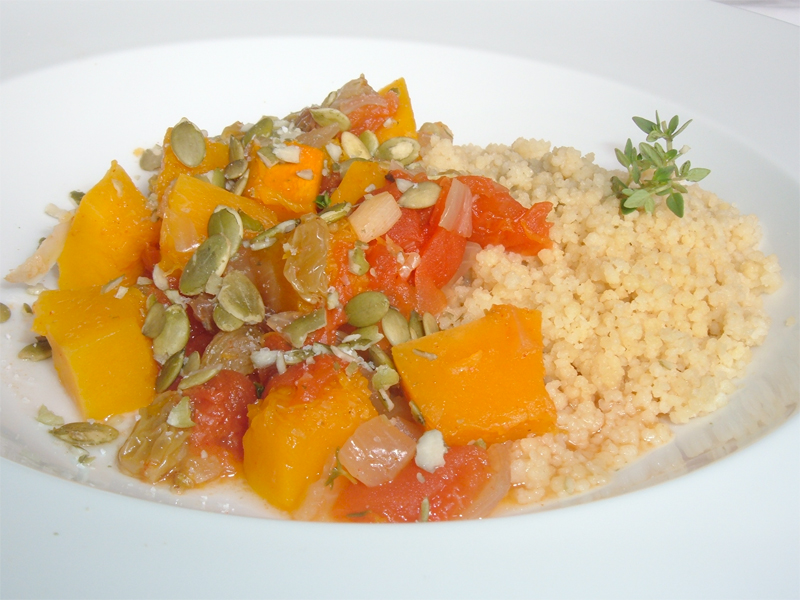
The weather in coastal Southern California can’t seem to decide what season we’re in, but I’m already jazzed about the arrival of Fall. Hot chocolate, morning fog, shorter days, impending food-filled celebrations, time off with the husbot—can I count the ways I love thee? And perhaps more than any other produce, squash is the signature item of the season. There’s quite a selection of squash readily available these days. Butternut squash, pumpkin, acorn squash, and kabocha are only a few of the varieties sold at the local grocery mega-mart and farmer’s market. That said, I don’t cook as often with squash as I would like. The few times I had squash served to me when I was young, the squash was bland or overly sweetened. (Think candied yams.) My husband is even more averse to squash than I am because of his prior experience. But I don’t think the humble squash is to blame for this poor reputation; I think many recipes for squash are just plain boring or poorly thought out. So when I got the yen to use some butternut squash this weekend, I avoided reaching for the traditional (and overused) butternut squash soup and instead tried to recall cuisines that might blend the savory with the sweet in a delicious, but starchy dish. Morocco and Algeria anyone?
Continue reading »
Tags: African, butternut squash, couscous, paprika, raisins, saffron, squash, tomatoes
Posted in Main Course
| No Comments »
October 19, 2009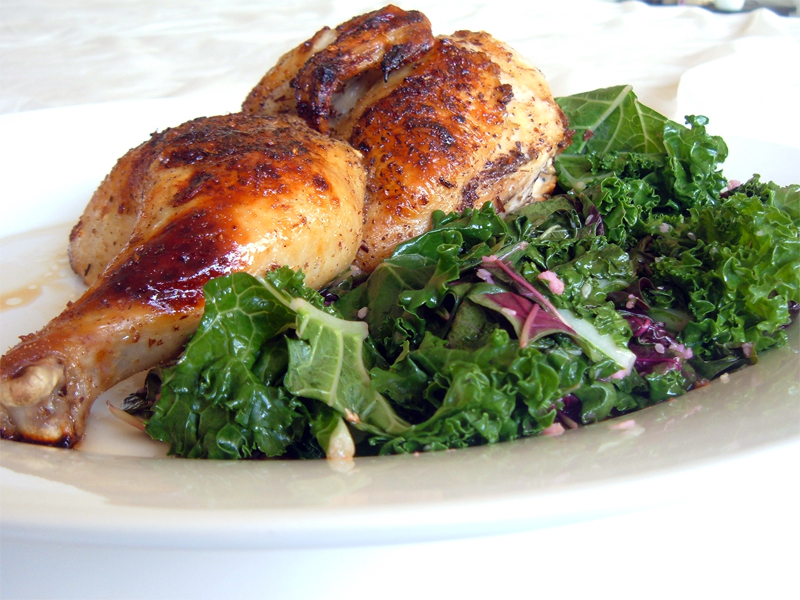
Okay, I had planned on roasting the chicken with a persimmon glaze. However, there were two major problems with this approach. Problem One: persimmons are delicately flavored and, short of a mild cream or custard sauce, are difficult to pair with other flavors. Even too much sugar or honey seems to destroy the subtlety of the persimmon. Problem Two: fuyu persimmons, the kind I usually buy, don’t really have the texture to make a proper glaze. Imagine trying to make a glaze out of something like partially cooked carrots. (Usually you glaze the carrots themselves, not make a glaze out of them.) Nothing I did, including softening the persimmons via cooking and straining in a sieve, yielded the smoothness you associate with a glaze. Arrowroot might have given me a more shiny or glossy sauce, but without the texture, the whole deal was a bust anyway. So there’s a lesson learned: never, ever try to make a savory sauce out of fuyu persimmons. Hachiya persimmons might do better, but you’d have to use the softest, ripest fruits to avoid the astringency associated with that variety. It’s such a shame; I love persimmons. I was really hoping to bring their deliciousness to a main course.
That said, dinner was far from a bust. The spice rub was good, the chicken was beautifully tender and juicy, and the wilted greens were fabulous—that last bit is the real surprise because I usually find myself saying "meh" to most green side-dishes. Also, spatchcocking a chicken is just plain darn fun.
Continue reading »
Tags: Asian, brown rice vinegar, experimental, poultry, sesame, sichuan peppercorns, star anise
Posted in Main Course
| No Comments »
October 13, 2009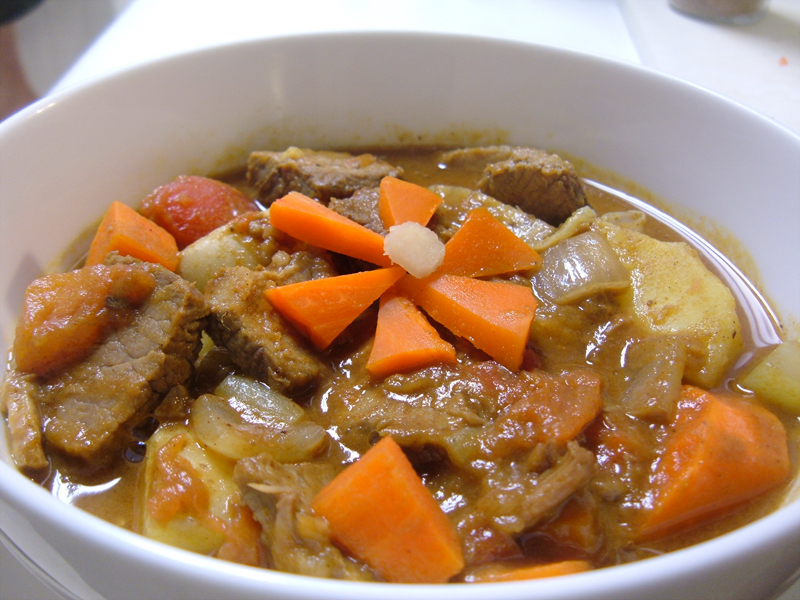
Occasionally I get the urge to cook what no sane, modern man or woman should ever try. Take today for instance—I thought, "Wouldn’t it be great to make Mom’s Japanese curry, but without the help of roux from a box?" Ha bloody ha-ha. Okay, so maybe starting this the day after the cioppino was not my brightest idea. Starting this after finishing a fish stock, a molten cake, a cioppino, and a pesto while also working on two loaves of bread was truly the pinnacle of brilliant scheduling. But like you, I thought, "I just need to make a roux. How hard could it be?" I’ve made roux thousands of times and killed thousands of roux babies. I eat roux for breakfast (okay, not really). But still!
Continue reading »
Tags: apple, Asian, beef, brown stock, carrots, curry, experimental, ginger, Japanese, roux, sauces, yoshoko
Posted in Main Course
| No Comments »
October 12, 2009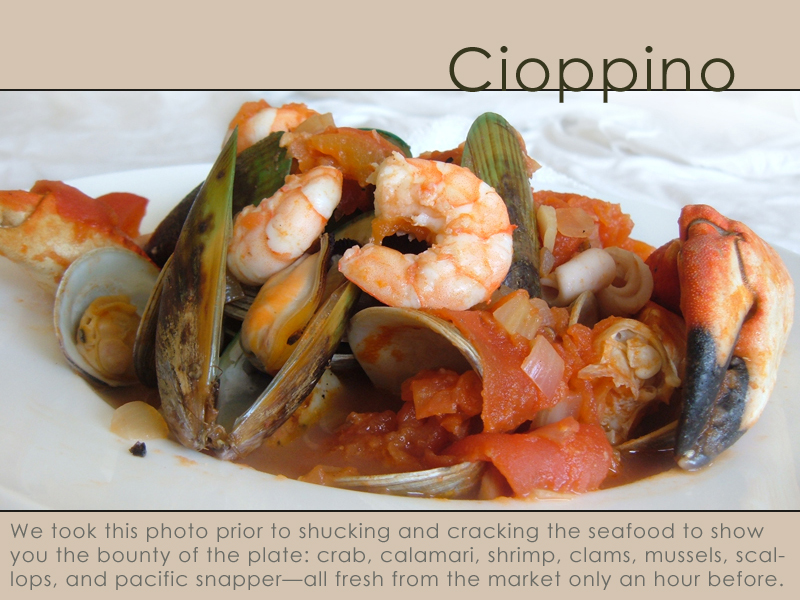
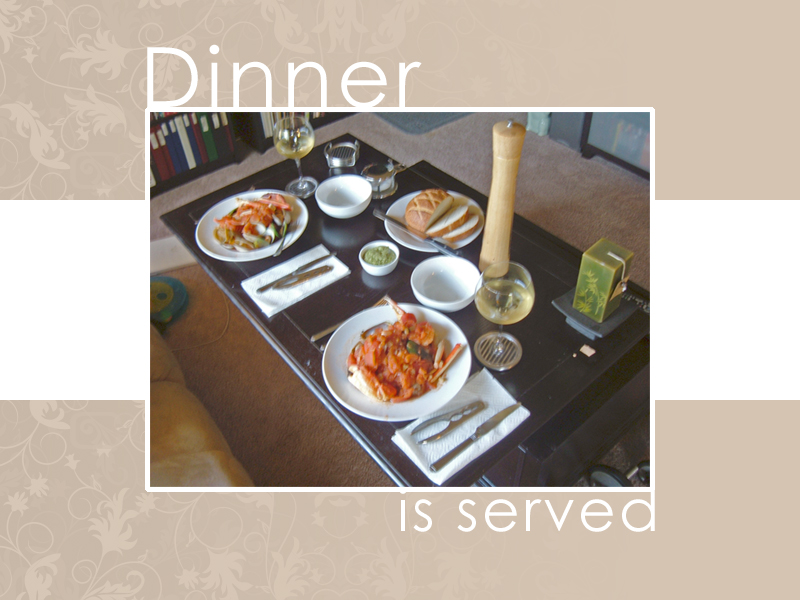
In the summer of 2006 I lost 40 lbs. Today, three years and some months later, the weight is still off and, in addition to staying on track, I’ve lost an additional five pounds. This recipe is a celebration of health and a farewell to my arch-nemesis: the up-and-down roller coaster of diet fads. For this success, I have the folks at SparkPeople to thank. I spent about a year with Sparky, and over those long months of tracking my weight, budgeting my calorie intake and expense, living on the forums, and listening to the advice of nutrition experts, I learned bunches about body maintenance and the negative impact of dieting mentality. That’s not to say I haven’t gone up or down a few pounds in all three years; hell, you can go down a pound or more just by sleeping eight hours. But every time I need to get back on track, I just remind myself of the principles and lessons I learned from Sparky.
Now onto the actual food!
Continue reading »
Tags: crab, favorite, fennel, fish, pacific snapper, scallops, seafood, shellfish, shrimp, special occasions, squid, tomatoes, wine
Posted in Main Course
| No Comments »
October 11, 2009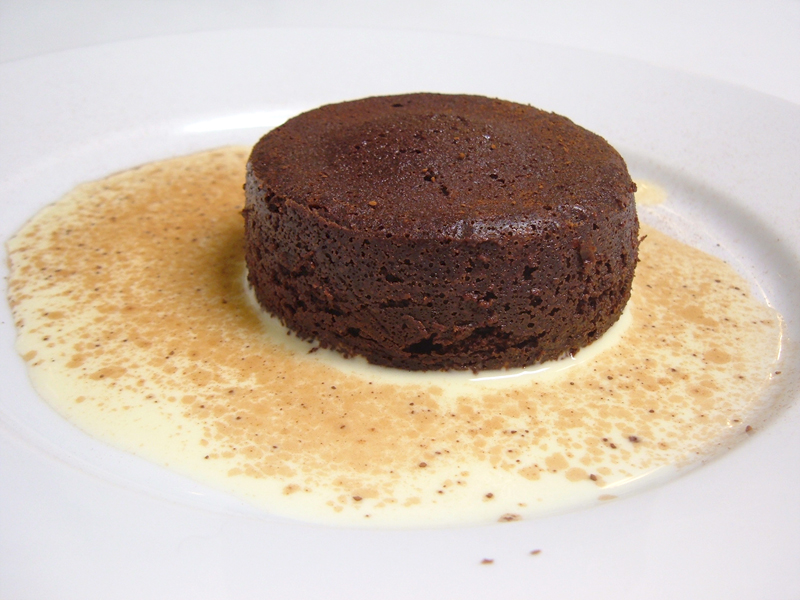
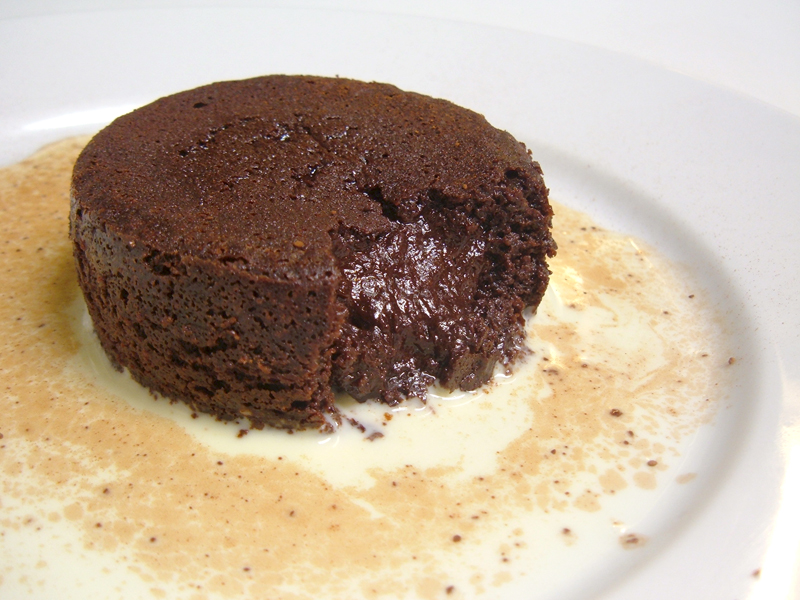
Unless a blog is dedicated to baking, I frown on attention-starved cooking blogs with a page full of dessert close-up photography. I also frown on most cakes. I usually can’t bring myself to enjoy eating a frosting-covered mound of flour, even to be polite. Other sweets like apple pie à la mode and oatmeal raisin cookies are more tempting, but I can pass them up without much suffering. But chocolate—well, that’s my weakness. I love chocolate, especially 70%-75% dark chocolate. (Milk chocolate is for wusses.) Pair the flavor of pure chocolate with espresso and a dash of salt, and you may as well pry the dessert from the hands of my stiff corpse.
Continue reading »
Tags: chocolate, espresso, liqueur, sauces
Posted in Dessert
| No Comments »
October 11, 2009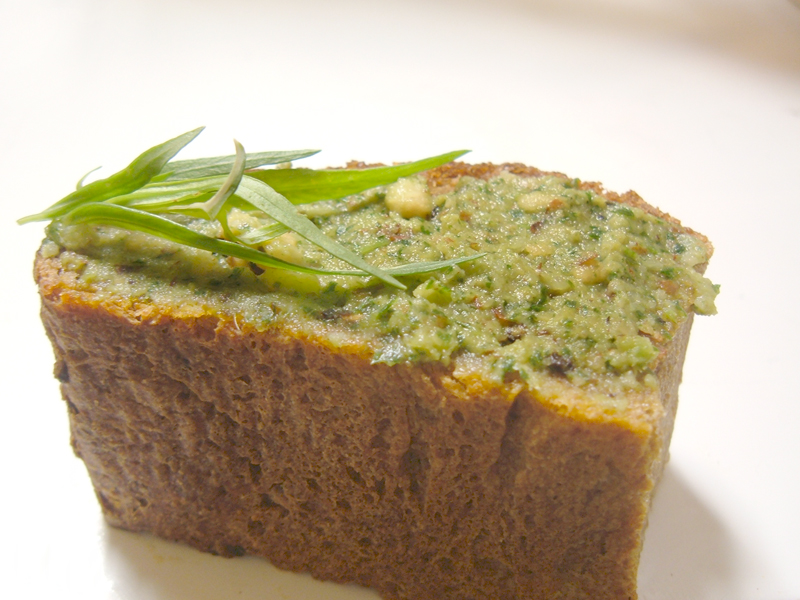
This recipe was a tasty deviation from regular, old basil pesto and was a wonderful contrast to the cioppino. I particularly liked the tarragon, the fennel, the Kasseri cheese, and the almonds. What was disappointing was the lack of anchovy flavor! Then again, yours truly has never before bought whole fresh anchovies and gutted them by hand, so I had no idea what to expect; I’m more used to the stuff they sell you in a can, which is pungent indeed. Next time I’ll be a little more careful and pair the anchovies with ingredients that complement rather than override.
Continue reading »
Tags: almonds, anchovies, cheese, fennel, fish, Kasseri cheese, tarragon
Posted in Appetizer
| No Comments »
October 6, 2009No kitchen can truly be great without homemade stock. Stock is the fonds de cuisine, or "the foundation of cooking," and is a major component of rich stews and many excellent sauces. (And as for sauces—well, no aspiring chef or gourmet cook can truly claim fame in the culinary arena without demonstrating command of sauces.) Furthermore, a properly prepared stock made from scratch will always outperform prepackaged stock from the supermarket or stock made from powders; the two cannot even compare. If you haven’t already, do yourself a favor and upgrade your kitchen with a little homemade stock. Prepare stock the night before and refrigerate or make in advance and freeze for up-to several months.
There are at least a dozen, if not several dozen, variations of stock, depending on the ingredients and the methods employed. However, we can usually break down a traditional stock into three basic components:
Continue reading »
Tags: fish, mirepoix, sachet, sauces, seafood, stock, wine
Posted in Main Course, Miscellaneous
| No Comments »