Posts Tagged ‘Pork’
May 2, 2010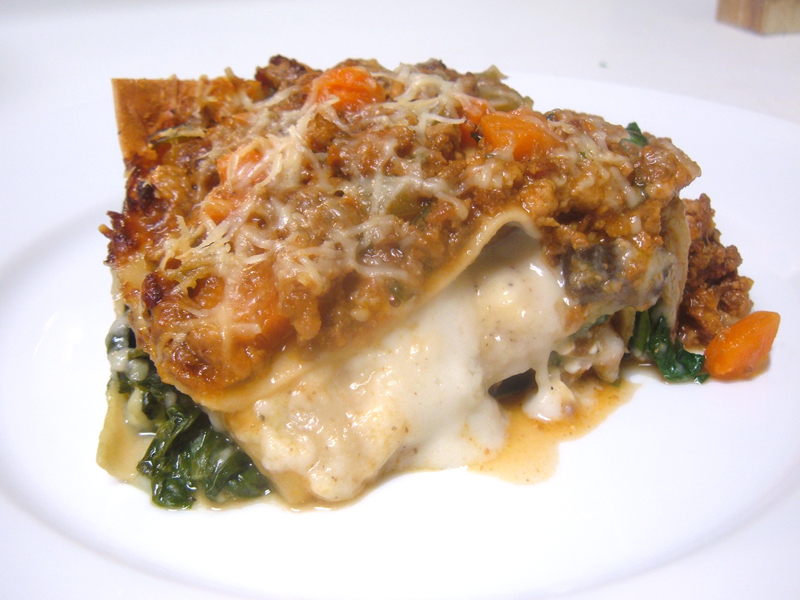
The weather in west Torrance is lovely at this time of year, if somewhat varied and unpredictable. Spring rains are abating rapidly, but gusty coastal winds and bouts of cloud cover can result in unseasonably cool temperatures (especially indoors, with all the breeze and none of the sun). Gradually, however, the days are warming. Temperatures aren’t likely to peak until the month of August, but they are expected to rise into the high 70s or low 80s by July. So Tyler and I are finishing the end of Spring cuisine with a warm, hearty meal—the likes of which we’ll probably not revisit again until the end of this year or the beginning of the next.
Continue reading »
Tags: bechamel, beef, bolognese, casserole, cheese, cream, lasagna, oregano, party pleaser, pork, roux, wine
Posted in Main Course
| No Comments »
December 6, 2009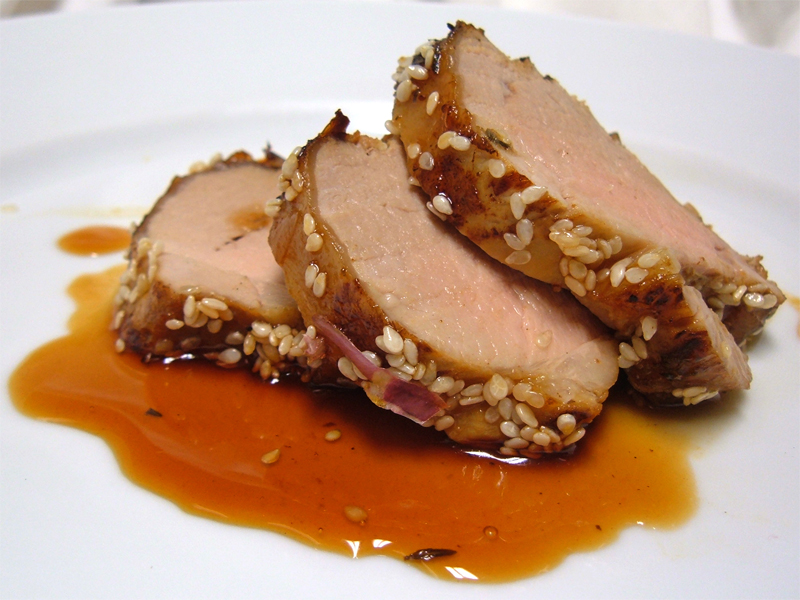
In recent weeks, Creative Comestibles has featured the heavier, classic sauces and stocks of French-influenced cuisine. But today I mutinied and embarked in a new—or should I say old?—culinary direction. So-called "modern" sauces are popular, mainly because they are considered lighter, healthier, and less preparation intensive. The apricot-port sauce featured here generally fits these characteristics; the sauce can be assembled in minutes, is devoid of fat, and in appropriate quantities accents (not overrides) the savory with an aspect of sweet. I pair the sauce with marinated pork cooked to juicy perfection and sliced into medallions. Pork pairs very well with apricot and, as a tenderloin, is just as easy to finish as the sauce itself.
Continue reading »
Tags: apricot, fruit, garlic, pork, port, sauces, shallots, soy
Posted in Main Course
| No Comments »
November 10, 2009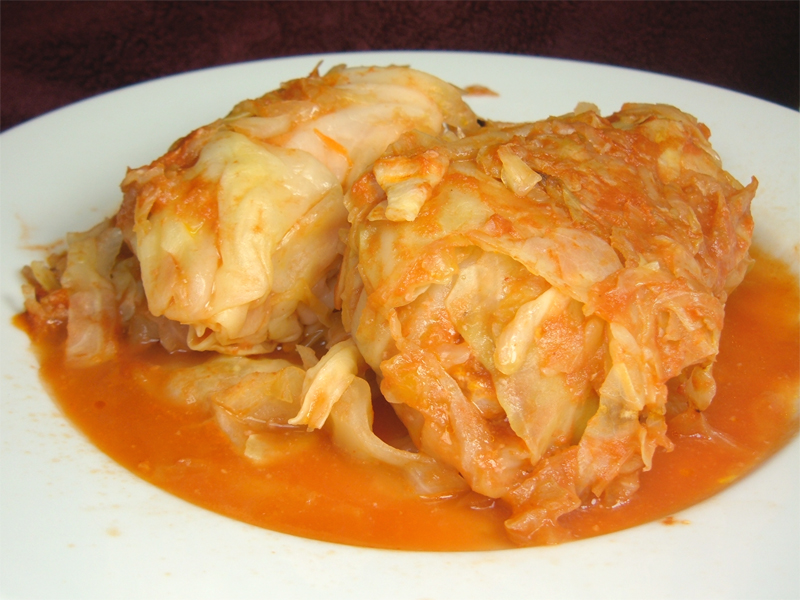
Occasionally, my mother served us "pigs in a blanket" for dinner—and no, I’m not speaking of pastry wrapped hot dogs or sausages! In our household, "pigs in a blanket" always meant meat rolled in whole cabbage leaves and simmered in a tomato-based sauce. I can’t imagine where Mom picked up the reference, since the term (when referring to cabbage rolls) originates from Slavic-influenced regions like Pennsylvania.
Regardless of what they’re called, cabbage rolls exist across Europe, parts of Asia, and parts of the U.S. which are heavily influenced by Eastern European immigrants. There are many variations on the recipe depending on the region of origin. Sometimes cabbage rolls are cooked in tomato juice. In other recipes, you’ll see a sour cream sauce. Occasionally, people use pickled cabbage leaves to wrap the meat or add citric acid salt (sour salt). Cabbage rolls may even be distantly related to meat-stuffed versions of the dolma wrapped in grape leaves. In summary, this dish is a ubiquitous classic of rustic country-fare and (in my opinion) one of the ultimate comfort foods of Fall.
Continue reading »
Tags: bacon, beef, cabbage, comfort food, Hungarian, paprika, pork, sauerkraut, tomato juice
Posted in Main Course
| 2 Comments »
October 26, 2009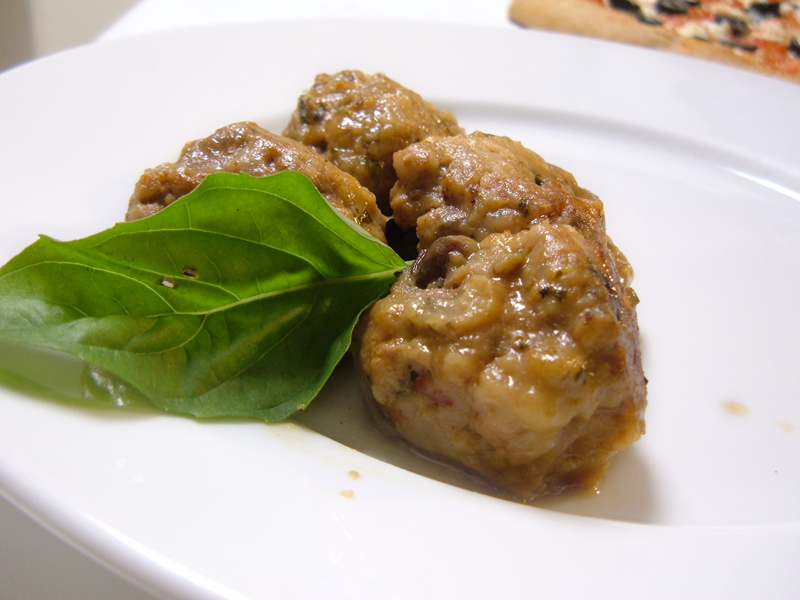
The theme this week was Spanish cuisine and flavors. (More on why in the next article.) I needed an all-meat dish to accompany the other main, so I bumbled around on the internet until I ran across "albondigas"—or meatballs. The snafu: the online recipes were all over the map. Many of the meatballs were basted in a tomato sauce, but some were in wine-vegetable broths. Beef, pork, veal, bacon, and chicken were all candidates for the actual meat content. One of them called for Parmesan cheese, and that’s where I just drew the line. Parmesan cheese? As in the Parmigiano Reggiano of Italy?! Why would Spain, with all its lovely and wonderful cheeses, use Parmesan in what is considered a classic dish of Spain? I dove for the nearest bookstore. Save me from the hordes of sameness! I was not going to be conned into some American rendition of spaghetti and meatballs (minus the spaghetti), no matter what the internet said.
Continue reading »
Tags: almonds, mushrooms, pancetta, paprika, pork, portobello mushrooms, saffron, sherry, Spanish, veal, wine
Posted in Appetizer, Main Course
| No Comments »
October 22, 2009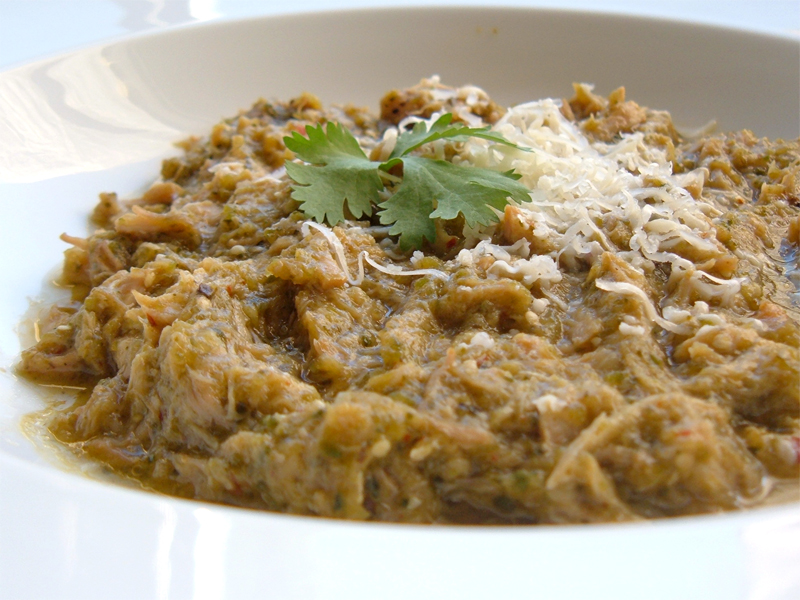
Chile Verde is a dish straddling the border between Mexico and the United States. It can be made with a distinctively Tex-Mex flair, served in burritos, or created as a rich broth for plain steamed rice called morisqueta. Even wilder variations of chile verde call for paprika, cinnamon, and yellow bell peppers or chicken instead of pork. To complicate matters further, there is another eerily similar dish, called Chilayo, which Diana Kennedy attributes to the Colima region of Mexico in her book The Art of Mexican Cooking. So given all this, what exactly is chile verde?
Well I can’t tell you what chile verde should be, because anything I say could be contradicted by at least ten Mexican grandmothers or world-class competitors in chili cook-offs (all of whom can hardly agree with each other). However, I can tell you all about my chile verde, which is a rather simple blend of common sense and personal preference.
Continue reading »
Tags: chiles, crockpot, cumin, guajillo chiles, Mexican, poblano chiles, pork, tomatillos, tomatoes
Posted in Main Course
| No Comments »
September 19, 2009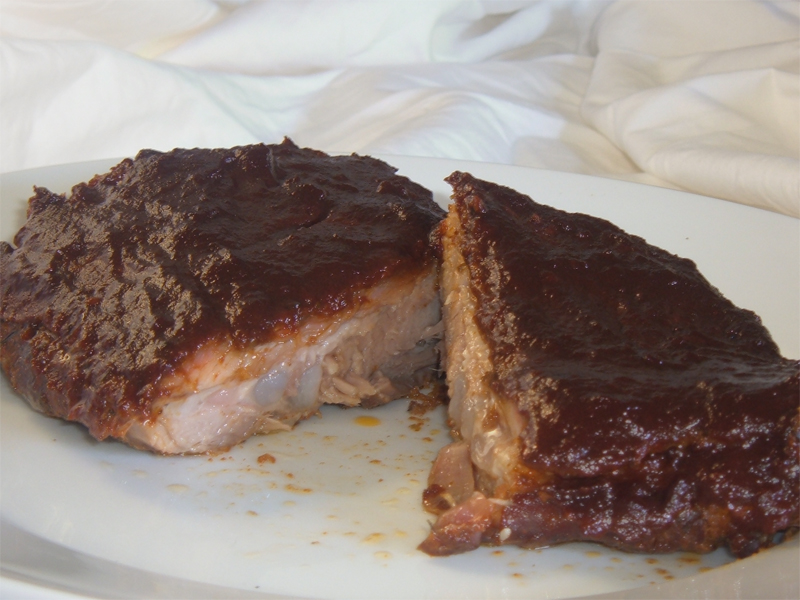
Making fantastic ribs isn’t all that complicated. The purists will say you only need two components: a great cut of meat and the right cooking method. The meat is usually pork (either spareribs or baby backs) but I’ve heard glowing reviews about beef ribs as well. For this dish, as well as others where meat is the central ingredient, I recommend visiting a good butcher; nothing will ruin ribs faster than starting out cheap. My personal favorite butcher’s shop, Marconda’s Meats, is a little far away, but well worth the trip. In the future I may also try Manhattan Meats.
How do you prepare your newly purchased prize beauty for consumption? First, pat in a spice rub. You can use whatever combination suits you best, but I like to go with salt, pepper, cayenne powder, onion powder, garlic powder, thyme, paprika, cumin, and maybe a little ancho chili powder or chipotle powder.
Continue reading »
Tags: bbq, grill food, party pleaser, pork, ribs
Posted in Main Course
| No Comments »
September 19, 2009
Gourmet calls this Pork Chops Saltimbocca. After reading Wikipedia’s entry on Saltimbocca, I’m not convinced this dish is true to it’s heritage, but heyI’ll give Gina Enriquez the benefit of the doubt.
To make a long story short, I wasn’t impressed with this dish. It’s a downright shame because the Fontina and the prosciutto were excellent quality and freshness; they were both bought late yesterday afternoon at the lovely Giuliano’s Delicatessen and Bakery. The cheese, which I’ve never sampled before today, was soft, creamy, and rich. The prosciutto was sliced paper-thin and neither too moist nor too dry. Unfortunately, the sage was not at peak freshness, and the pork chops were garden-variety Albertsons bone-in thick cut. Still, one would think that putting these four ingredients together would not be so underwhelming. But before I criticize the recipe, let me offer a few critical remarks about my own technique.
- With so few ingredients, it's crucial to obtain high quality materials. So next time spring for quality pork chops from a good butcher. Ohand don't forget the really fresh sage!
- Despite oversearing one side, the pork inside was cooked perfectly.
Continue reading »
Tags: cheese, Gourmet Magazine, pork, prosciutto, sage
Posted in Main Course
| No Comments »
September 19, 2009
I discovered a recipe from Emeril which brought back fond memories of thin sliced beef from KTA in a soy sauce marinade. (The butchers eventually stopped offering the thin slicing service; it’s a time-consuming process to keep the meat and knife sufficiently cold. Continue reading for more commentary on this subject.) I’m not sure I would call the recipe “Korean.” It sounds more like an American bastard child of grilled thin sliced beef teriyaki over sticky white rice and ground pork lettuce wraps with crunchy rice noodles.
Anyway, the only part of the dish I made word-for-word was the chile sauce. For the marinade, I just threw the ingredients together with a “Oh that looks about right.”
A few helpful hints for next time:
Continue reading »
Tags: Asian, Emeril Lagasse, ginger, marinade, pork, rice, sesame seeds, shoyu, soy, spicy, Sriracha
Posted in Main Course
| No Comments »